
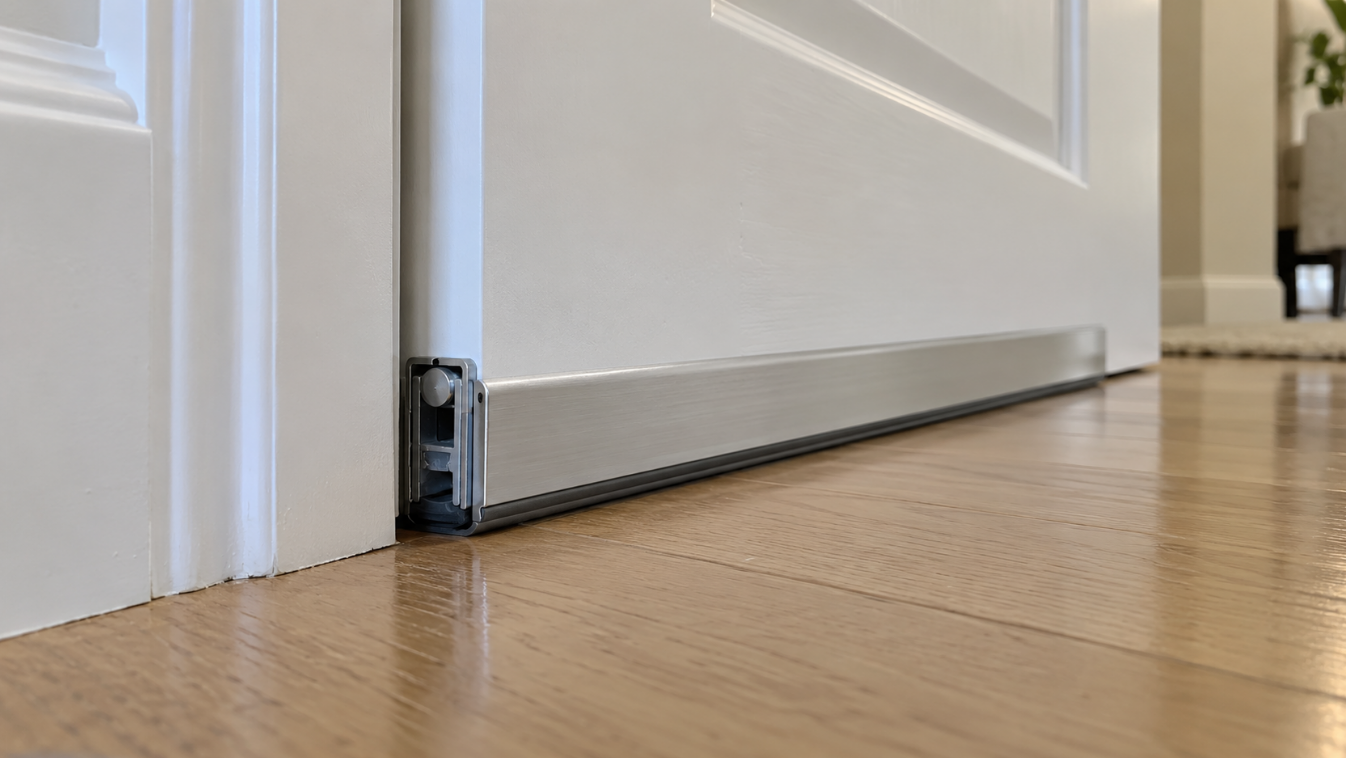
A door sweep is a strip with a brush, rubber, or vinyl edge that mounts to the face of a door and drags along the floor or threshold. "Under-door seal" is the broader name for anything that closes the gap at the bottom of a door. It covers door sweeps, door shoes, threshold seals, and automatic door bottoms that drop a seal only when the door closes.
Door sweeps cost less and install in minutes, which makes them a common fix for drafts on exterior doors. Automatic door bottoms seal tighter without dragging on the floor, so they're the usual choice when the goal is blocking sound between rooms.
What Counts as an Under-Door Seal?
The seal under a door goes by several names, and each one describes a slightly different piece of hardware. They fall into three groups, depending on what the seal presses against.
Door sweeps and draft stoppers seal by touching whatever surface sits under the door. A sweep mounts to the bottom of the door face with screws or adhesive and carries a brush or flexible fin that rests on the floor. A draft stopper skips the hardware entirely: it's a loose fabric tube you lay against the closed door and move aside when you open it.
Door shoes and threshold seals work as a pair with the threshold. A door shoe, also called a door bottom, slides over the bottom edge of the door as a U-shaped channel with a seal on its underside. A threshold seal goes the other way, sitting as a flexible insert in the threshold so the bottom of the door presses down onto it.
Automatic door bottoms work on their own. The housing mounts on the door, and its seal drops when the door closes and lifts as soon as it opens. Because the seal moves, the same hardware can close the gap against a smooth floor or a threshold.
Door Sweep vs Under-Door Seal - Key Differences
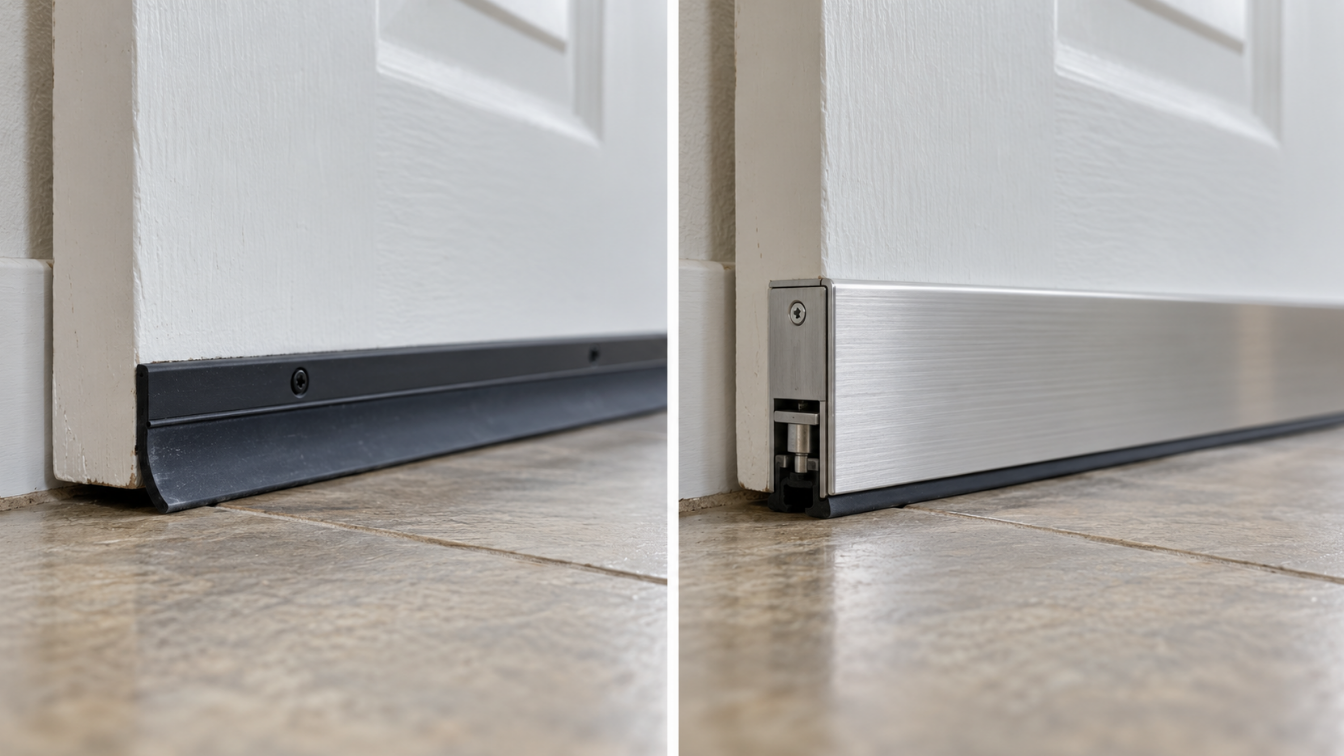
The main difference comes down to contact. A door sweep touches the floor every time the door moves, while an automatic door bottom touches it only when the door is shut. That one detail decides how each one wears, how much it drags, and how tightly it can seal.
A sweep has to stay light enough for the door to open easily, so it can't press hard against the floor. An automatic door bottom faces no such limit, because it isn't in contact while the door swings. It can press its seal firmly down when closed and still let the door open without friction.
|
Door sweep |
Automatic door bottom |
|
|
How it seals |
Brush or fin touching the floor |
Seal drops onto the floor when the door closes |
|
Floor contact |
Constant, including while the door moves |
Only when the door is closed |
|
Drag when opening |
Some, more on carpet and rugs |
None, since the seal lifts |
|
Wear |
Brush and fin wear down with use |
Seal wears slowly because it doesn't slide |
|
Seal tightness |
Moderate, limited by the need to swing freely |
Firm, pressed down across the full width |
|
Installation |
Screws or adhesive on the door face |
Screws on the door face, plus adjustment |
|
Best for |
Drafts, dust, and light on exterior doors |
Sound control, plus drafts and light |
Which Works Better for Drafts, Bugs, and Noise?
The right seal depends on what's coming under the door. Air, insects, and sound all use the same gap, and each one gets past the seal in a different way.
Drafts and Weather
A door sweep handles most drafts well, especially on an exterior door with a threshold. Rubber and vinyl fins block air better than brushes, which let some air pass between the bristles. On doors that face wind-driven rain, a sweep works best paired with a threshold seal, so the door closes against two barriers.
Insects and Rodents
Any seal stops insects and mice only as long as it closes the gap completely. Brush sweeps leave openings between the bristles, and worn or curled fins lift away from the floor over time. A solid rubber fin set firmly against the threshold holds up better, and checking it once a season catches wear before it becomes an entry point.
Noise Between Rooms
Sound needs only a small opening to get through, and the gap under a door often lets in more noise than the door itself. A sweep helps a little, but its light contact, brush bristles, and wear leave small openings that sound slips through.
An automatic door bottom closes that gap with a firm seal across the full width of the door. For real sound control, the bottom seal works together with seals on the sides and top of the frame. Sound will find any opening left around the edges.
The door itself sets the upper limit. A lightweight hollow-core door lets more sound through its face than a solid-core door. Sealing a hollow door still helps, though it won't match the result on a heavier one.
How to Choose and Install the Right Seal
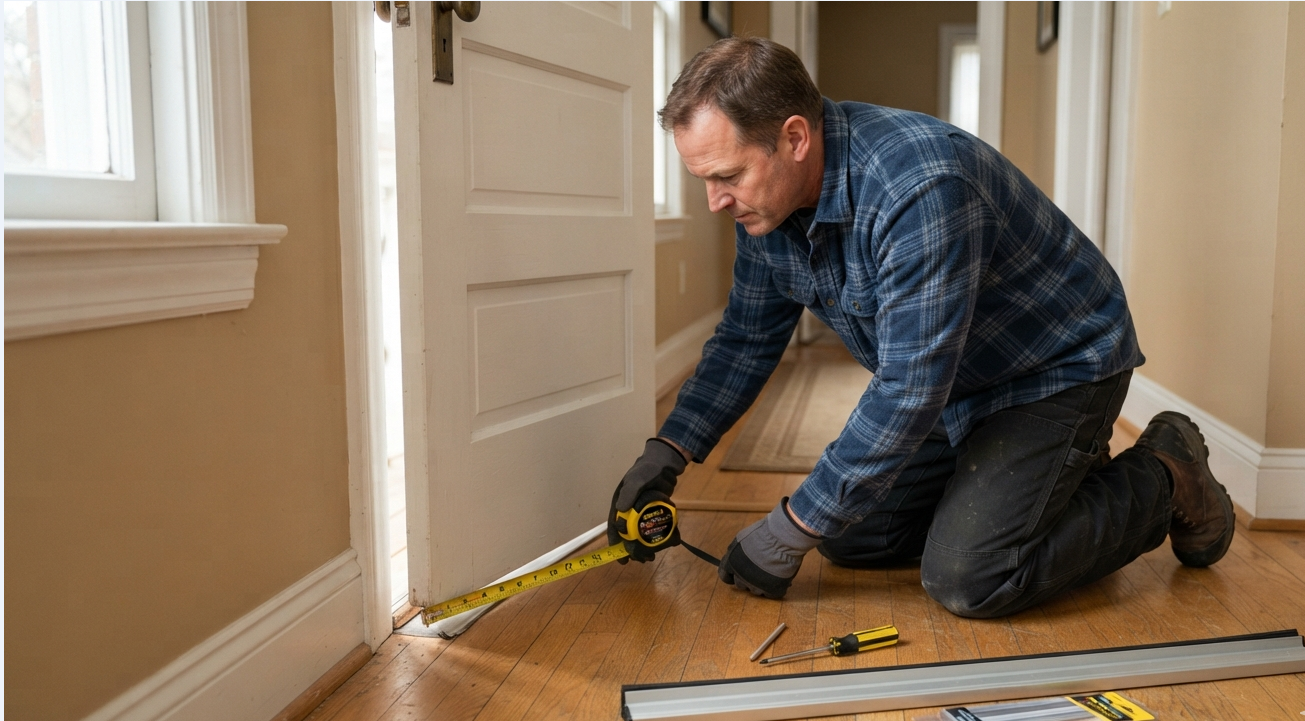
Start by measuring the gap under the closed door at both ends and in the middle. Floors are rarely perfectly level. A gap that changes across the width tells you whether a sweep can stay in contact or whether you need a seal that adjusts.
The floor surface matters next. Sweeps drag on carpet and rugs and wear quickly on rough tile, while automatic door bottoms seal best against a smooth floor or a flat threshold. On interior doors over carpet, an automatic door bottom avoids the constant friction a sweep would create.
Interior and exterior doors call for different priorities. An exterior door has to handle weather, so a sweep or door shoe that meets a threshold seal makes sense there. An interior door between a bedroom, office, or media room and the rest of the house usually needs sound control more than weather protection. That points to an automatic door bottom.
Door sweeps go on the side of the door it swings toward. If an exterior door opens into the house, the sweep mounts on the inside face. Set it so the fin touches the floor or threshold with light, even pressure, firm enough to seal but loose enough that the door opens without catching.
Length matters for every type. Seals that run short of the door edges leave openings at the corners, so measure the full width of the door. Heavy-duty door seals suit entry doors and high-traffic openings where lighter hardware wears out quickly.
Sealing a Door for Sound
A door blocks sound only when every edge is sealed. The bottom gap gets an automatic door bottom, while the sides and top of the frame need seals that close against the door when it shuts. Together they turn the door and frame into one closed barrier.
Sound Pro Solutions carries surface-mounted automatic door bottoms in lengths from 24 to 48 inches for wood, metal, and fiberglass doors. For the jambs and header, perimeter door seals close the remaining edges. The full range is in our door seals category, and offices, hotels, and other high-use buildings can find hardware sized for that traffic among our commercial door seals.
Door seals form one part of a larger sound isolation plan, which can also include the walls and ceiling around the door. If a slamming door bothers you more than sound passing through it, our guide on how to make doors quieter when closing covers that separate fix.
Recent posts


