
Commercial Door Seals
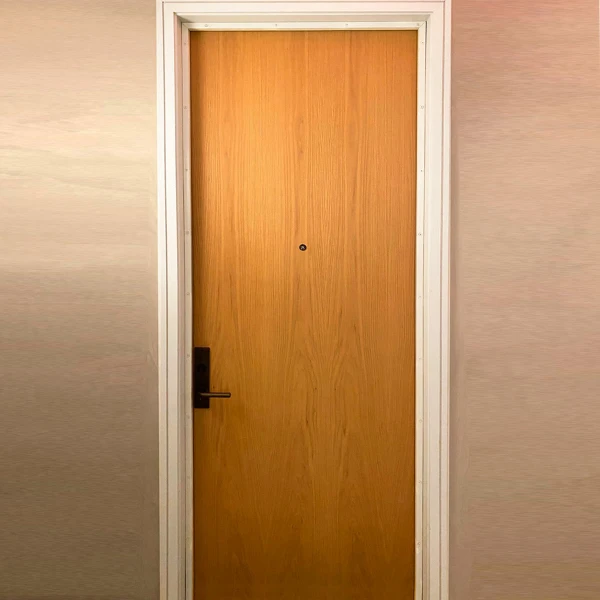
$125.00
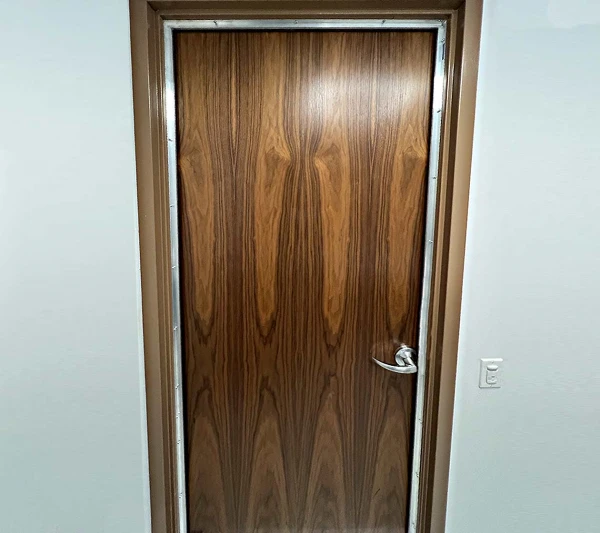
$49.00
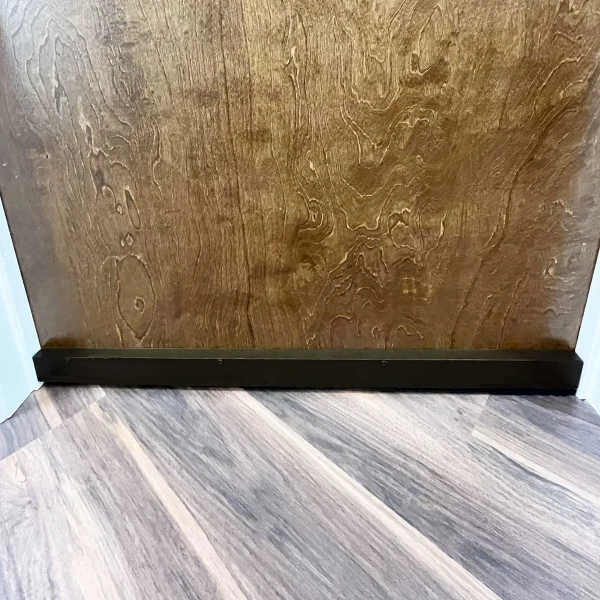
$149.00
A commercial door seal mounts to the frame or door face with screws and holds its compression insert in a rigid aluminum housing. That construction keeps sealing pressure through years of daily use, where self-adhesive foam and vinyl tape take a permanent set under load and lose contact with the door.
Sound Pro Solutions supplies three seals for commercial openings: a fixed perimeter profile from $49, an adjustable perimeter profile from $125, and an automatic door bottom from $149 in chrome. All three are made to order in fixed length increments, and ship-out speed is listed on each product page.
This category covers swing doors, specifically the perimeter gap along the jambs and head and the gap at the door bottom. Floor-mounted saddle thresholds, astragals for double doors, door shoes, and fire-rated intumescent products fall outside our range.
Why Commercial Doors Need Seals
The gap around a commercial door carries more sound than the door leaf. An air gap offers effectively no resistance to airborne noise, so a 1/8" opening along the jambs and a half-inch gap at the floor undo the isolation of a solid-core door and the partition it sits in. For a medical office, a counseling room, or an HR meeting space, that turns into a speech privacy problem rather than a comfort complaint.
Commercial openings also fail differently from residential ones. Hollow metal frames are rarely installed perfectly square, doors in buildings older than forty years have settled unevenly, and high-traffic entrances cycle hundreds of times daily. Adhesive foam tape flattens permanently under that load, releases in humid corridors, and ends up hanging off the frame within weeks of installation.
Retrofit economics favor sealing. A perimeter seal and door bottom cost a fraction of a replacement door assembly, can be installed with a drill on one opening at a time, and require no demolition, no repainting, and no removal of the space from service. A facilities team can work through a floor of offices between shifts.
Types of Commercial Door Seals
Selection starts with the edge that needs closing and the condition of the frame. The three products below cover the perimeter and the floor gap of a swing door.
Fixed Perimeter Seals
The L-Shape Door Seal mounts on the face of the frame along both jambs and the head, using an aluminum L-profile with a double neoprene rubber insert. Compression is set by housing position at installation and holds at that setting.
Profile dimensions are 0.75" wide by 1.25" high, with lengths from 24" through 120" and finishes in white, chrome, dark bronze, and black, from $49. This profile suits square frames with an even gap, which describes newer interior commercial doors and most repeated openings on a single floor plan.
Adjustable Perimeter Seals
The Heavy Duty Adjustable Door Seal adds slotted mounting to the same principle. The slots let you move the housing toward or away from the door leaf after the screws are in, allowing you to set compression separately at each point along the frame.
Lengths run from 24" to 96" in white, chrome, and black, from $125. Two field conditions make this the safer specification on commercial work: hollow metal frames that sit out of square, and doors that have settled in the opening over decades of building movement. Full specifications are listed under Heavy Duty Door Seals.
Automatic Door Bottoms
The Automatic Door Bottom Seal closes the floor gap when the door is shut and lifts clear when the door opens. A plunger contacts the strike jamb as the door closes, driving the seal insert down; opening the door retracts it.
The unit surface-mounts to the door face, measures 2" tall by 1" deep, and comes in lengths from 24" to 48" with white, chrome, gold, dark bronze, and black finishes, starting at $149. Retraction is what makes it workable in commercial traffic, since a fixed sweep, dragged across carpet several hundred times a day, wears both the sweep and the flooring.
Sealing a Complete Opening
A door has four edges. Perimeter hardware covers three of them, and the floor gap needs its own product.
Sealing the jambs and head while leaving a half-inch opening at the floor produces a result close to no seal at all, because the remaining gap carries the sound that the sealed edges no longer do. Budget the perimeter seal and the automatic door bottom together on every opening where isolation or privacy is the reason for the work.
One complete opening, therefore, takes two line items: a perimeter length equal to twice the frame height plus the door width, and one door bottom at the door width.
Specifying Seals Across Multiple Openings
Multi-opening projects need a schedule before an order. List each opening with its door width, frame leg height, frame material, and gap readings, then group openings that share dimensions.
Finish consistency is worth settling at the schedule stage. Chrome, black, and white run across all three products, while dark bronze appears on the L-shape profile and the door bottom, so a project standardizing on dark bronze needs the adjustable profile specified in a different finish or substituted with the fixed profile where frames allow.
All three seals are made to order in fixed length increments. Ship-out speed is listed on each product page and varies by item, so confirm it for the specific lengths and finishes in your schedule. Send the opening schedule to our team, and we will check lengths, finishes, and quantities with you before you place the order.
Materials and Construction of Commercial Door Seals
Three elements separate commercial hardware from consumer weatherstripping: the housing, the insert, and the fastening method. Each is covered below.
What Makes a Door Seal Commercial-Grade
Four construction features define the class:
- An extruded aluminum housing that holds the insert straight along the full length of the frame leg
- A dense elastomeric insert that recovers its shape after each compression cycle
- Screw mounting into the frame or door face, with hardware supplied
- Compression that can be re-set later instead of requiring a replacement purchase
Consumer weatherstripping meets none of these. Foam and hollow vinyl tape rely on adhesive, take a permanent set under load, and offer no way to restore the fit once compression is gone.
Extruded Aluminum Housings
Both perimeter seals and the door bottom are built on extruded aluminum. The rigid profile maintains uniform compression from the head of the frame to the floor, so pressure does not vary with how well the material lies against the surface.
Aluminum holds up in humid corridors, stairwells, and exterior openings without warping or corroding. Finish options let the hardware match existing door furniture, and a finished profile on a hollow metal frame reads as part of the opening.
Double Neoprene Seal Inserts
Both perimeter profiles carry a double neoprene rubber insert. The two-part shape recovers after compression and stays flexible across temperature swings, where lower-grade materials harden in cold and take a set in heat.
Neoprene resists ozone, oils, and general weathering, keeping the same insert serviceable on an exterior entrance and an interior conference room door. The automatic door bottom uses a resilient insert engineered for the vertical drop-and-retract motion rather than lateral compression.
Surface-Mount Retrofit on Hollow Metal and Wood Frames
All three seals attach to the existing frame or door with screws, and mounting hardware ships in the box. No routing, no kerf cutting, and no door replacement, so the finished opening is sealed without disturbing the casing, hinges, or hardware.
Installation works on hollow metal, wood, and fiberglass alike. Tools needed: a tape measure, a drill or screwdriver, and a saw for any trimming. Because nothing is glued, the hardware can be removed, repositioned, or readjusted years later when the building settles or the frame is refinished.
Compression Adjustment for Out-of-Square Frames
Slotted mounting on the adjustable profile lets the housing shift perpendicular to the door face after installation. Loosening the screws, moving the profile, and re-tightening the screws change how firmly the neoprene meets the leaf at that point.
Hollow metal frames make this useful more often than not. A frame installed a sixteenth out of plumb leaves either a section with no contact or a section compressed hard enough to fight the latch, and adjustment resolves both without shimming the frame or planing the door.
Made-to-Order Lengths and Finishes
All three seals are produced to order in fixed length increments. Fixed perimeter profiles run 24" to 120", adjustable profiles run 24" to 96", and automatic door bottoms run 24" to 48" in 2" steps.
Measure the door width for the head section and the door bottom, and each frame leg for the side pieces. Order the next increment up when a dimension falls between sizes: aluminum housings are trimmed on-site with a hacksaw or miter saw, and a short piece cannot be extended.
Finish availability differs by product. The fixed profile comes in white, chrome, dark bronze, and black; the adjustable profile in white, chrome, and black; the automatic door bottom in white, chrome, gold, dark bronze, and black. Chrome is the base finish on the door bottom, and the other four carry a higher price at the same length.
Professional Applications for Commercial Door Seals
The settings below account for most commercial installations and indicate which combination fits each.
Offices and Conference Rooms
Speech privacy drives most workplace orders, and the difference registers at the first meeting after installation. Hollow metal frames point toward the adjustable perimeter profile, and conference rooms that handle confidential discussions warrant the door bottom as well.
Hotels and Multifamily Buildings
Corridor conversation, elevator noise, and light spilling around guest room doors all trace back to unsealed gaps. Perimeter seals with automatic bottoms improve sleep quality without replacing doors, which matters in older properties where original doors stay for architectural or budget reasons. Work proceeds room by room as units turn over.
Healthcare Facilities
Treatment rooms, consultation offices, and counseling spaces need doors that hold a conversation inside. The same hardware limits dust and air movement between clinical and non-clinical zones, and the retracting door bottom makes it effortless for staff to move equipment through doorways.
Schools and Universities
Classrooms, lecture halls, and testing areas suffer from corridor noise during passing periods and from sound transfer between adjacent rooms. Perimeter seals on classroom doors reduce both, and screw-mounted hardware survives student traffic in a way that adhesive products never do.
Recording and Broadcast Facilities
The studio door bears the room's isolation burden. A perimeter seal paired with an automatic door bottom is the baseline treatment, and partial sealing produces partial results. Wall and ceiling treatment shapes the sound inside the room; the door hardware controls what crosses its boundary.
High-Traffic Entrances
Doors cycling hundreds of times a day destroy adhesive weatherstripping in weeks. Screw-mounted aluminum handles the load, and when compression eventually needs attention, the adjustable profile restores the fit without a replacement order.
Advantages of Commercial Door Seals
Compared with consumer weatherstripping and door replacement, this hardware occupies a practical middle ground: a permanent upgrade with retrofit effort and cost.
Cycle Life That Matches Commercial Traffic
Neoprene inserts, held in rigid housings, maintain sealing pressure through years of daily use. Tape delivers one season and pulls the finish off the frame when it comes away, which turns into a recurring maintenance line rather than a one-time purchase.
Retrofit in Occupied Buildings
Each opening is sealed independently with a drill and the included hardware. No demolition, no dust containment, no relocating staff or guests, and a corridor of offices can be completed without a carpenter.
Re-Adjustment Instead of Replacement
A fit that drifts as the building settles or humidity swells, the door gets reset with a screwdriver. Over a portfolio of doors, that difference shows up directly in the maintenance budget.
Sound, Air, Light, and Dust in One Line Item
Closing the gap addresses every leak through it. The seal that blocks conversation also stops drafts, keeps conditioned air inside, shuts out corridor light, and keeps dust and odors from migrating between spaces, which lowers HVAC load as a side effect.
Integration With the Isolation Package
Door seals work alongside the rest of the isolation range: Green Glue and mass loaded vinyl add mass and damping to the partition, isolation clips decouple the framing, acoustical sealant closes construction gaps, and the door hardware closes the operable opening. Specifying the door and wall as a single assembly produces an audible result.
Sound Pro Solutions Coverage Areas
Sound Pro Solutions supplies commercial door seals nationwide from its facility in Long Island City, New York, with local options for the NYC metro area.
New York City and the Tri-State Area
Customers in Manhattan, Brooklyn, Queens, the Bronx, Staten Island, and the surrounding tri-state region qualify for free pickup and delivery on orders over $150 in NYC. For multi-opening projects, our team can review the doors on-site and develop a schedule of lengths, profiles, and finishes with you. We supply the hardware and the specification guidance; installation is handled by your facilities team or contractor.
Nationwide Shipping
Orders ship via FedEx throughout the continental United States, and every package is insured for the full order value with insurance included in the shipping cost. All three seals are produced to order, and ship-out speed is listed on each product page.
Consultations by phone or email cover gap measurement, profile selection, finish matching, and opening schedules for projects outside the local area.
If a shipment arrives damaged, notify us by email within 5 days with photographs. We handle the FedEx claim and arrange a replacement at no cost once the insurance review is complete.
FAQs
Frequently Asked Questions. Here are some common questions about Acoustic panels.
/01What makes a door seal commercial-grade?
Construction defines the class: an extruded aluminum housing, a dense neoprene insert, screw mounting, and compression that can be readjusted. Consumer weatherstripping relies on adhesive and takes a permanent set within months of daily use.
/01Do I need an automatic door bottom as well as a perimeter seal?
Yes, on any opening where sound or privacy is the reason for the work. Perimeter hardware covers the jambs and head, leaving the floor gap open, and that gap is usually the largest opening around the door.
/01Will these seals work on hollow metal frames?
Yes. All three products surface-mount with screws on hollow metal, wood, and fiberglass. The adjustable perimeter profile is the better choice for hollow metal frames, since those frames are rarely installed perfectly square.
/01How do I calculate lengths for several doors?
For each opening, perimeter length equals twice the frame leg height plus the door width, and the door bottom equals the door width. Round each figure up to the next available increment, then group openings that share dimensions.
/01Will a seal make the door harder to operate in a high-traffic entrance?
Not when set correctly. The adjustable profile lets you back off compression until the door latches normally while the neoprene still makes contact, and the automatic door bottom drops its seal only after the door has closed.