
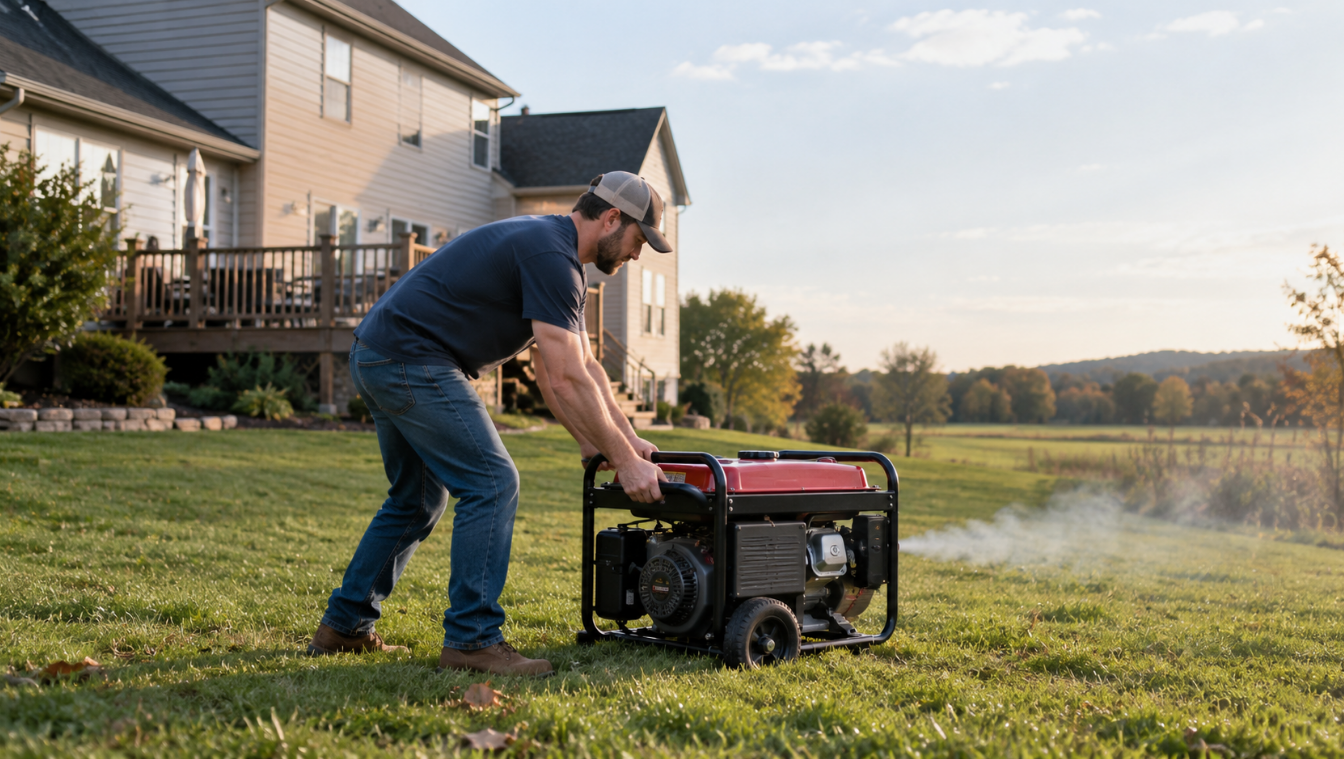
To reduce generator noise, move the generator farther from people and point the exhaust away from them. Then set it on a soft surface or anti-vibration pads, and block the line of sight with a solid barrier or a ventilated enclosure. These steps work for portable, inverter, and home standby generators alike.
Every method has one limit. Nothing you add should restrict the airflow a generator needs for cooling or trap its exhaust, because carbon monoxide and overheating are far bigger risks than noise.
Why Are Generators So Loud?
A generator makes noise from several sources at once, and each one needs a different fix:
- The engine itself, where every combustion stroke sends out a pressure pulse
- The exhaust, which releases those pulses through a small muffler
- The cooling fan, which pushes a large volume of air across the engine and alternator
- Vibration, which travels through the frame into whatever surface the generator sits on
Engine speed explains much of the difference between models. A conventional portable generator holds a fixed engine speed to keep its output at 60 hertz. It runs just as loud powering one lamp as it does powering a refrigerator. An inverter generator converts its power electronically, which lets the engine slow down when the load is light.
Low-frequency rumble causes the most complaints from neighbors. Long sound waves travel farther, bend around obstacles, and need heavier materials to block. That's why a thin fence barely changes what the house next door hears.
Carbon Monoxide, Heat, and Airflow
Any attempt to quiet a generator has to keep its air supply and exhaust path completely open. A generator burns fuel, and its exhaust contains carbon monoxide, a gas you can't see or smell.
The U.S. Consumer Product Safety Commission advises running portable generators outside only, at least 20 feet from the house. The exhaust should point away from the home and any other building people might enter. Its guidance also warns never to run one inside a home, garage, basement, crawlspace, or shed, since open doors and windows don't provide enough ventilation. A battery-operated carbon monoxide alarm, or one with battery backup, belongs on every level of the home.
Heat brings the second risk. A generator in a tight box or behind a wall with no air gap can overheat and shut down or damage itself. Foam, plastic, and other flammable materials should stay well away from the muffler and exhaust outlet.
How to Quiet a Generator for Free or Almost Free
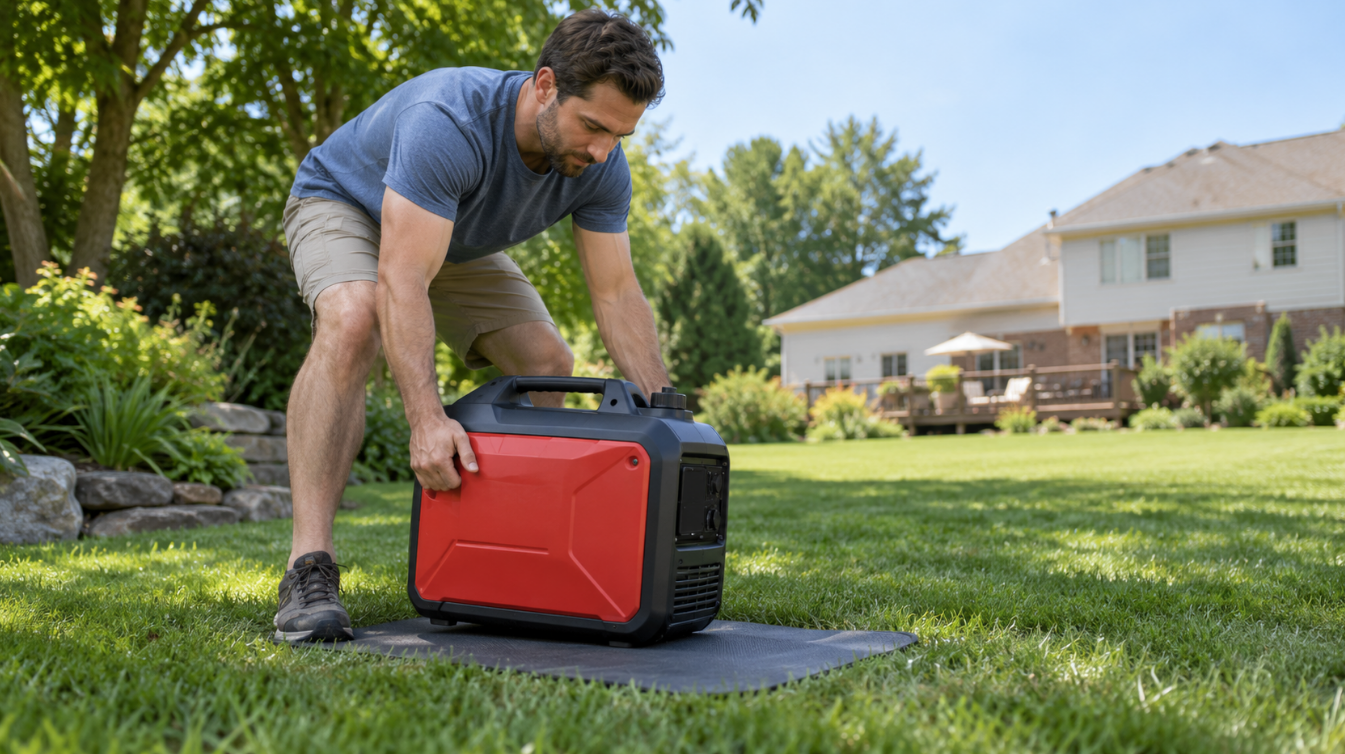
The cheapest ways to quiet a generator change where and how it runs. Try these first, since together they often solve the problem without building anything.
Move It Farther Away
Distance costs nothing and works every time. In open air, sound drops by about 6 decibels each time you double the distance from the source. A generator moved from 20 to 40 feet away sounds noticeably quieter. Walls, fences, and other reflecting surfaces nearby reduce that effect, so the result in a cramped side yard will be smaller than in an open field.
Point the Exhaust Away From People
Most generators sound loudest on the exhaust side. Turning the unit so the exhaust and engine face away from your house, your neighbor's windows, and your campsite sends the strongest noise toward open space. This also follows the federal safety advice to aim exhaust away from occupied buildings.
Put It on a Soft Surface or Anti-Vibration Pads
A generator sitting on concrete, a metal trailer, or a wooden platform passes its vibration into that surface, and the surface radiates it as extra low-frequency noise. Grass or packed soil absorbs part of that vibration on its own.
Rubber anti-vibration pads under the feet or frame go further, and spring isolators do the same job for larger units. The pads need to be firm enough to keep the generator stable and level, because a soft pad that compresses unevenly can let the unit rock.
Run It in Eco Mode
Many inverter generators have an eco or economy mode that drops engine speed when the load is light. Turn it on and avoid running more appliances than you need at once, and the engine will spend more time at a lower, quieter speed. Conventional generators don't have this option, since their engine speed stays fixed.
Mufflers, Silencers, and Exhaust Extensions
Exhaust noise can often be reduced with a better muffler. Aftermarket generator mufflers and silencers exist for many popular portable models, and some owners adapt automotive mufflers to their units.
That kind of modification carries real trade-offs. An oversized or poorly matched muffler can change backpressure and engine temperature, and any change to the exhaust may void the manufacturer's warranty. Check the generator's manual before buying anything.
Keep the spark arrester in place. National forests and many state and local lands require internal combustion engines, generators included, to carry an approved spark arrester, and a homemade muffler often lacks one. Exhaust extension pipes can help direct noise away from people. Every joint has to stay sealed, and the outlet must still point away from buildings.
Build a Sound Barrier Wall
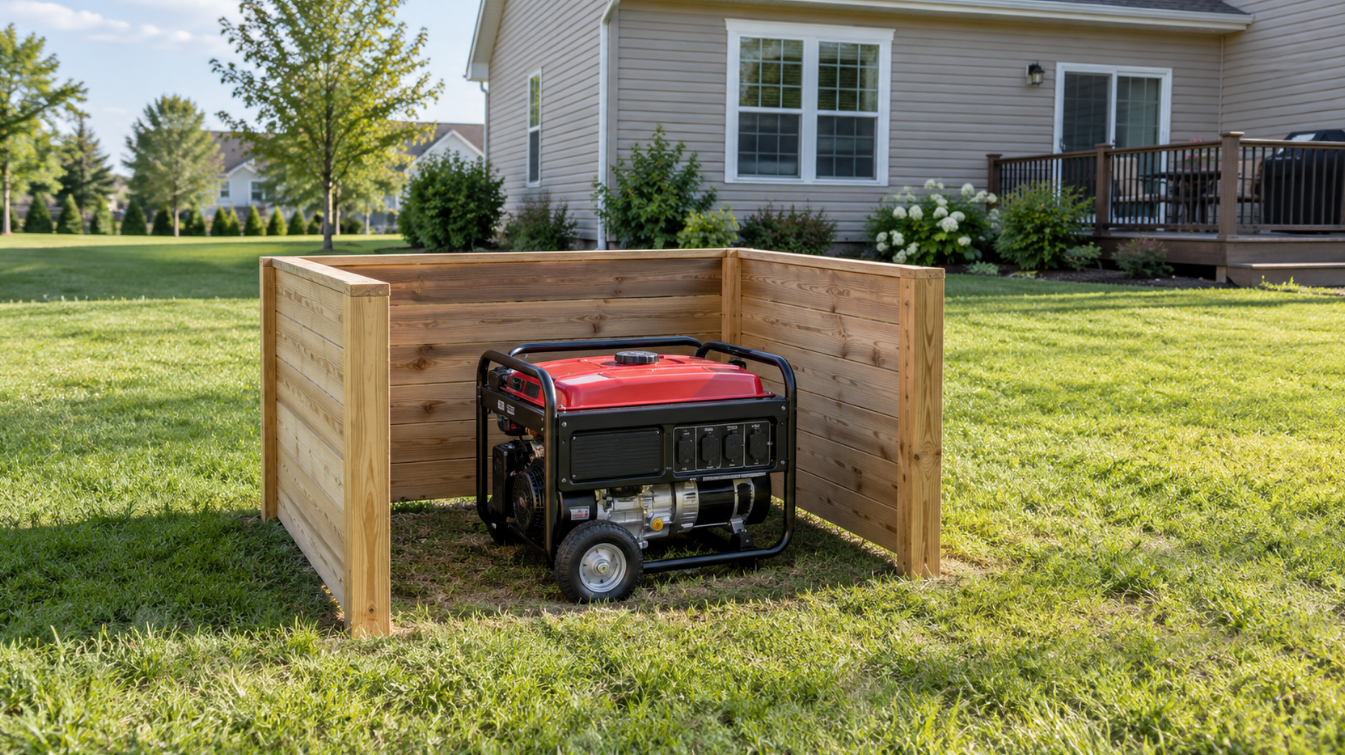
A barrier reduces generator noise only when it blocks the straight line between the generator and the listener. If you can see the generator from your window over or around the barrier, most of the sound reaches you too.
An effective barrier is solid, heavy, and free of gaps. Plywood, fence boards installed without spaces, or masonry all work better than lattice or a stretched tarp. It should stand taller than the generator and extend past its sides.
A three-sided barrier with the open side facing away from people works well for portable units. Leave a generous air gap between the generator and the walls so it can breathe. If you line the inside face with sound-absorbing material, use products made for outdoor use. Existing structures can act as a barrier too, so placing the generator behind a detached garage or the corner of the house costs nothing.
How to Build a Soundproof Box for a Generator
A soundproof box, often called a quiet box, surrounds the generator with heavy walls while giving it a controlled path for air and exhaust. It can cut noise more than any other DIY method, and it carries the most risk if built wrong.
Keep in mind that a box differs from a shed. Federal safety guidance warns against running a generator inside a shed, and a box that traps exhaust or heat creates the same danger. The enclosure still sits outdoors, at least 20 feet from the house.
What a Generator Enclosure Needs
A working generator enclosure combines four elements:
- Mass in the walls, such as a double layer of plywood or MDF with tight joints
- Sealed seams and edges, since a small gap lets a large share of the sound escape
- Sound-absorbing material on the inside walls to stop sound from building up inside the box
- Dedicated openings for intake air, cooling air, and exhaust
Use exterior-grade materials, because the box lives outside in rain and sun. Keep every absorbing layer well clear of the muffler, and make the lid or one side removable for refueling, oil changes, and pulling the starter cord.
Ventilation Baffles and Heat Control
The air openings are where most homemade boxes fail. A straight hole lets noise out as easily as it lets air in. Builders route intake and outlet air through baffled channels that turn one or two corners before reaching the outside. Sound loses energy at each turn and against the absorbing lining, while air still flows.
Size the openings generously and test before trusting the box. Run the generator under a typical load and check the temperature inside after half an hour. If the box feels hot or the engine labors, the vents are too small.
Ready-Made Enclosures
Manufactured generator enclosures and quiet boxes are sold for many portable models. Before buying one, confirm it fits your generator's dimensions and exhaust position, and check whether the generator manufacturer allows it, since some warranties exclude enclosed operation.
Generator Noise Reduction Methods Compared
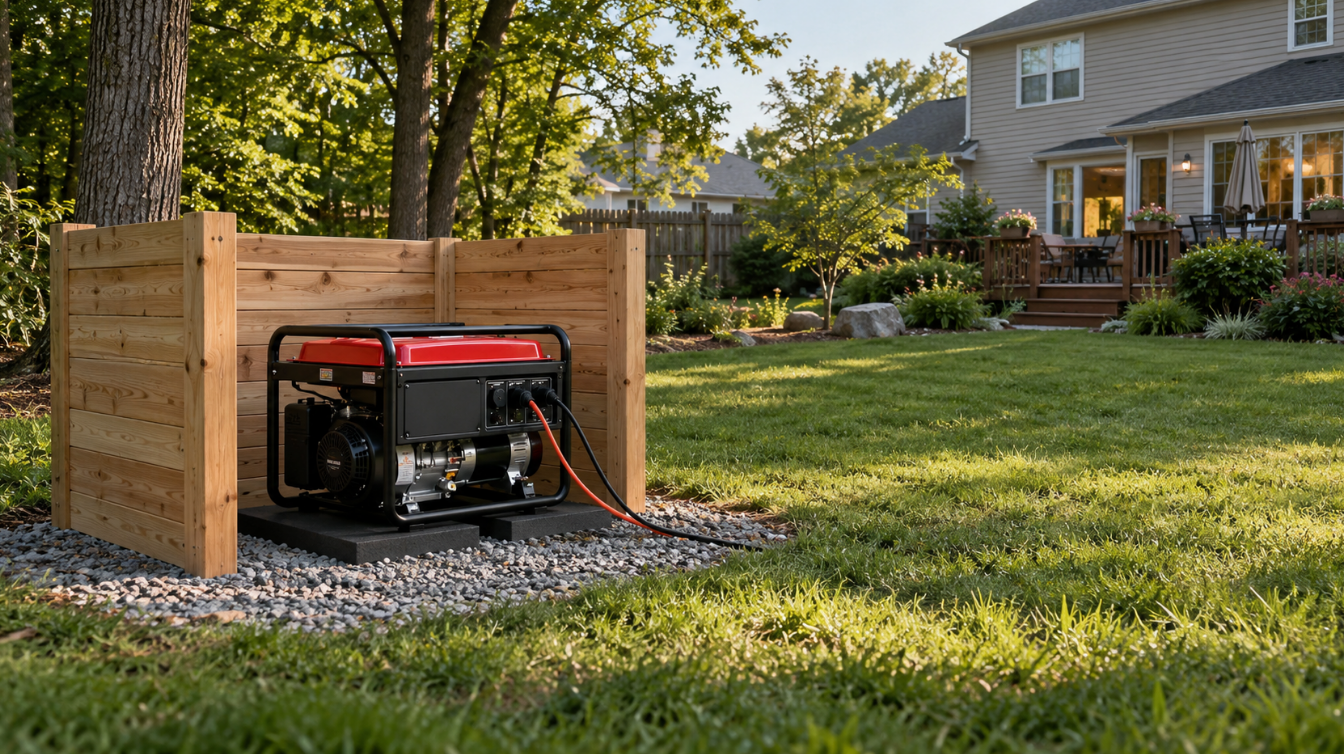
The methods in this guide differ in cost, effect, and risk. Free changes in placement and setup come first, while barriers and enclosures make sense once those are done and the generator is still too loud.
Combining methods gives the biggest result. Picture a generator placed far from the house, with its exhaust turned away, sitting on rubber pads behind a three-sided barrier. It will sound far quieter than one that relies on a single fix.
|
Method |
Cost |
Noise reduction |
Best for |
Safety note |
|
Moving it farther away |
Free |
About 6 dB per doubling of distance in open air |
All portable generators |
Keep at least 20 feet from the house |
|
Pointing the exhaust away |
Free |
Lower noise on the facing side |
Portable generators |
Never aim exhaust at windows or doors |
|
Soft surface or anti-vibration pads |
Low |
Less low-frequency rumble |
Portable units on concrete, platforms, trailers |
Keep the unit stable and level |
|
Eco mode |
Free |
Lower noise at light loads |
Inverter generators |
None |
|
Aftermarket muffler |
Low to medium |
Depends on the design |
Portable generators |
Keep the spark arrester; check the warranty |
|
Sound barrier wall |
Medium |
Large when it blocks the line of sight |
Portable and standby generators |
Leave an air gap for cooling |
|
Ventilated enclosure |
Medium to high |
The largest of the DIY options |
Portable generators |
Heat buildup and exhaust must be controlled |
Quieting a Standby Generator or a Generator Room
Permanently installed generators follow different rules from portable units. Placement, clearances, and enclosures are set by the manufacturer and local codes, so the options focus on location, housing, and the building around them.
Home Standby Generators
Location decides most of a standby generator's noise impact. The installer has to follow the manufacturer's clearance requirements and local code. Within those limits, a spot away from bedrooms and from the neighbor's side of the property makes a real difference.
Many manufacturers offer sound-attenuated housings for their standby models. A barrier wall can add more reduction if it leaves the required clearances for airflow and service. Many home standby units also run a short automatic exercise cycle, so check whether yours lets you move it to midday, when fewer people are home.
Generator Rooms Inside Buildings
Commercial and multifamily buildings often house their generator in a dedicated room. Keeping that noise out of the rest of the building calls for sound isolation, which works through mass, decoupling, and airtight seals.
In practice, that means walls with added mass, such as a layer of mass-loaded vinyl, and a ceiling decoupled from the structure above with isolation clips. Doors need door seals on every edge, and each spot where pipes and conduits pass through gets closed with acoustical sealant.
Sound-absorbing panels on the walls inside the room lower the noise level within it, though they won't stop sound from passing into adjacent spaces on their own. The large air openings that every generator room needs usually get sound attenuators, and an acoustical consultant should size them so cooling airflow stays within the manufacturer's limits.
Camping, RVs, and Choosing a Quieter Generator
At a campground, distance from neighbors and the park's quiet hours set the limits. Park the generator on the side of your site away from other campers, turn the exhaust toward open ground, and set it on grass or a rubber mat. A short three-sided baffle helps, as long as it leaves plenty of room for air.
If you're replacing a generator, an inverter model usually runs quieter at light loads than a conventional one of similar output. Compare published noise ratings carefully, since manufacturers don't all measure at the same distance or load, and a rating taken farther away will look lower.
Recent posts


