
Perimeter Door Seals
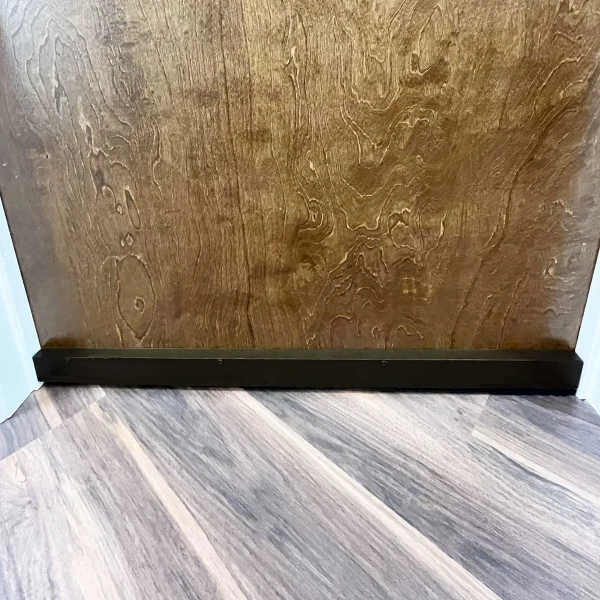
$149.00
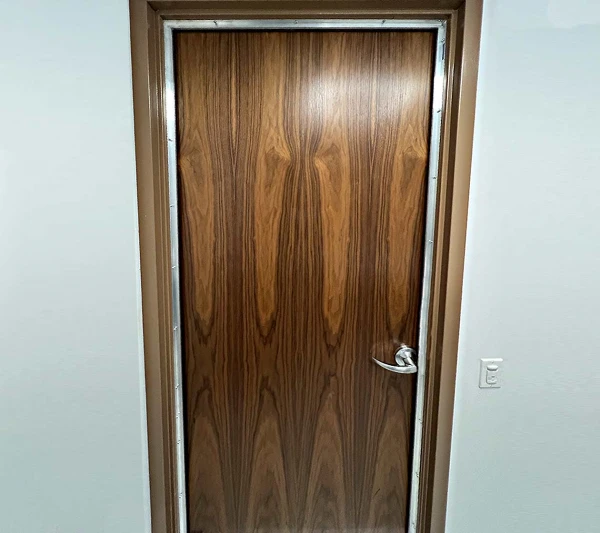
$49.00
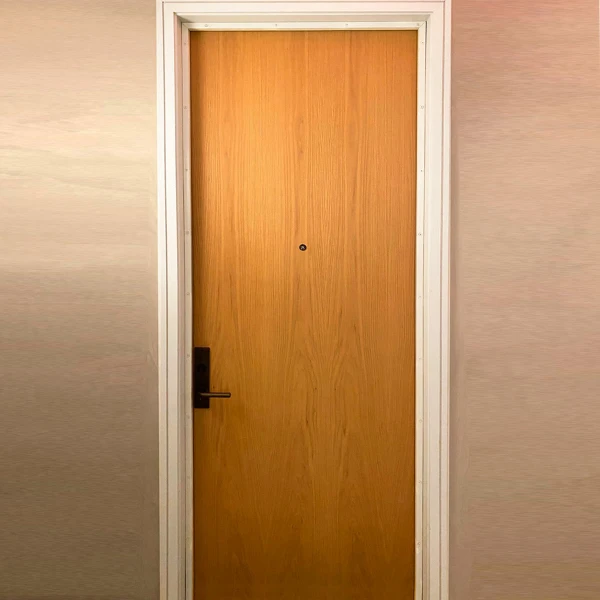
$125.00
A perimeter door seal closes the gap between the door leaf and the frame along both jambs and the head, using a rigid housing that holds a compression insert in position. Sound, drafts, light, dust, and odors all travel through that gap, and closing it changes what passes between a room and everything around it.
Sound Pro Solutions carries two perimeter seals built on extruded aluminum with neoprene inserts: a fixed L-shape profile and a heavy duty adjustable profile. Both surface-mount to the existing frame with screws, ship in made-to-order lengths, and leave the door and frame intact. The same hardware appears in commercial door specifications under other names, including perimeter gasketing, jamb seals, and head and jamb weatherstripping.
Why Spaces Need Perimeter Door Seals
The gap around a door carries more sound than the door itself. Airborne noise follows the path with the least resistance, and an air gap offers effectively none, so a 1/8" opening along the jambs undermines the isolation of a solid-core door and the wall it sits in. Conversations, corridor footsteps, and HVAC rumble reach the room through the frame perimeter regardless of what the door leaf is made of.
Self-adhesive weatherstripping fails at this job within a season. Foam and hollow vinyl tape compress permanently under daily door pressure and never recover their original thickness; the adhesive releases in humid conditions, and the gap it covered reopens. Screw-mounted hardware in a rigid housing keeps its position and its compression through years of cycles, and it can be re-tuned instead of replaced.
Sealing three edges leaves the fourth open. The gap between the door bottom and the floor is usually the largest opening around a door, often half an inch or more, and sound passing through it erases most of what the perimeter seal accomplished. Plan a perimeter seal and an automatic door bottom together on any door where isolation matters.
Types of Perimeter Door Seals
Both products mount the same way and use the same materials. They differ in how compression against the door leaf is set.
Fixed Perimeter Seals (L-Shape)
The L-Shape Door Seal uses an aluminum L-profile with a double neoprene rubber insert, mounted on the face of the frame along the jambs and head. Compression is determined at installation by the housing's position and remains at that setting.
Profile dimensions are 24" x 0.75" x 1.25", with a weight of 0.6 lbs per 24" section, making mounting simple on wood, metal, and fiberglass frames alike. Lengths run from 24" through 120" in nine increments, with white, chrome, dark bronze, and black finishes.
This is the right choice for a square frame and a door that closes evenly, which describes most residential openings and newer interior commercial doors.
Adjustable Perimeter Seals
The Heavy Duty Adjustable Door Seal adds slotted mounting to the same surface-mount principle. The slots let you shift the housing toward or away from the door leaf after the screws are in, setting compression point by point along the height of the frame.
Lengths run from 24" to 96" in white, chrome, and black. The adjustment solves two field conditions that a fixed profile cannot: frames that sit slightly out of square, and older doors that have settled unevenly in the opening.
How to Choose Between Fixed and Adjustable
Measure the gap between the door leaf and the frame at five points before deciding: top corner on the hinge side, top corner on the strike side, midpoint of each jamb, and the head. Record each reading.
A spread under 1/16" across those five points means the opening is close enough to square for a fixed L-shape profile. A spread wider than that leaves either a section with no contact or a section compressed hard enough to fight the latch, and the adjustable profile handles it.
Three conditions push toward the adjustable seal regardless of measurement:
- Buildings older than roughly forty years, where settlement has moved frames out of plumb
- Hollow metal commercial frames, which are rarely installed perfectly square
- Doors cycling hundreds of times a day, where compression will need a tune-up eventually
Pairing a Perimeter Seal With a Door Bottom
A complete seal covers four edges, and the perimeter hardware covers three of them. The floor gap needs separate hardware, since no jamb-mounted profile reaches it.
The Automatic Door Bottom Seal closes that gap only while the door is shut. A plunger contacts the strike jamb as the door closes, driving the seal insert down against the floor; opening the door retracts it, so nothing drags on the carpet or hardwood. Both product families are listed together under Door Seals.
Materials and Construction of Perimeter Door Seals
The housing holds the geometry and pressure; the insert does the sealing; and the fastening method determines whether the installation remains serviceable. Each element is covered below.
Extruded Aluminum Housings
Both seals are built on extruded aluminum. The rigid profile keeps the insert straight along the full length of the frame leg, so compression remains even from the head to the floor rather than varying with how well the material lies.
Aluminum tolerates humidity without warping or corroding, which matters on exterior doors and in bathrooms, kitchens, and basements. The finished profile also reads as architectural hardware on the frame rather than as a repair.
Double Neoprene Seal Inserts
The insert on both products is a double neoprene rubber profile. The two-part shape recovers after each compression cycle and stays flexible across temperature swings, where cheaper materials harden in cold weather and take a permanent set in heat.
Neoprene resists ozone, oils, and general weathering, so the same insert works on an entry door exposed to weather and on an interior studio door that never sees sunlight.
Surface-Mount, Screw-In Installation
Both seals attach to the face of the existing frame with screws, and mounting hardware ships in the box. No routing, no kerf cutting, and no door replacement, which means a finished opening can be sealed without touching the casing or the door leaf.
Removal works the same way in reverse. Nothing is glued, so the hardware comes off, moves, or gets re-adjusted years later if the building settles or the frame is repainted. Tools needed: a tape measure, a drill or screwdriver, and a saw if any trimming is required.
Compression Adjustment
Slotted mounting on the adjustable seal lets the housing move perpendicular to the door face after installation. Loosening the screws, shifting the profile, and re-tightening changes how firmly the neoprene meets the leaf at that point on the frame.
That matters over time. A door that latched perfectly in March can drag by August as humidity swells the leaf, and a building that settles moves the frame with it. Adjustment restores the fit without a replacement purchase, and it lets a single seal serve a frame whose gap varies from top to bottom.
Finishes and Profile Dimensions
Finish selection differs between the two products. The L-shape profile comes in white, chrome, dark bronze, and black; the adjustable profile comes in white, chrome, and black.
The L-shape profile measures 0.75" wide by 1.25" high, small enough to sit on a standard frame face without crowding the stop or interfering with hinges and strike plates. Frames with unusual trim or applied molding may need the profile checked for clearance against the stop before ordering.
Made-to-Order Lengths
Both seals are produced to order in fixed length increments. Fixed profiles run 24" to 120", and adjustable profiles run 24" to 96".
Measure the door width for the head section and the frame height for each leg before ordering. Order the next increment up when a dimension falls between sizes: aluminum housings trim down on site with a hacksaw or miter saw, and a short piece cannot be extended.
Professional Applications for Perimeter Door Seals
Perimeter seals appear wherever a door has to deliver quiet, privacy, or climate separation. The settings below account for most installations and indicate which profile suits each.
Recording Studios and Podcast Rooms
The studio door carries the isolation burden of the whole room, and unsealed jambs let street traffic, household activity, and building mechanical noise into takes. Wall panels and bass traps shape what happens inside the room; the perimeter seal controls what crosses its boundary. Pair it with an automatic door bottom, since partial sealing produces partial results.
Offices and Conference Rooms
Speech privacy drives most workplace orders. A sealed meeting room door keeps confidential conversation inside and open-plan noise outside, and the difference is audible from the first meeting after installation. Hollow metal commercial frames make the adjustable profile the safer specification here, since they rarely sit perfectly square.
Hotels and Multifamily Buildings
Corridor conversation, elevator noise, and light spilling under and around guest room doors all trace back to unsealed gaps. Retrofitting perimeter seals improves sleep quality without replacing doors, which matters in older buildings where original doors stay for architectural or budget reasons. A facilities team can work through a corridor of rooms with a drill and a ladder.
Healthcare and Education
Treatment rooms, counseling offices, classrooms, and testing areas need doors that keep conversation inside and corridor activity out. Sealed jambs reduce transfer between rooms and hallways, and the same hardware limits dust movement between clinical and non-clinical zones.
Residential Entry and Interior Doors
On entry doors, the perimeter gap admits winter drafts, summer heat, insects, and street noise, and sealing it lowers HVAC load and the noise floor. On interior doors, the same hardware separates a home office from a living room or a nursery from a kitchen, and the finish options let the installation match existing door hardware.
Advantages of Perimeter Door Seals
Compared with adhesive weatherstripping and heavier construction work, this hardware sits between the two: a permanent upgrade with a retrofit effort. The specific advantages follow.
Compression That Holds and Re-Adjusts
Neoprene inserts in rigid aluminum hold sealing pressure through years of daily cycles. On the adjustable profile, a fit that drifts can be reset with a screwdriver, while tape offers one season of service and pulls paint off the frame when it comes away.
Retrofit Without Replacing the Door or Frame
Both seals install on the opening you already have, on wood, metal, or fiberglass, with the included hardware. A homeowner finishes one door in an afternoon, and a contractor works through a floor of offices without a carpenter or a single door order.
Sound, Drafts, Light, and Dust in One Upgrade
Closing the perimeter gap addresses every leak through it. The seal that blocks conversation also stops winter drafts, keeps conditioned air inside, shuts out hallway light at night, and keeps dust and cooking odors where they started.
Finishes That Match Existing Door Hardware
Four finishes on the L-shape profile and three on the adjustable cover most standard door hardware palettes, so the seal reads as part of the opening. Chrome pairs with brushed and polished lever sets, dark bronze with oil-rubbed hardware, and white and black disappear against painted frames.
Part of a Complete Isolation System
Perimeter seals work alongside the rest of the isolation catalog: Green Glue and mass-loaded vinyl add mass and damping to the partition, acoustical sealant closes construction gaps, and the door hardware closes the operable opening. Treating the door and wall as a single assembly produces a result you can hear.
Sound Pro Solutions Coverage Areas
Sound Pro Solutions supplies perimeter door seals nationwide from its facility in Long Island City, New York, with local options for the NYC metro area.
New York City and the Tri-State Area
Customers in Manhattan, Brooklyn, Queens, the Bronx, Staten Island, and the surrounding tri-state region qualify for free pickup and delivery on orders over $150 in NYC. Local customers can schedule a consultation, and for larger projects, our team can review the openings on site to recommend lengths, profiles, and finishes. We supply the hardware and the specification guidance; installation is handled by you or your contractor.
Nationwide Shipping
Orders ship via FedEx throughout the continental United States, and every package is insured for the full order value with insurance included in the shipping cost. Both seals are produced to order, and ship-out speed is listed on each product page.
Consultations by phone or email cover gap measurement, profile selection, and finish matching for projects outside the local area.
FAQs
Frequently Asked Questions. Here are some common questions about Acoustic panels.
/01What is the difference between a perimeter door seal and weatherstripping?
Weatherstripping usually refers to soft self-adhesive foam or vinyl tape sold in rolls and replaced every season or two. Perimeter door seals are screw-mounted aluminum profiles with dense neoprene inserts, built to block sound and air, and to remain serviceable for years.
/01Should I choose the fixed or the adjustable profile?
Measure the gap at five points around the frame. A spread under 1/16" suits the fixed L-shape profile. Wider variation, an older building, or a hollow metal commercial frame indicates an adjustable profile, which lets you set compression separately along the frame.
/01Do I need a door bottom seal as well?
Yes, for any door that has to block sound. Perimeter hardware covers the jambs and head, leaving the floor gap open, and that gap is usually the largest opening around the door. An automatic door bottom closes it, completing the four-edge seal.
/01Will a perimeter seal make the door harder to close?
Not when set correctly. The adjustable profile lets you back the compression off until the door latches normally while the neoprene still makes contact. On the fixed profile, correct positioning at installation achieves the same result.
/01Can these seals be used on exterior doors?
Yes. Extruded aluminum resists corrosion, and the neoprene insert stays flexible through temperature and humidity swings, so both profiles work on entry doors as well as interior openings.