
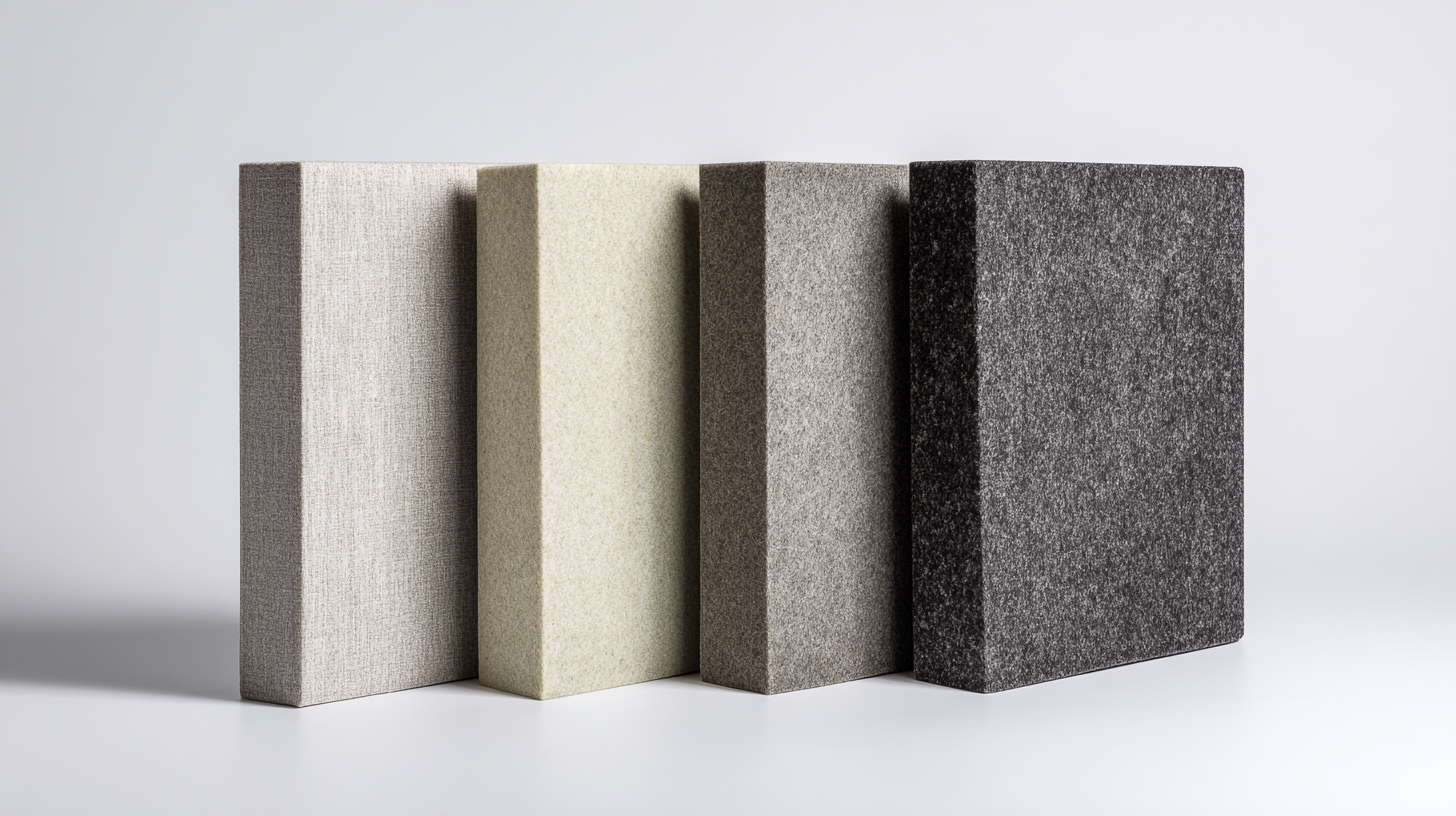
Acoustic panel thickness determines which frequencies the panel can absorb. A panel must be at least one-quarter of the wavelength of a target frequency to absorb it effectively, which means a 2-inch panel cannot absorb frequencies below approximately 500 Hz, regardless of material. The correct thickness depends on the lowest problem frequency in the room, not on room size or aesthetic preference.
Why Thickness Determines Which Frequencies a Panel Can Absorb
Sound absorption in porous materials depends on the relationship between panel thickness and the wavelength of the sound being treated. For a porous absorber to capture a sound wave, it must be thick enough to interact with a meaningful portion of that wave's physical length. The minimum effective thickness is approximately one-quarter of the target wavelength.
Sound wavelength is inversely proportional to frequency: lower frequencies produce longer wavelengths. At 100 Hz, the wavelength is approximately 11 feet. At 500 Hz, the wavelength is approximately 2.2 feet. At 1,000 Hz, the wavelength is approximately 1.1 feet.
Applying the quarter-wavelength rule: to absorb 1,000 Hz effectively, a panel needs to be at least 3.3 inches thick. To absorb 500 Hz, it needs at least 6.6 inches. A standard 2-inch wall panel reaches its effective lower boundary at approximately 500 Hz — it cannot meaningfully interact with the wavelengths produced by frequencies below that point.
A 2-inch panel's inability to absorb bass is not a material quality issue. Denser, higher-NRC material does not change the physical constraint. A 2-inch mineral wool panel cannot absorb 100 Hz any more than a 2-inch fiberglass panel can — the wavelength of 100 Hz is simply too long for either panel to capture at that thickness.
The practical consequence: a room treated exclusively with 2-inch wall panels may show reduced echo and improved voice clarity while retaining audible bass buildup. The panels are performing correctly within their frequency range. The remaining bass problem requires thicker material — specifically bass traps — not a replacement of the existing panels.
Acoustic Panel Thickness by Frequency Range
Each thickness of acoustic panel absorbs a defined frequency range. Thinner panels treat high and mid frequencies effectively; thicker panels extend absorption into lower mid and bass frequencies. The table below shows the effective lower frequency limit for each standard thickness in fabric-wrapped fiberglass and mineral wool panels.
|
Thickness |
Effective Down To (approx.) |
Frequencies Absorbed |
Primary Application |
|
~1,000 Hz |
High frequencies only |
Flutter echo reduction, bright rooms |
|
|
~500 Hz |
Mid and high frequencies |
Studios, offices, vocal booths, conference rooms |
|
|
~250 Hz |
Mid, high, and upper bass |
Home theaters, music rooms, drum rooms |
|
|
~125 Hz |
Low-mid and bass |
Bass-heavy rooms, rooms with subwoofers |
|
|
4–8 inch (bass traps) |
20–300 Hz |
Full bass range |
Corners only; low-frequency pressure zones |
The frequency boundaries in the table apply to fabric-wrapped fiberglass panels at standard Owens Corning 703/705 density and to mineral wool panels at 60–80 kg/m³. These are the two most widely used materials for professional acoustic treatment.
Acoustic foam panels reach the same approximate lower-frequency boundaries at equivalent thicknesses, but with lower NRC values at each frequency point. A 2-inch foam panel absorbs down to approximately 500 Hz — but at NRC 0.60–0.75 rather than the NRC 0.85–1.00 of fiberglass or mineral wool at the same thickness.
How Room Use Determines the Required Thickness
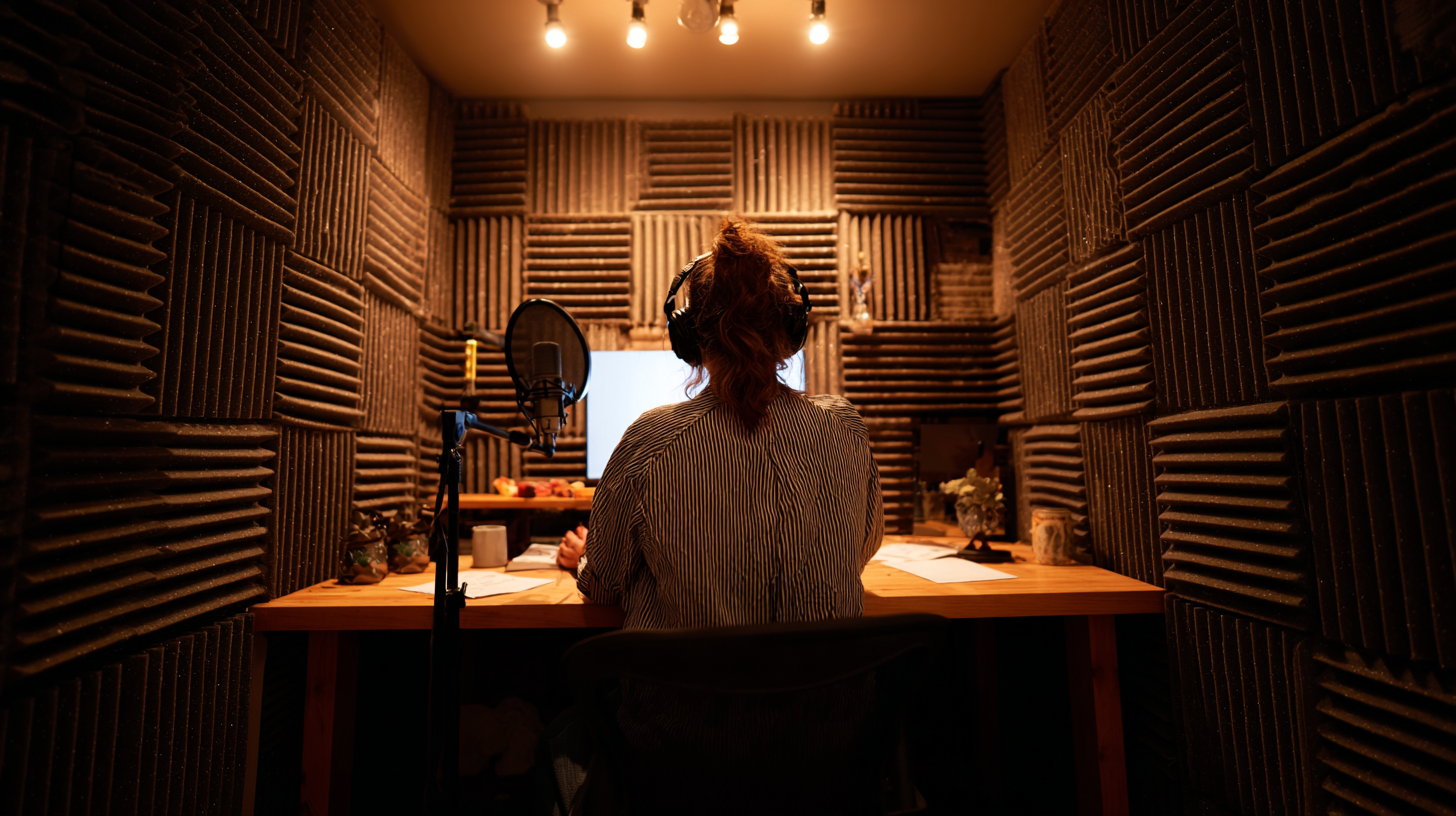
The required panel thickness is set by the lowest frequency that needs to be controlled in the space. Room use determines which frequencies are present at problematic levels — a podcast booth has a different frequency problem than a home theater with a subwoofer.
Podcast booth / vocal recording / video calls
The primary acoustic problems are flutter echo, high-frequency reflections, and loss of voice clarity. The lowest problematic frequency in these spaces is approximately 500 Hz — the lower boundary of speech intelligibility. Two-inch panels at the first reflection points on the side walls and ceiling provide sufficient treatment. Bass traps are not required unless a subwoofer or bass amp is present in the room.
Home studio / music production (without live drums)
The primary problems are mid-frequency buildup, proximity effect on vocals, and general muddiness in the low-mid range. The lowest problematic frequency extends to approximately 250–300 Hz. Two-inch panels at reflection points address the mid and high range. Four-inch bass traps in room corners are required to treat the 125–300 Hz range where buildup commonly occurs.
Home theater (with subwoofer)
A subwoofer produces frequencies as low as 20–80 Hz. The primary problems are bass boom at the listening position, standing waves across the room, and low-frequency pressure buildup. Three-inch to 4-inch wall panels treat the upper bass and midrange. Bass traps of 6–8 inches in room corners are required to address the 60–120 Hz range that subwoofers operate in.
Live recording room / drum room
A drum kit produces broadband energy from approximately 50 Hz (kick drum fundamental) through 10,000 Hz (cymbal transients). The lowest problematic frequency is 80 Hz or below. Four-inch wall panels are required for all primary reflection surfaces. Floor-to-ceiling bass traps of 6–8 inches in every corner are needed to address the full low-frequency range.
Conference room / open office
The primary problem is speech reverberation — high RT60 that reduces speech intelligibility and increases listener fatigue. The relevant frequency range for speech intelligibility is approximately 500 Hz to 4,000 Hz. Two-inch panels on wall surfaces and 2-inch ceiling clouds directly above the primary speaking and listening areas provide the required treatment. Bass traps are not necessary unless the space also functions as a music playback room.
Why 2-Inch Panels Are Not a Universal Answer
Two-inch acoustic panels are the most widely sold thickness and are frequently described as the standard recommendation. They are the correct choice for treating mid and high frequencies — but they are physically incapable of absorbing bass frequencies below approximately 500 Hz, regardless of material quality, density, or NRC rating.
The "2-inch standard" originates in speech-intelligibility treatment. Two inches is sufficient to absorb the frequency range most relevant to voice clarity — roughly 500 Hz and above. That standard was established for offices, conference rooms, and broadcast studios where bass content is not the primary acoustic problem. It was not established as a universal specification for all room types.
Two-inch panels are the correct and sufficient thickness in the following spaces: podcast booths, vocal recording rooms, conference rooms, video call rooms, and open offices. These are environments where the acoustic problem is primarily in the mid and high frequency range, and where bass-producing equipment is absent or minimal.
Two-inch panels are insufficient in the following spaces: any room with a subwoofer, bass amplifier, live drum kit, or other source of significant low-frequency energy. The symptom of under-treatment at this thickness is specific: echo and flutter echo improve after installation, but a low-frequency hum, boom, or muddy bass quality remains unchanged.
If 2-inch panels have been installed and a bass problem persists, the panels are not defective. They are performing correctly within their frequency range. The solution is to add bass traps — 4 to 8 inches thick — in room corners. Replacing 2-inch wall panels with thicker panels will not resolve a bass problem, because the physical mechanism of corner bass pressure buildup is separate from wall reflection treatment.
Thickness vs. Material - Which Has More Impact on Absorption
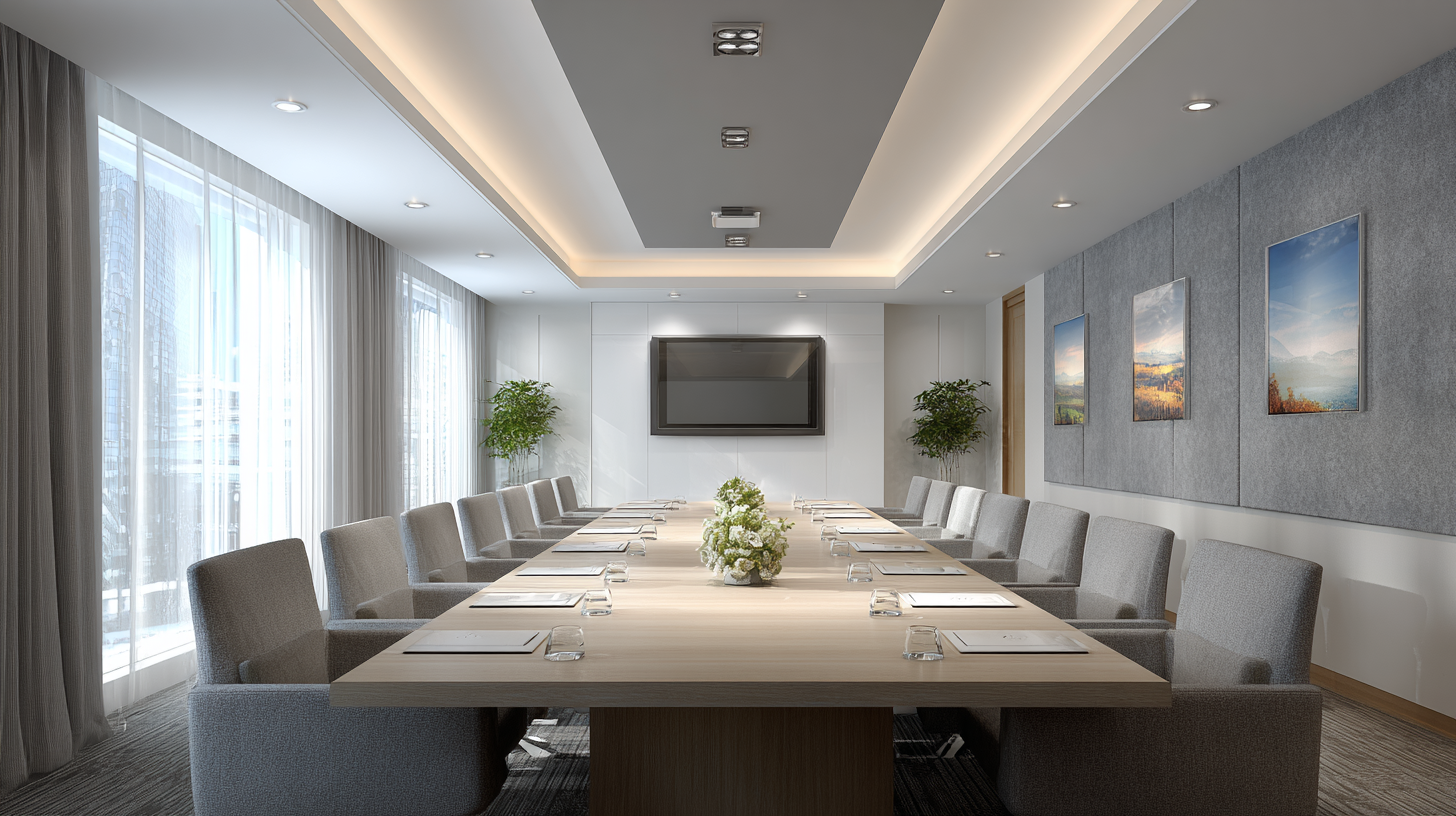
Thickness has a greater impact on low-frequency absorption than material type. A 4-inch fiberglass panel will always outperform a 2-inch mineral wool panel in the bass range, even though mineral wool has higher density. Material type affects NRC at a given thickness — it does not extend the effective lower frequency limit of the panel.
Material density determines how efficiently a panel absorbs within its working frequency range. At 2 inches, mineral wool (60–80 kg/m³) typically achieves NRC 0.90–1.00, while standard fiberglass (703 density) achieves NRC 0.85–0.95 in the same frequency range. That difference is real and meaningful for mid-frequency treatment. Both materials, however, stop being effective at approximately the same lower frequency boundary — around 500 Hz at 2 inches.
Thickness shifts the lower boundary of effective absorption downward. Adding thickness extends the frequency range a panel can treat, independent of the material used. A 4-inch panel of either fiberglass or mineral wool absorbs meaningfully down to approximately 125 Hz. A 2-inch panel of either material does not, regardless of how dense the core is.
The practical decision rule: when choosing between a thinner high-density panel and a thicker standard-density panel for a room with bass content, choose the thicker panel. Density improves NRC within the working range; thickness expands the working range itself.
Acoustic foam is the exception to this general pattern. At equivalent thickness, acoustic foam achieves lower NRC values than fiberglass or mineral wool — typically NRC 0.50–0.80 vs NRC 0.85–1.00 at 2 inches. For acoustic foam, both thickness and material type simultaneously affect performance, and the lower NRC means more surface area is required to achieve equivalent absorption compared to fiberglass or mineral wool panels at the same thickness.
Thickness Recommendations for Bass Traps vs. Wall Panels
Bass traps and wall panels follow different thickness logic because they target different acoustic phenomena. Wall panels treat reflection at mid and high frequencies and perform effectively at 2–4 inches. Bass traps must absorb low-frequency pressure buildup in room corners and require a minimum of 4 inches to be effective, with 6–8 inches providing meaningful absorption below 100 Hz.
A room corner is the intersection of three surfaces — two walls and the floor, or two walls and the ceiling. At that intersection, low-frequency sound pressure accumulates to its maximum level. Bass traps placed in corners address the zone of highest bass energy concentration in the room. Placing a thick panel on a flat wall surface does not replicate this effect, because the pressure level at a flat wall surface is lower than at a corner.
The relationship between bass trap thickness and effective lower frequency limit follows the same quarter-wavelength principle as wall panels. At 4 inches, a corner bass trap absorbs meaningfully down to approximately 125 Hz. At 6 inches, the lower boundary extends to approximately 80 Hz. At 8 inches, it reaches approximately 60 Hz.
Corner bass traps typically use a triangular cross-section to fill the corner volume efficiently. At the apex of the triangle — the point deepest into the corner — the effective depth of the absorptive material can reach 10–12 inches, which provides absorption at frequencies below 60 Hz. The triangular geometry allows deeper, more effective treatment than a rectangular panel of the same face dimension mounted flat against a wall.
Stacking multiple 2-inch wall panels on a flat wall surface does not replicate the absorption of a single 4-inch bass trap in a corner. The physical mechanism is different: wall panels intercept reflected waves at the surface; corner bass traps dissipate pressure buildup at the zone of maximum accumulation. Both are required in rooms with significant bass content — they do not substitute for each other.
Quick Reference - Thickness by Room Type and Problem
|
Room / Use Case |
Primary Problem |
Recommended Wall Panel Thickness |
Bass Trap Required? |
|
Podcast booth / vocal room |
Flutter echo, high-freq reflections |
2 inches |
No (unless audible bass) |
|
Conference room / open office |
Speech reverb, high RT60 |
2 inches |
No |
|
Home studio (no live drums) |
Mid-freq buildup, general muddiness |
2 inches + 4-inch corners |
Yes — 4 inch |
|
Home theater (with subwoofer) |
Bass boom, standing waves |
3–4 inches |
Yes — 6–8 inch |
|
Live recording / drum room |
Broadband energy, low-freq transients |
4 inches |
Yes — 6–8 inch, all corners |
Acoustic Panel Thickness at Sound Pro Solutions
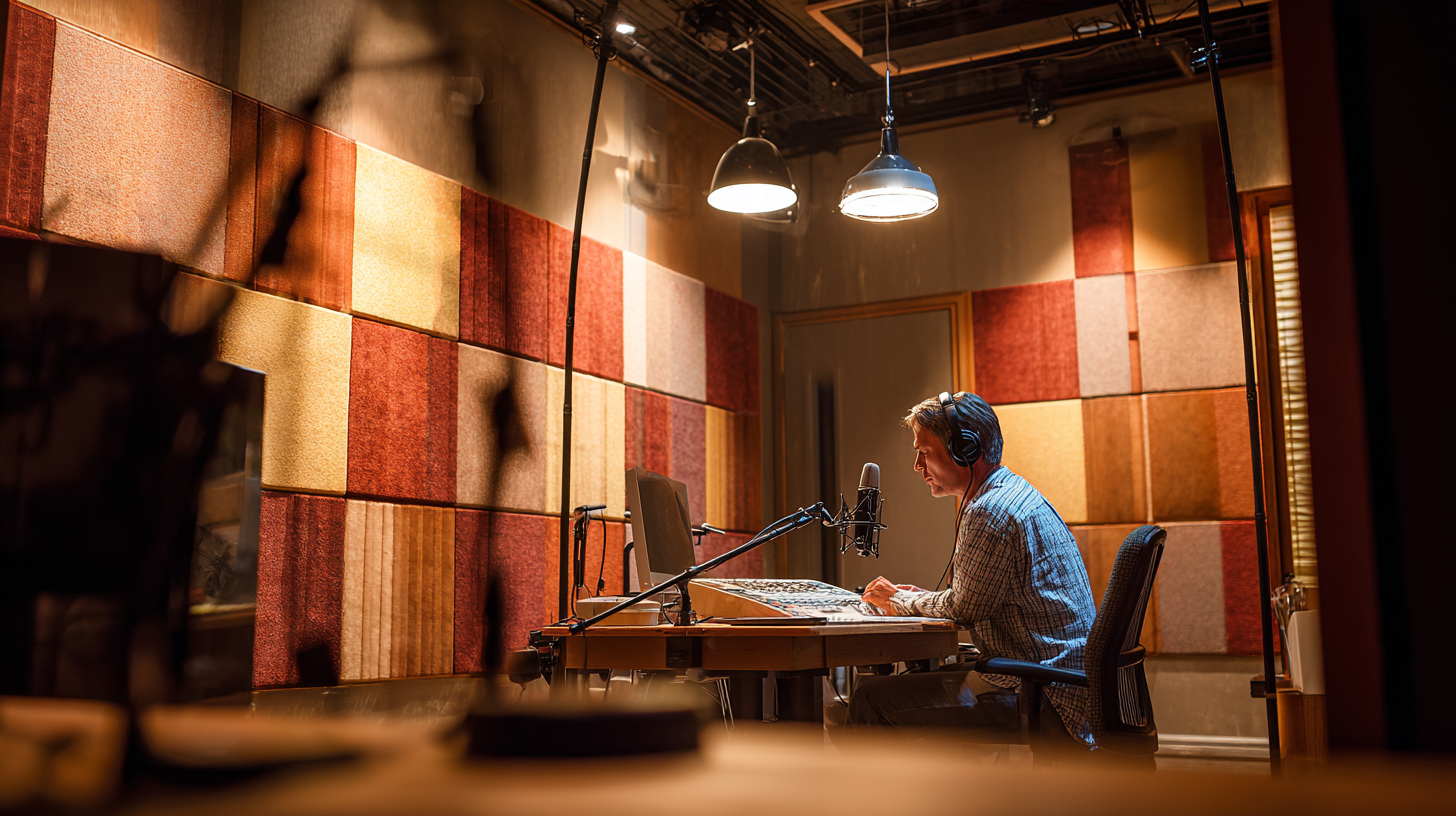
Sound Pro Solutions carries fabric-wrapped fiberglass and mineral wool panels in 1-inch, 2-inch, 3-inch, and 4-inch thickness, and corner bass traps from 4 to 8 inches. All products include NRC test data by frequency from accredited acoustic laboratories.
1-inch fabric-wrapped fiberglass panels: NRC 0.70–0.85; standard sizes 24×24 and 24×48 inches; for high-frequency flutter echo treatment and bright room correction.
2-inch fabric-wrapped fiberglass panels: NRC 0.90–0.95; standard sizes 24×24, 24×48, and 48×48 inches; for studios, offices, conference rooms, and vocal booths.
2-inch mineral wool panels: NRC 0.95–1.00; standard sizes 24×24 and 24×48 inches; for broadcast studios and music rooms where higher NRC in the mid-frequency range is required.
3-inch fabric-wrapped fiberglass panels: NRC 0.95–1.00; standard sizes 24×48 and 48×48 inches; for home theaters and music production rooms.
4-inch fabric-wrapped fiberglass panels: NRC 1.00; standard sizes 24×48 and 48×48 inches; for bass-heavy rooms and live recording environments.
Corner bass traps, 4–8 inch: triangular cross-section; floor-to-ceiling installation; effective from 60–125 Hz depending on depth; required for any room with subwoofer, bass amp, or live instruments.
For thickness selection assistance based on your specific room dimensions and acoustic goals, contact Sound Pro Solutions at (888) 661-7233.
Recent posts


