
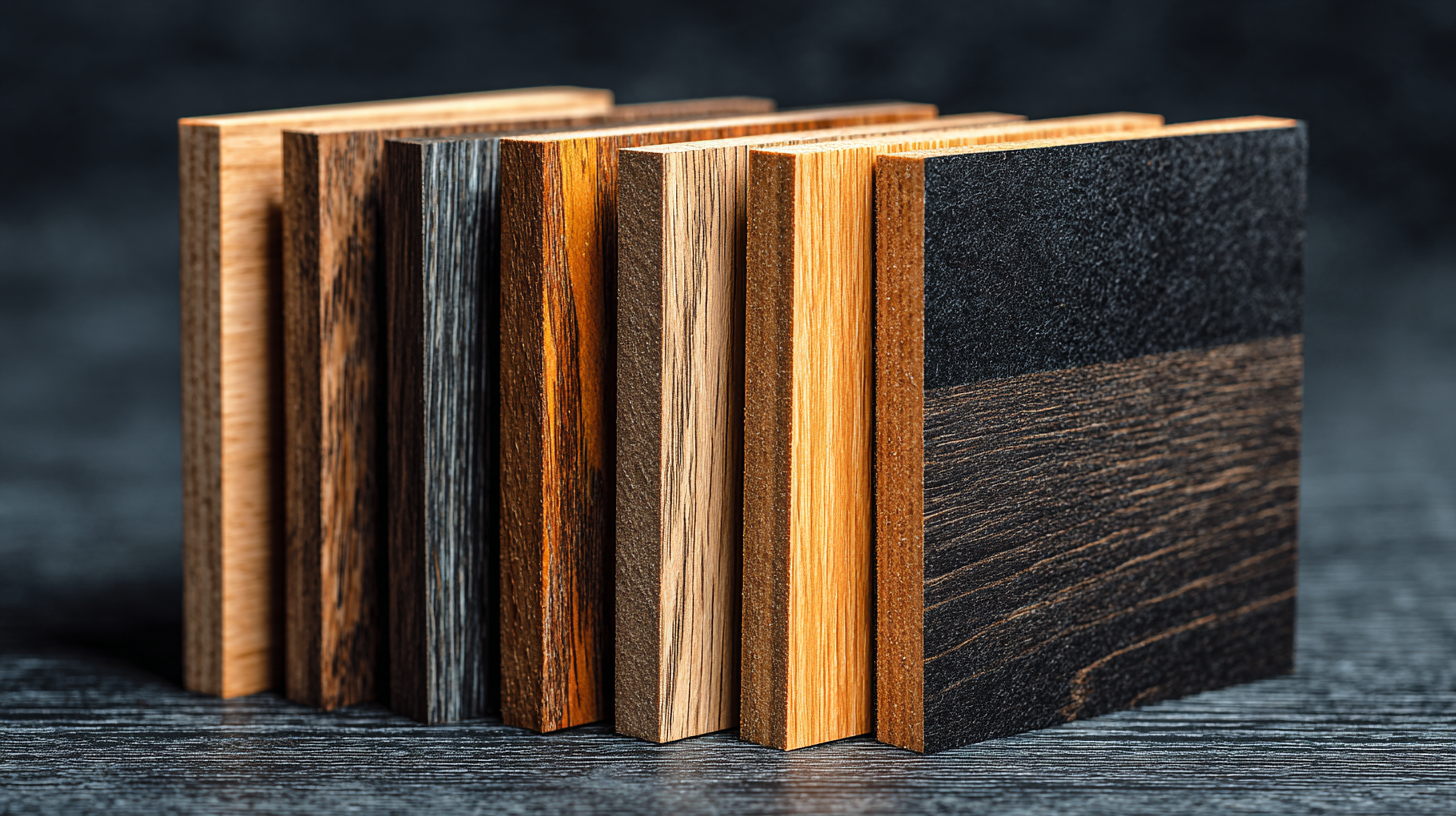
The wood species used in acoustic panels affects sound diffusion, panel durability, dimensional stability, and aesthetics - but it does not determine the panel's NRC rating in isolation. Understanding what wood actually contributes to acoustic performance, and what the panel's construction contributes, leads to a better-informed choice.
How Wood Properties Affect Sound Absorption
Wood interacts with sound through three physical properties: density, porosity, and stiffness. These properties determine whether a wood surface primarily reflects, scatters, or partially absorbs sound energy that reaches it.
Density is the most influential factor. Dense hardwoods reflect more sound energy and transmit less - their tightly packed cellular structure provides little opportunity for sound waves to penetrate and dissipate. Lower-density softwoods allow slightly more energy to enter the material, but the difference in absorption between wood species is small compared to the effect of panel construction.
Porosity in wood refers to the size and distribution of cell vessels running along the grain. Ring-porous hardwoods such as oak have large, visible pores arranged in annual rings. Diffuse-porous species such as birch and maple have smaller, more evenly distributed pores. The pore structure affects how sound is scattered at the surface - but wood porosity is too low to produce meaningful bulk absorption. Wood is not a porous absorber in the acoustic sense; mineral wool and felt are.
Stiffness affects how a wood panel vibrates in response to low-frequency sound. A stiffer, denser panel vibrates less freely and converts less energy to heat through internal damping. Softer species with lower stiffness exhibit slightly higher internal damping - they absorb marginally more energy through the vibration of the wood itself, particularly at low frequencies.
The critical point for acoustic panel selection: wood species determines how sound is scattered and diffused at the panel surface. The NRC rating of a finished acoustic panel is determined primarily by the absorptive core or backing material - fiberglass, mineral wool, or felt - not by the wood face.
Solid Wood Acoustic Panels vs. Wood Slat Panels
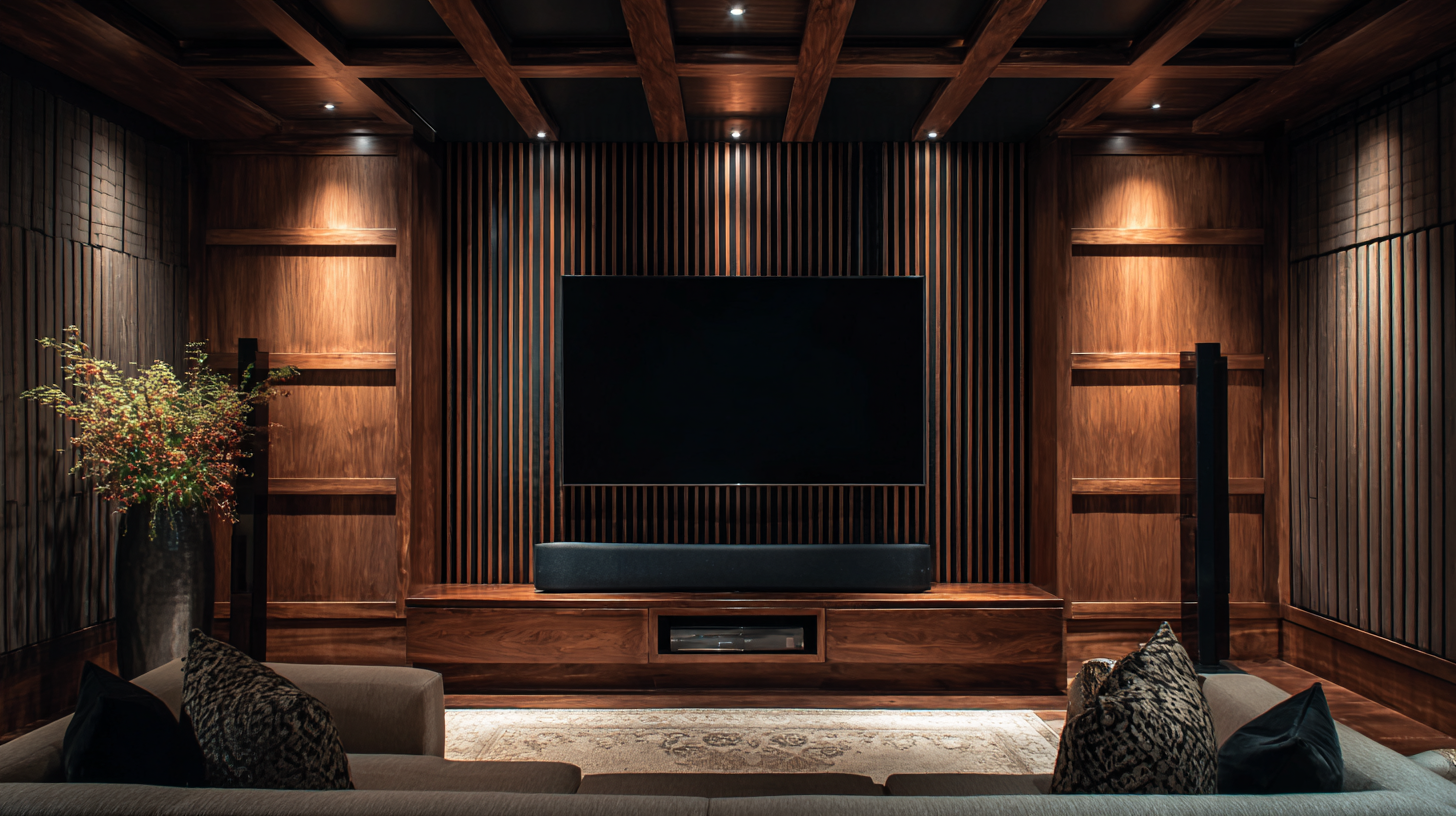
Two structurally different products are sold as acoustic wood panels, and they function through different mechanisms. Confusing them leads to mismatched expectations about what the wood species contributes.
Solid-core acoustic panels with wood facing use a fiberglass or mineral wool core as the primary absorber. The wood element - a thin veneer face, a solid wood frame, or wood battens - functions as a decorative and structural surface. Sound reaches the absorptive core through the gaps in the wood structure or around its edges. In this configuration, the wood species has almost no effect on the panel's NRC rating. The core material and its thickness determine absorption performance entirely.
Wood slat panels consist of parallel wood slats mounted to a felt or fabric backing. The slats themselves are primarily decorative and structural - they create the visual profile and hold the panel rigid. Sound that passes through the gaps between slats is absorbed by the felt backing. The wood slats reflect and scatter the portion of sound that strikes them directly. In this configuration, the species of wood affects three things: the width and stability of the slats (which determines how much of the backing is exposed), the surface hardness (which affects durability), and the visual finish. The NRC of the finished panel is governed by the felt backing density and the ratio of open gap area to slat area.
Understanding this distinction is essential: choosing a denser wood species does not make a slat panel absorb more sound. Choosing a wood species with better dimensional stability ensures the slat geometry - and therefore the open-area ratio - remains consistent over time.
Wood Species for Acoustic Panels
The table below lists the most commonly used wood species in US acoustic panel products, with their physical properties and acoustic relevance.
|
Species |
Density (kg/m³) |
Janka Hardness (lbf) |
Porosity Type |
Dimensional Stability |
Acoustic Role |
Typical Cost |
|
Red Oak |
740 |
1,290 |
Ring-porous |
Good |
Diffusion, stiffness |
$$ |
|
White Oak |
770 |
1,360 |
Ring-porous |
Excellent |
Diffusion, stiffness |
$$ |
|
Black Walnut |
610 |
1,010 |
Semi-ring-porous |
Good |
Moderate damping, aesthetics |
$$$ |
|
Hard Maple |
705 |
1,450 |
Diffuse-porous |
Very good |
High diffusion, bright reflection |
$$ |
|
Eastern White Pine |
400 |
380 |
Softwood |
Fair |
Low damping, budget use |
$ |
|
Yellow Pine |
590 |
870-1,225 |
Softwood |
Fair |
Mid damping, structural |
$ |
|
Birch (Baltic) |
640 |
1,260 |
Diffuse-porous |
Excellent |
Uniform surface, MDF substrate |
$-$$ |
|
Western Red Cedar |
370 |
350 |
Softwood |
Excellent (moisture) |
Lightweight, humidity-resistant |
$$ |
|
Teak |
690 |
1,155 |
Ring-porous |
Excellent |
Oil-rich, premium finish |
$$$$ |
No single species is acoustically superior in isolation. The species choice should be driven by dimensional stability requirements, finish preferences, hardness for the application environment, and budget - not by unsupported claims about one wood absorbing bass or another absorbing treble.
Oak for Acoustic Panels
Oak is the most widely used wood species for acoustic slat panels in the US and European markets. Both red oak and white oak offer a combination of dimensional stability, hardness, and surface finish quality that makes them the industry's default for slat panel systems.
Red oak has a density of approximately 740 kg/m³ and a Janka hardness of 1,290 lbf. White oak is slightly denser at 770 kg/m³ with a hardness of 1,360 lbf. Both are ring-porous hardwoods - the large pores along the annual rings give oak its characteristic visible grain pattern, which reads well at the scale of a wall panel and holds stain finishes evenly.
The dimensional stability of oak is the primary reason for its dominance in slat panels. Oak responds predictably to changes in humidity, and when properly kiln-dried and finished, it maintains consistent slat width and inter-slat spacing over time. In an acoustic slat panel, consistent spacing is essential - if slats expand and close the gaps, the open area of felt exposed to the room decreases and NRC drops. Oak's stability ensures the panel performs as specified throughout its service life.
Oak is appropriate for virtually any interior application - home theaters, living rooms, offices, conference rooms, and bedrooms. It is available in a wide range of stains and finish options from natural to dark charcoal, giving it the broadest design versatility of any acoustic panel wood species.
Walnut for Acoustic Panels
Black walnut is the premium choice for acoustic slat panels where aesthetics are the primary driver alongside acoustic performance. Its deep brown color with chocolate undertones and straight-to-wavy grain pattern is visually distinctive in a way that oak and pine are not.
Black walnut has a density of approximately 610 kg/m³ and a Janka hardness of 1,010 lbf - softer than oak but still a hard, durable species suitable for wall panel applications. Its lower density relative to oak results in slightly higher internal damping - walnut converts marginally more vibrational energy to heat than oak when the panel itself flexes. This difference is acoustically minor but real.
The lower density of walnut compared to oak means walnut slat panels are slightly lighter per square foot - a practical advantage in ceiling-mounted cloud or baffle applications where panel weight affects fastener loads.
Walnut's darker tone serves a functional purpose in home theater and media room applications. Dark panel surfaces absorb more light than light-toned wood, reducing screen reflection and improving perceived contrast when used on side walls and the front wall behind the screen.
Black walnut is the most expensive of the standard acoustic panel wood species. It is the appropriate choice for high-end residential spaces, audiophile listening rooms, executive boardrooms, and boutique commercial interiors where the visual investment is justified.
Pine, Birch, and Cedar - Budget and Specialty Options
Pine, birch, and cedar each occupy a specific position in the acoustic panel market, suited to particular constraints or applications rather than serving as general-purpose alternatives to oak.
Pine (Eastern white pine, density 370-420 kg/m³; yellow pine, 540-590 kg/m³) is the lowest-cost option for acoustic panel applications. Eastern white pine is a soft, lightweight species with relatively high porosity and low stiffness. Its softness makes it susceptible to surface denting and scratch damage, which limits its appropriateness in high-traffic commercial environments. It is suitable for residential applications - home studios, bedrooms, basement media rooms - where impact resistance is not a primary requirement. Pine's pale, knotty character suits farmhouse and rustic interior styles. Its primary limitation is dimensional movement: pine is more sensitive to humidity changes than oak or birch, which makes consistent slat spacing harder to maintain over time in variable-humidity environments.
Birch (Baltic birch, density 620-680 kg/m³) is the standard substrate material for medium-density panel construction. Its diffuse-porous structure produces a smooth, even surface with minimal visible grain - an advantage when a uniform, paintable finish is required. Baltic birch plywood is the most common substrate for DIY acoustic panel frames due to its dimensional stability and clean edge profile. As a slat material, birch produces a contemporary, minimalist appearance that suits Scandinavian and modern interiors. Its hardness (Janka 1,260 lbf) is comparable to oak, giving it good durability. Cost is moderate - lower than oak in most US markets.
Western red cedar (density 340-380 kg/m³) is the lightest and most moisture-resistant of the commonly used acoustic panel species. Cedar's natural oils provide inherent resistance to moisture, decay, and insect damage without additional chemical treatment. This makes it the appropriate choice for acoustic panels in humid environments - coastal homes, basement rooms with imperfect vapor barriers, pool enclosures, and covered outdoor spaces. Cedar's acoustic behavior is similar to other low-density softwoods: moderate internal damping, low stiffness. Its primary value in acoustic applications is not acoustic but environmental - it is the only common species that maintains dimensional stability in genuinely high-humidity conditions.
How Slat Geometry Affects Acoustic Performance
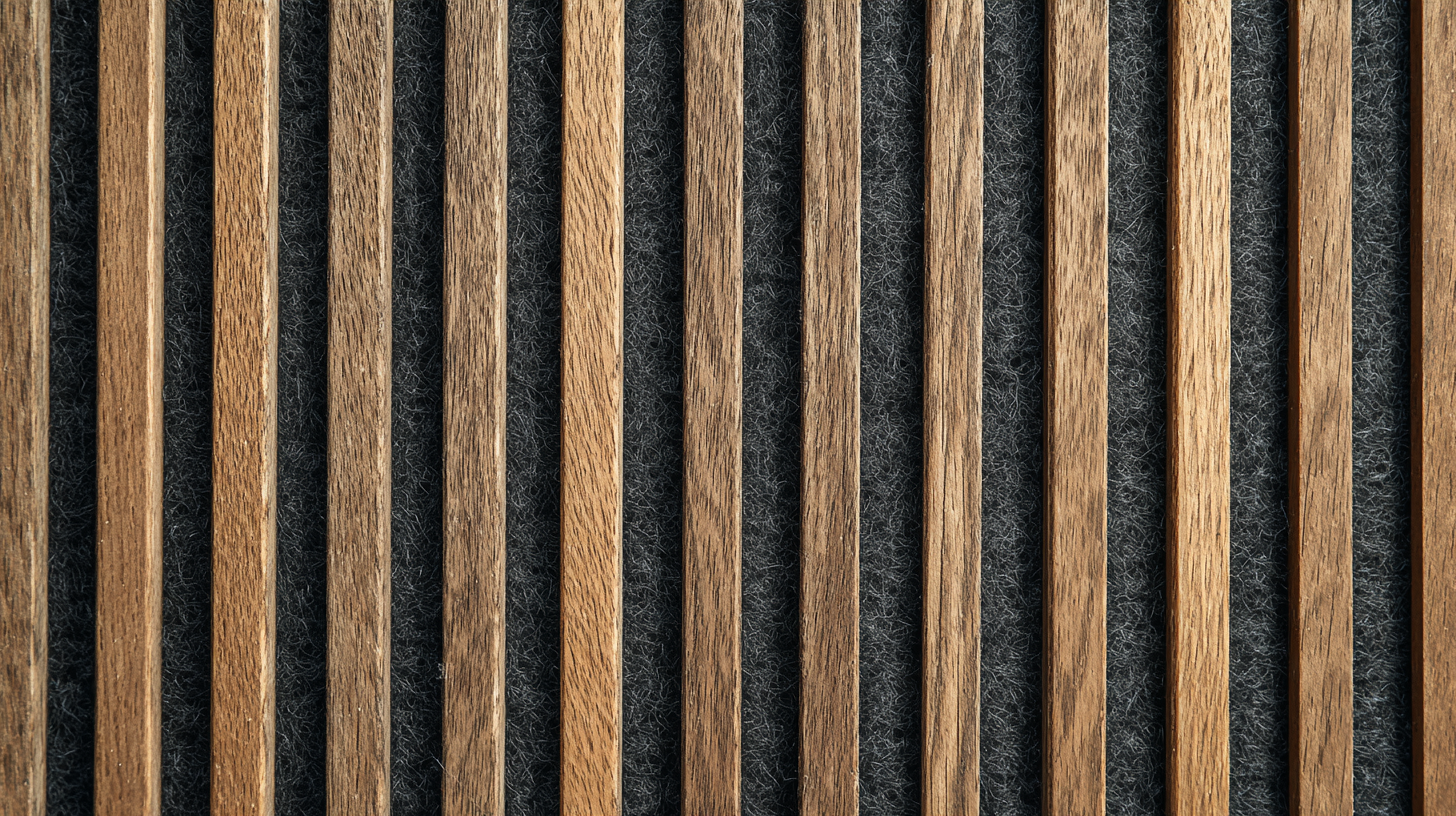
In acoustic wood slat panels, the geometry of the slat pattern - specifically the width of the slats, the width of the gaps between them, and the height of the slat profile - determines acoustic performance more directly than the wood species used.
The NRC of an acoustic slat panel is a function of the open area ratio: the percentage of the total panel face that consists of exposed felt backing rather than wood surface. A slat panel where gaps represent 30% of the face area will absorb approximately 30% as much sound as bare felt of the same type - the wood portion reflects the rest.
Narrower slats with wider spacing increase the open area ratio and raise NRC. A panel with 12mm slats and 8mm gaps has an open area ratio of approximately 40%. The same panel with 18mm slats and 4mm gaps has an open area ratio of approximately 18%. For the same felt backing, the first configuration will have a significantly higher NRC.
Slat height (the depth of the profile) affects diffusion. Taller slats create deeper shadow lines and a more pronounced three-dimensional surface. The additional depth increases the path length of sound as it travels between slats to reach the backing, providing a small increase in mid-frequency absorption and improved scattering of high-frequency reflections.
Felt backing density is the single most important variable in slat panel acoustic performance. A dense, thick felt backing - typically 5-10mm of polyester or wool felt - provides NRC values of 0.40-0.65 for a panel with standard slat geometry. Thin or low-density backing significantly reduces this range. When evaluating acoustic slat panels, always request the NRC test data for the complete panel assembly, not the backing material in isolation.
Typical NRC ranges for acoustic wood slat panels by configuration:
|
Configuration |
Open Area Ratio |
Typical NRC |
|
Narrow slats (10-12mm), wide gaps (8-10mm), dense felt |
40-50% |
0.55-0.70 |
|
Standard slats (15-18mm), standard gaps (5-7mm), dense felt |
25-35% |
0.40-0.55 |
|
Wide slats (20-25mm), narrow gaps (3-5mm), standard felt |
15-20% |
0.25-0.40 |
|
Wide slats, decorative spacing, thin felt |
10-15% |
0.10-0.20 |
Choosing Wood for Acoustic Panels by Room Type
The final species selection should be matched to the room's functional requirements, humidity conditions, aesthetic priorities, and budget.
|
Room |
Recommended Species |
Reasoning |
|
Home theater / media room |
Oak (dark finish) or Walnut |
Stability, dark tone reduces light reflection, high-traffic durability |
|
Home office |
Oak or Birch |
Clean appearance, consistent finish, moderate budget |
|
Bedroom |
Walnut, Oak, or Pine |
All appropriate; pine viable if humidity-controlled |
|
Recording studio |
Oak or Birch |
Dimensional stability critical for maintaining consistent slat geometry |
|
Boardroom / commercial office |
Oak or Walnut |
Hardness for durability, professional appearance |
|
Bathroom / humid basement |
Cedar |
Only species with natural moisture resistance without chemical treatment |
|
Budget residential |
Pine (yellow) or Birch |
Acceptable stability, significant cost savings vs. oak |
In all room types, the acoustic outcome depends more on the panel's felt backing specification and slat geometry than on the wood species. Species selection should be finalized after acoustic requirements are established - not as the primary acoustic decision.
Recent posts


