
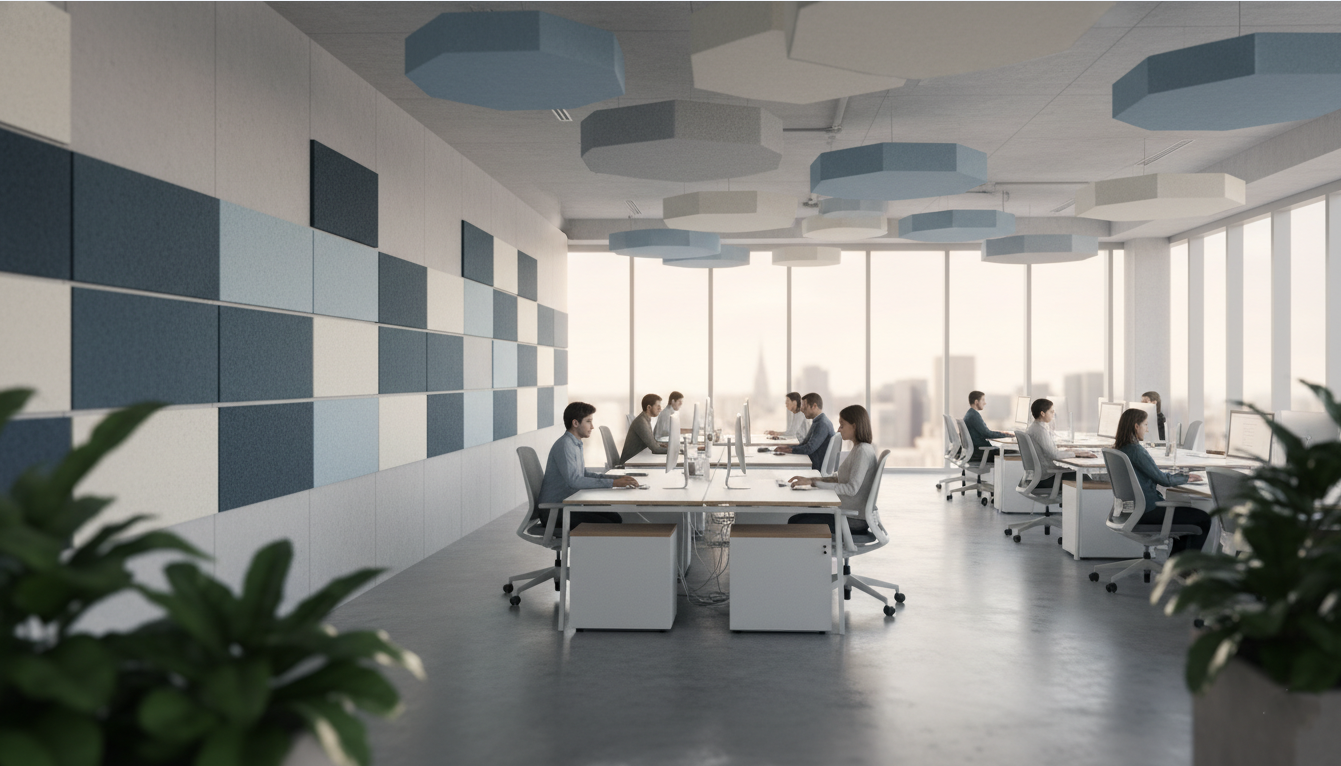
The best places to install acoustic panels in an office are the surfaces sound reaches first: walls at seated speech height (about 4-5 ft / 1.2-1.5 m), the ceiling above work and meeting areas, and the first reflection points in conference rooms. Treating these zones controls speech reflections, enhances speech privacy, and improves video call clarity.
This guide breaks an office down by zone and tells you exactly where panels belong in each one, how much coverage to aim for, and where not to put them.
Why Office Acoustics Are Hard to Control
Offices are built with hard, reflective surfaces - glass partitions, drywall, concrete, and open ceilings - so speech and equipment noise bounce repeatedly rather than being absorbed. As reflections accumulate, the room grows louder, and speech becomes harder to understand.
The main noise source in most offices is human speech. When several conversations overlap in a reflective room, people raise their voices to be heard, which pushes the overall noise level higher in a feedback loop.
Open-plan layouts are the hardest to treat because there are few solid walls to stop sound, and one conversation can travel across the entire floor. This is why open offices need ceiling and partition treatment, not just wall panels.
Uncontrolled reflections reduce both concentration and speech privacy. Workers lose focus from intelligible background chatter, and confidential conversations carry farther than intended.
General Rule - Treat Surfaces Where Sound Hits First
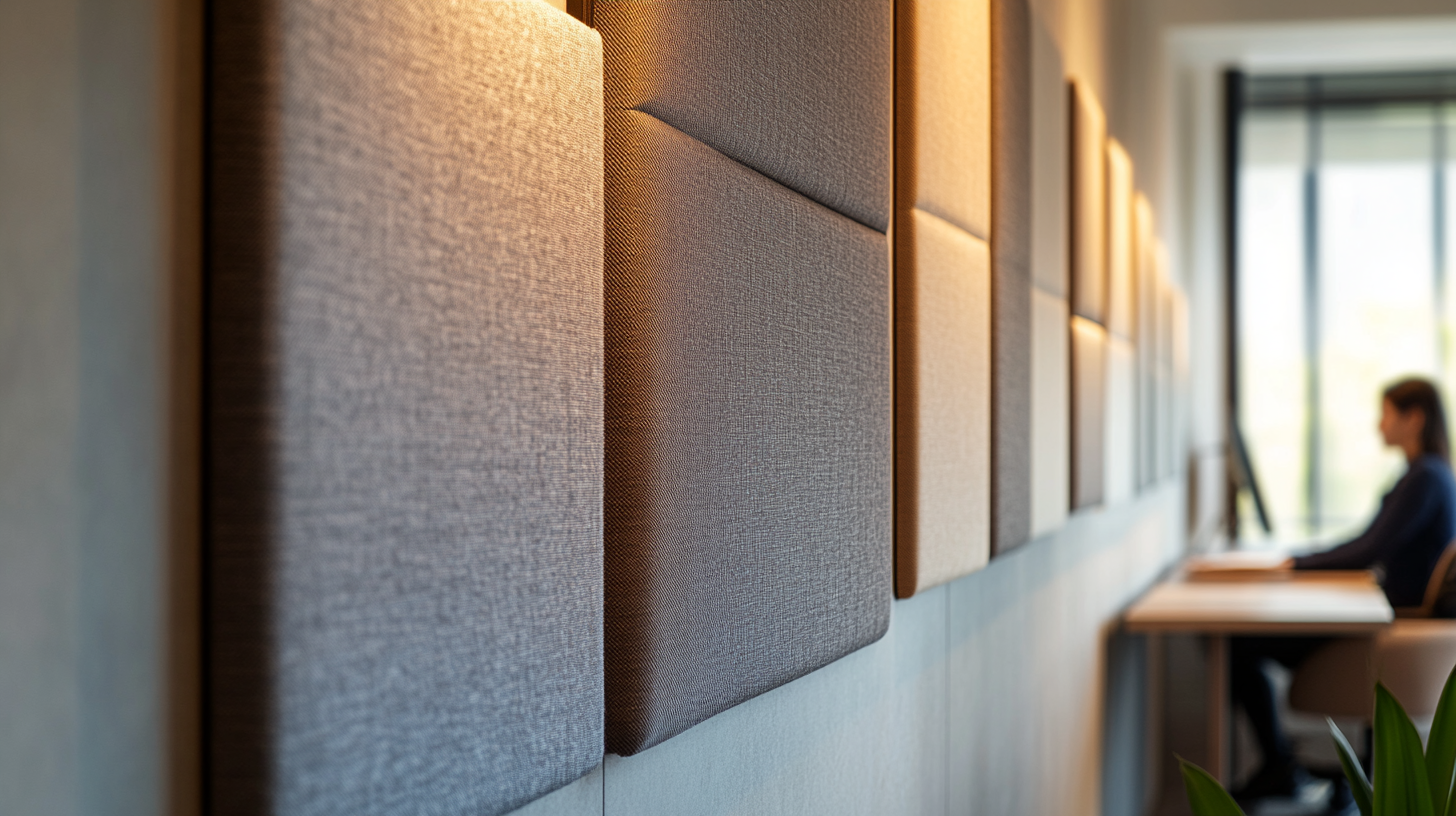
Acoustic panels only work where sound waves actually reach them, so they must be placed on the surfaces that receive the strongest direct and first-reflected sound. A panel on an unused surface absorbs almost nothing.
The most important target height is seated speech level - roughly 4-5 ft (1.2-1.5 m) off the floor - because that is where most voices originate and where direct sound strikes the surrounding walls.
The second priority is the largest flat reflectors in the room: long walls, the ceiling, and glass. These surfaces return the most energy back into the space.
Do not cover every surface. A room needs a mix of hard and soft surfaces; over-treating it makes speech sound dull and lifeless. The goal is balanced absorption distributed around the room, not maximum coverage.
Open-Plan and Workstation Areas
In open-plan areas, mount panels on the perimeter walls at seated speech height and add ceiling absorption directly above clusters of desks. These two locations capture the speech that otherwise travels freely across the floor.
Place wall panels at 1.2-1.5 m (4-5 ft) on any solid perimeter wall near workstations, centered on where seated voices reach the wall.
Hang ceiling clouds or baffles above desk clusters, since the ceiling is usually the largest untreated surface in an open office and the only one positioned over everyone.
Add freestanding desk dividers or between-desk screens for high-density seating. These panels block direct line-of-sight sound between neighbors and reduce speech traveling from desk to desk.
Meeting and Conference Rooms
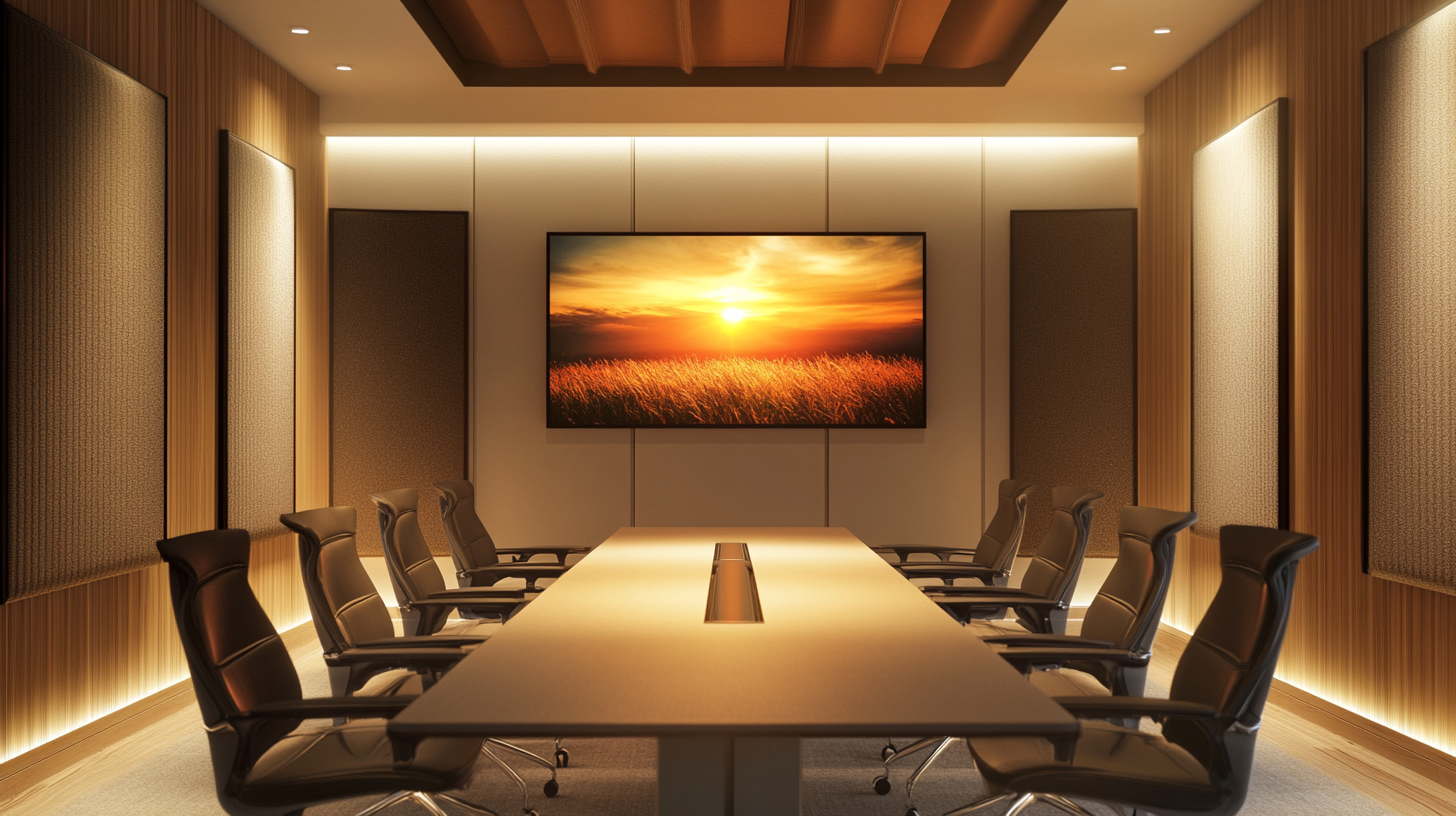
In meeting rooms, place panels on the first reflection points of the side walls and on the wall opposite the main speaker or display. This combination keeps speech intelligible for both in-room listeners and remote participants on video calls.
Treat the wall behind the display and the wall directly opposite it, because direct speech and audio reflect strongest along that axis.
Cover the first reflection points on both side walls - the spots midway between the speaker and the listeners where sound bounces off the side wall on its way across the table.
Add a ceiling cloud above the conference table when the ceiling is hard or the room has noticeable echo on calls.
Address glass walls with acoustic curtains or panels on the opposite solid surface, since you usually cannot mount panels on the glass itself, but still need to absorb its reflections.
Ceilings - Clouds, Baffles, and Grids
The ceiling is often the largest untreated reflecting surface in an office, so treating it usually delivers the biggest single improvement - especially in rooms with hard or open industrial ceilings. Below are the three main ways to place panels overhead.
Ceiling Clouds
Ceiling clouds are individual panels suspended horizontally below the ceiling, positioned directly above the people or desks generating sound. They absorb speech rising upward before it reflects back down into the room.
Baffles
Baffles are panels suspended vertically, hanging down from the ceiling like fins. They work well under open industrial ceilings with exposed ducts and beams, where they capture sound from multiple directions without needing a flat mounting surface.
T-Grid and Lay-In Tiles
In offices with a suspended drop ceiling, acoustic tiles can be laid directly into the existing T-grid. This treats the entire ceiling plane at once and is the simplest option when a grid is already installed.
Focus Rooms, Phone Booths, and Reception

Small enclosed spaces and high-speech zones need denser wall coverage than open areas because reflections return quickly off nearby surfaces. The closer the walls, the more aggressive the treatment required.
Treat focus rooms and phone booths on two or three walls, since their small volume causes fast, repeated reflections that make voices sound boxy on calls.
Treat reception areas and lobbies on solid walls near the entrance, because these spaces combine glass and hard floors that amplify every footstep and conversation.
Apply high-density coverage in call centers, where many simultaneous conversations create the highest sustained speech levels of any office environment.
How Many Panels and How Much Coverage
A practical target for an office speech environment is acoustic coverage of roughly 15-30% of the room's hard surfaces, with higher coverage for rooms with tall ceilings or dense occupancy.
Start at the lower end for a small, furnished room and move toward the higher end for large, sparse, or echo-prone spaces such as open floors and lobbies.
Distribute panels across several surfaces rather than concentrating them on one wall. Spread coverage absorbs reflections from more directions and prevents one area from going dead while another stays live.
Stop adding panels once the speech sounds clear and reverberation is gone. Beyond that point, extra absorption removes useful liveliness and makes the room feel muffled.
Where NOT to Place Panels
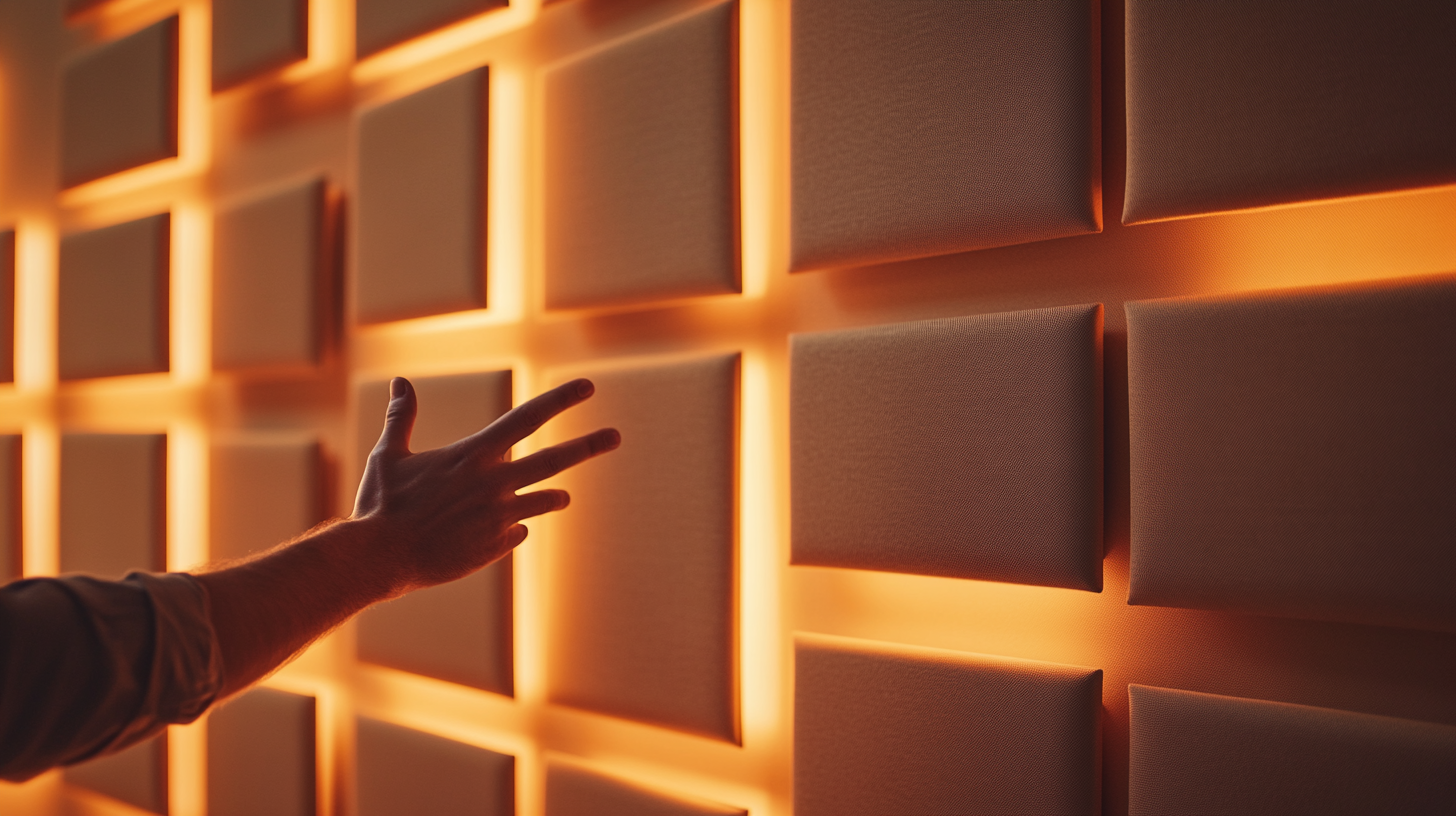
The most common placement mistakes reduce results even when the right number of panels is used. Avoiding them matters as much as choosing the correct zones.
Do not put all panels on a single wall. This leaves the opposite and adjacent surfaces free to keep reflecting sound across the room.
Do not mount panels far above the reflection zone. Panels placed near the ceiling on a wall miss the seated speech height, where most sound actually strikes.
Do not ignore the ceiling. In rooms with hard or open ceilings, skipping overhead treatment leaves the largest reflector untreated.
Do not block HVAC vents, sprinklers, or lighting. Panels must work around building systems and fire-safety equipment.
Do not over-cover the room. Treating every surface kills natural liveliness and makes speech sound flat and tiring.
Key Takeaways
Place office acoustic panels where sound lands first: perimeter walls at seated speech height, the ceiling above work and meeting zones, and the first reflection points in conference rooms. These locations control the speech reflections that drive office noise.
Match the treatment to the space - ceiling clouds and desk dividers for open plan, side-wall reflection points for meeting rooms, and dense wall coverage for focus rooms and call centers - while keeping total coverage near 15-30% and distributing it across surfaces.
Recent posts


