
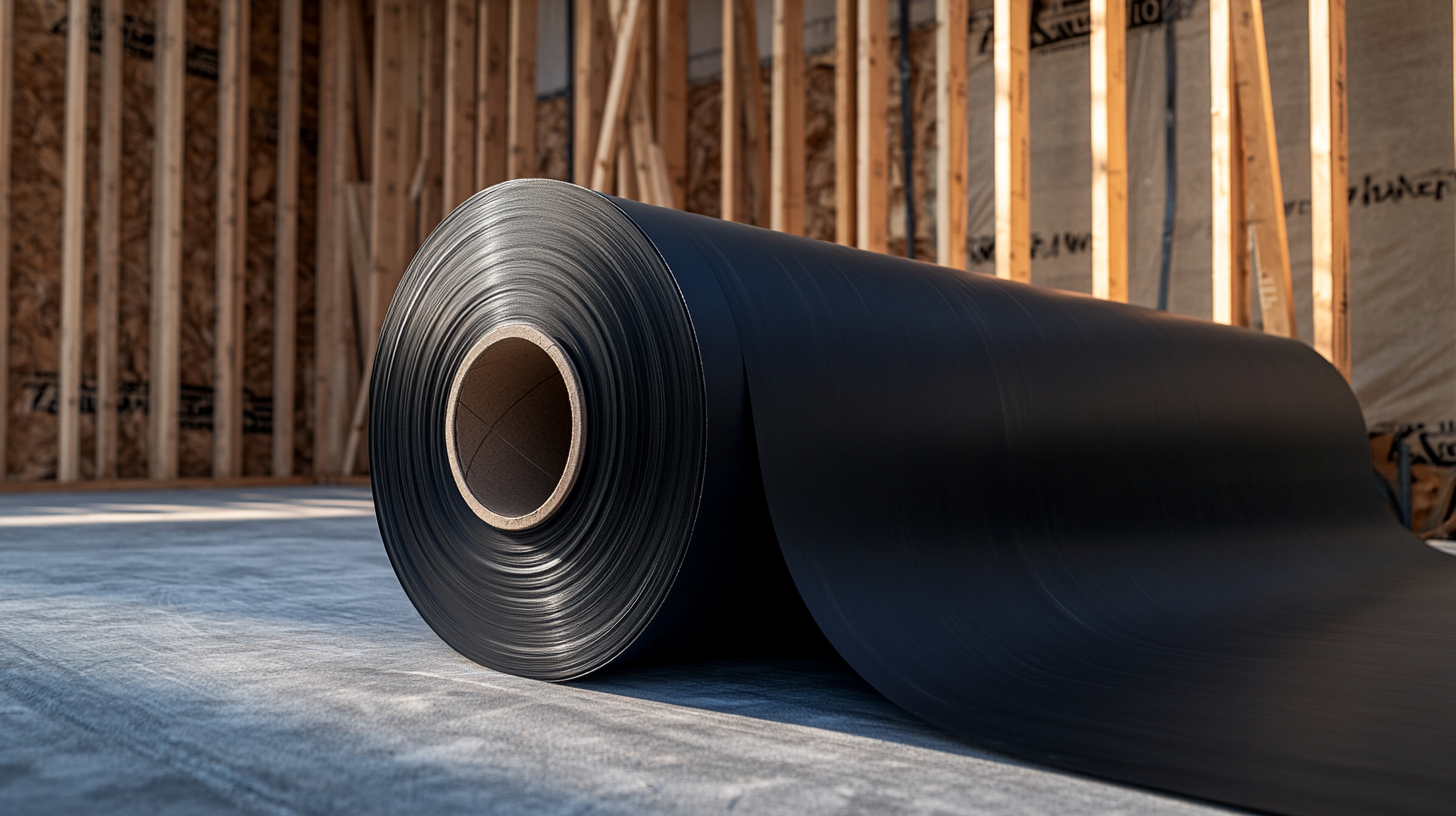
On its own, mass-loaded vinyl (MLV) has an STC rating of roughly 21 to 31, depending on its weight and thickness. The most common version - 1 lb/sf, 1/8″ thick - carries a standalone STC of 26, while heavier 2 lb/sf MLV reaches STC 31. Within a finished wall assembly, MLV can push the overall STC much higher, often into the 40s or 50s.
This guide provides STC values by weight, explains why those numbers don't add up as people expect, and shows what MLV actually achieves once it's installed.
What STC Rating Means for Mass-Loaded Vinyl
STC stands for Sound Transmission Class, a single-number rating of how well a material or assembly blocks airborne sound from passing through it. A higher STC means more sound is stopped.
For mass-loaded vinyl, the STC rating reflects how much noise the material keeps from transmitting through it. MLV is a limp, dense barrier that works by adding mass, which blocks airborne sound.
Low-STC items such as single-pane glass and hollow-core doors let a lot of sound through. High-mass products such as MLV and solid-core doors block far more sound, which is why MLV is used as a sound-barrier layer rather than a finish material.
Mass-Loaded Vinyl STC Ratings by Weight
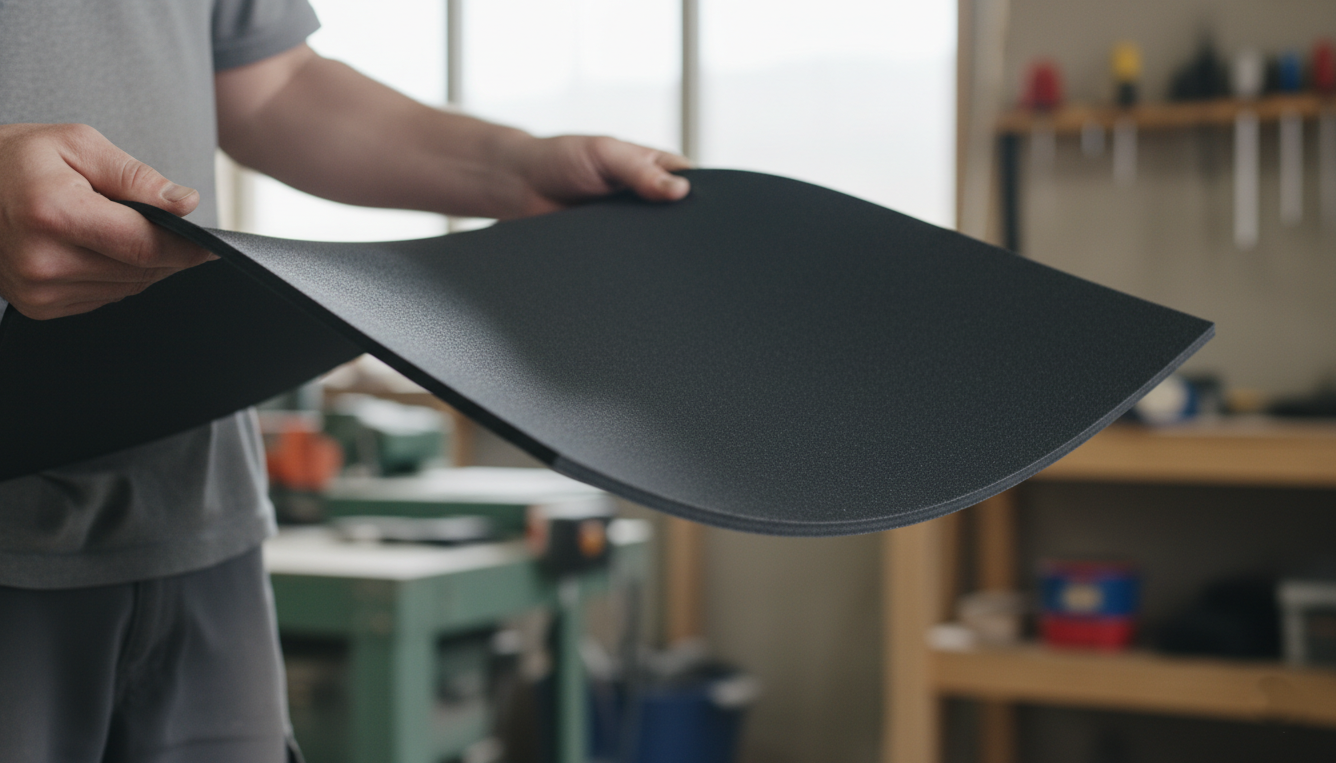
The standalone STC rating of MLV depends directly on its weight and thickness, ranging from about 21 for the lightest grade to 31 for the heaviest. Heavier vinyl carries more mass per square foot and blocks more sound.
|
Weight |
Thickness |
STC |
|
2 lb/sf |
1/4″ |
31 |
|
1 lb/sf |
1/8″ |
26 |
|
1 lb/sf with polyester scrim |
1/4″ |
27 |
|
0.6 lb/sf |
1/16″ |
22 |
|
0.5 lb/sf |
1/16″ |
21 |
These are standalone lab values for the material by itself. They describe the vinyl in isolation, not the performance you get once it's built into a wall, floor, or ceiling.
The real soundproofing result comes from the full assembly. MLV is almost always combined with drywall, studs, and insulation, and that complete system carries a much higher STC than the bare sheet.
Why STC Ratings Don't Simply Add Up
STC ratings of separate materials do not add together linearly, which is the single most common misconception about MLV. You cannot stack the numbers and sum them.
For example, adding a layer of MLV rated STC 26 to a wall assembly rated STC 33 does not produce STC 59. The realistic result is closer to STC 39, because the materials interact rather than accumulate.
This is why STC is properly assigned to a whole wall, floor, or ceiling assembly rather than to a loose stack of products. When you plan soundproofing, the number that matters is the rated STC of the complete assembly you intend to build.
MLV STC in Real Wall Assemblies
Built into a real wall, MLV reaches far higher numbers than its standalone rating, because the studs, drywall, and cavity all contribute. The stud type makes a large difference.
On wood studs, a wall using 1 lb/sf MLV typically reaches an STC in the 40s. Wood transmits more vibration between the two wall faces, which limits the assembly.
On metal studs, the same 1 lb/sf MLV can help a wall hit STC 55 or higher. Metal studs flex and decouple the wall faces, so less sound passes through the structure itself.
A polyester scrim layer adds decoupling for harder cases. Scrim-backed MLV is the better choice when installing over existing drywall or when the wall must control higher levels of vibrational and low-frequency noise.
Which MLV Weight Should You Choose
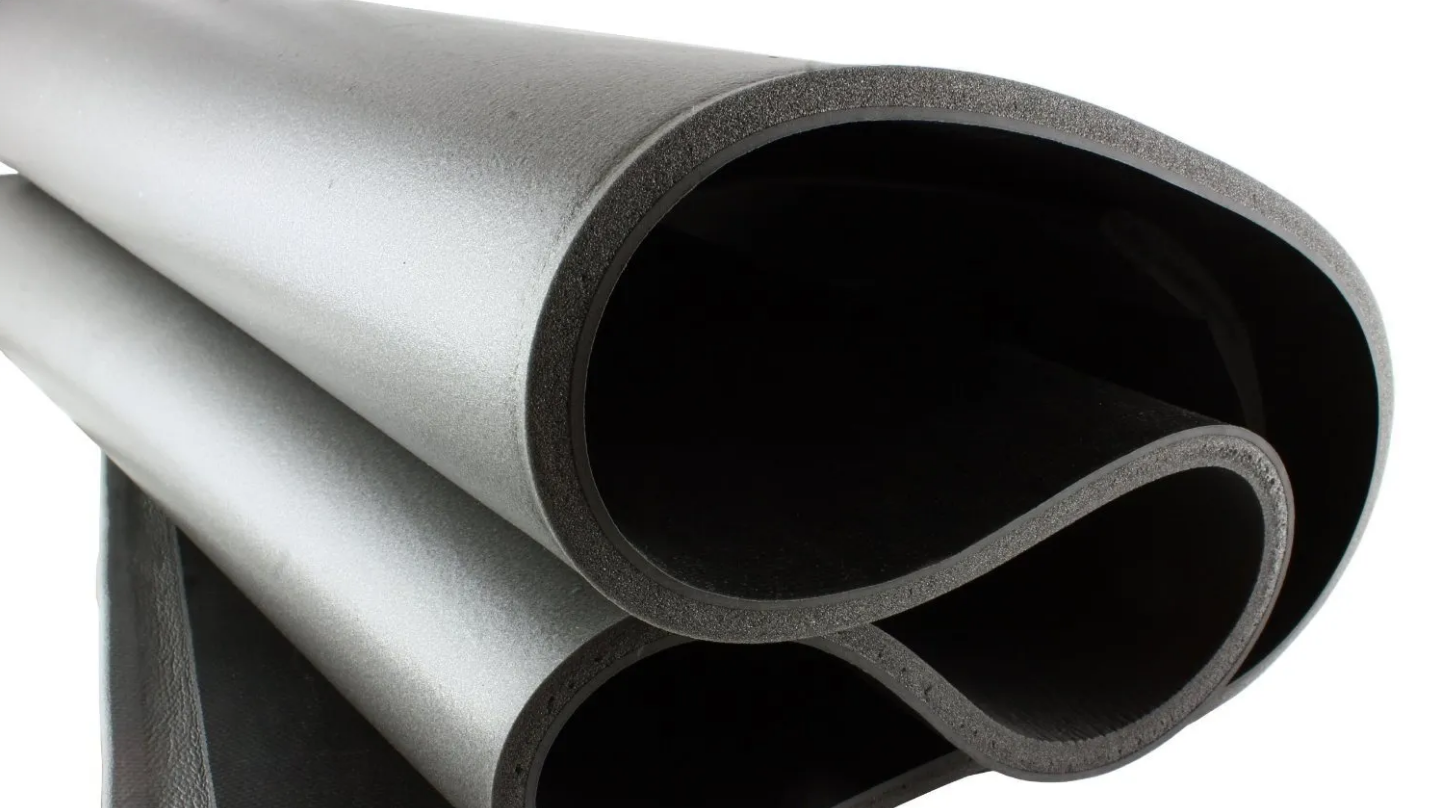
The right MLV weight depends on the type of noise, your budget, and any STC target set by building code. Heavier is not automatically better for every job.
Choose 1 lb/sf MLV for most wall soundproofing in homes and commercial spaces. It is the standard general-purpose grade and reaches the 40s-50s in typical assemblies.
Choose 2 lb/sf MLV for the loudest, lowest-frequency sources, such as mechanical and equipment rooms. Its extra mass and thickness make it the strongest option against deep, low-frequency noise.
Choose 0.5 or 0.6 lb/sf MLV as the cost-effective option on metal-stud walls. On metal studs, the lighter vinyl performs only about one STC point below 1 lb/sf, at roughly half the weight and cost.
Choose scrim-backed 1 lb/sf MLV when applying over existing drywall or targeting vibrational noise. The scrim improves decoupling between rigid surfaces.
STC vs NRC - What MLV Does and Doesn't Do
STC and NRC measure two different things, and confusing them leads to the wrong product choice. MLV is built for one of them, not both.
STC measures how much airborne sound a material blocks from passing through it. This is what MLV does well - it is a barrier.
NRC, the Noise Reduction Coefficient, measures how much sound a material absorbs to reduce echo within a room. MLV has a low NRC and is not an absorber; for echo control, you need acoustic panels, foam, or batts instead.
Insulation such as sound batts and mineral wool is widely misunderstood here. These materials have no standalone STC rating and do not block sound on their own, but when placed inside a wall cavity, they can raise the assembly's STC by about 1 to 3 points. Exposed on a surface, they absorb sound (an NRC function) rather than block it.
How to Get the Most STC From Your MLV
The STC you actually achieve depends as much on installation as on the material, because any gap lets sound leak around the barrier. A perfectly rated sheet performs poorly if it's installed with openings.
Cover the surface completely with no gaps. Sound passes easily through any uncovered area, undermining the barrier.
Seal every seam and the full perimeter. Overlapping seams and acoustic caulk at edges, outlets, and penetrations stop sound from flanking around the MLV.
Use decoupling where possible. Scrim-backed MLV, resilient channel, or isolation clips reduce the vibration path through the structure and raise the assembly's effective STC.
Treat any leak as a lost rating. A single unsealed gap or a flanking path can reduce real-world performance well below the lab number.
Key Points to Remember
Mass-loaded vinyl has a standalone STC rating of about 21-31 by weight, with 1 lb/sf (STC 26) as the common standard and 2 lb/sf (STC 31) as the heaviest. Those numbers describe the bare material - inside a real wall, the assembly reaches the 40s on wood studs and 55+ on metal studs.
Choose the weight by noise type and budget. Remember that STC ratings don't simply add up; pair MLV with absorption and careful sealing, since the actual rating depends on the full assembly and the quality of installation.
Recent posts


