
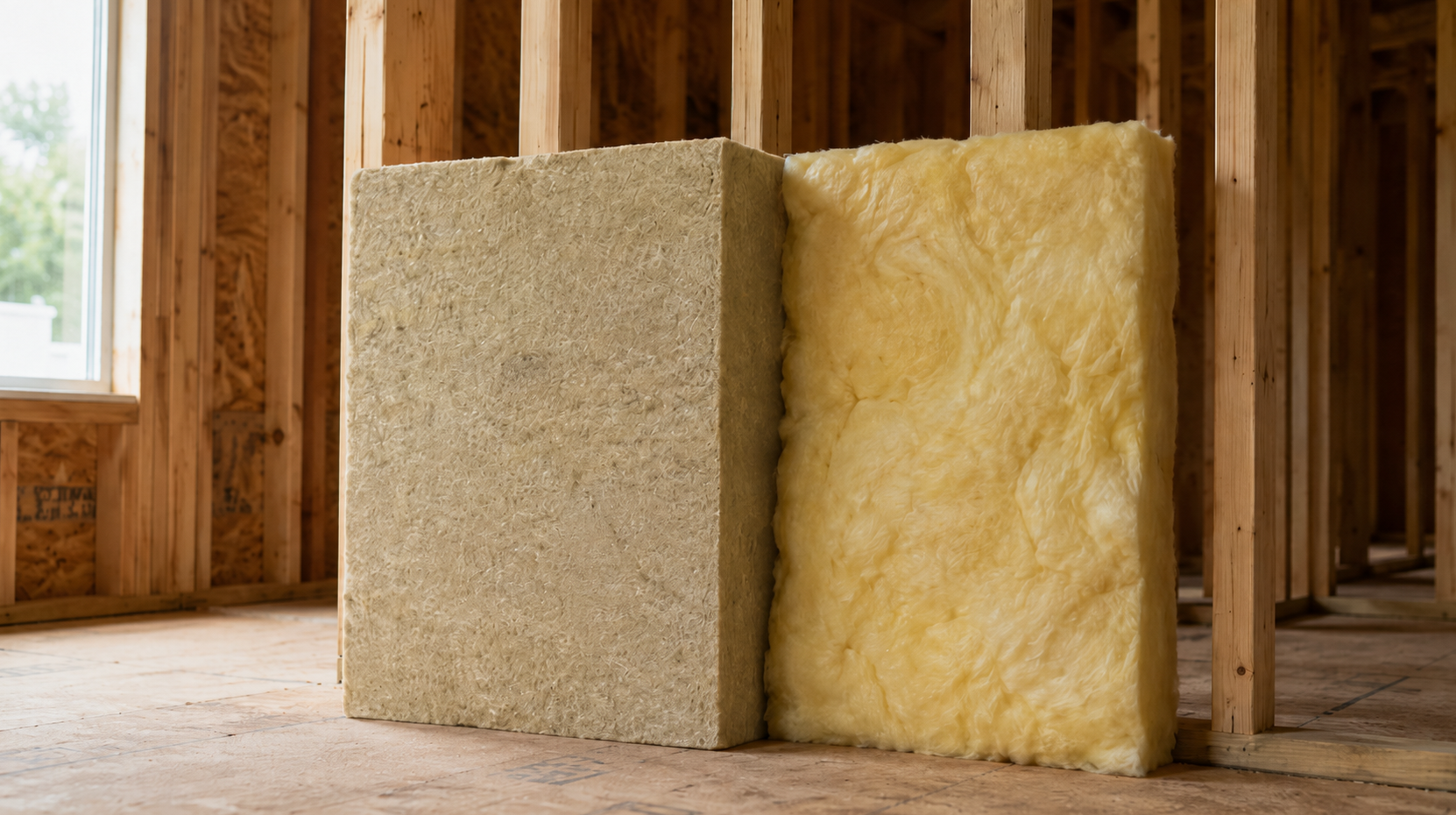
Rock wool and fiberglass are the two materials most people compare when filling a stud or joist cavity. Both are fibrous batt insulation, both slow heat transfer, and both absorb sound energy inside a wall. They differ in density, fire behavior, moisture handling, weight and price - and those differences matter in some assemblies and barely register in others.
Rock Wool vs Fiberglass - The Short Answer
Rock wool wins on fire resistance, density and moisture tolerance. Fiberglass wins on cost, weight and ease of fitting around obstructions. Thermal performance per inch is close, and acoustic performance inside a finished wall is closer than product marketing suggests.
|
Rock wool |
Fiberglass |
|
|
Also called |
Stone wool, mineral wool |
Glass wool |
|
R-value per inch |
About 3.7-4.2 |
About 2.9-3.8 standard; up to ~4.3 high-density |
|
Typical 2x4 cavity rating |
R-15 |
R-13 to R-15 |
|
Fire behavior |
Non-combustible, withstands about 2,150°F |
Glass fibers soften and melt around 1,200°F |
|
Water |
Hydrophobic, sheds water |
Absorbs and holds moisture |
|
Weight |
Noticeably heavier |
Light |
|
Facing options |
Unfaced only |
Unfaced, kraft-faced, foil-faced |
|
Material cost |
Roughly 25-50% more |
Lowest-cost batt option |
Terminology trips people up here. Rock wool, stone wool and mineral wool describe the same material class; ROCKWOOL is a brand name that became a generic term. Fiberglass and glass wool are likewise the same product under two names.
What Rock Wool Insulation Is
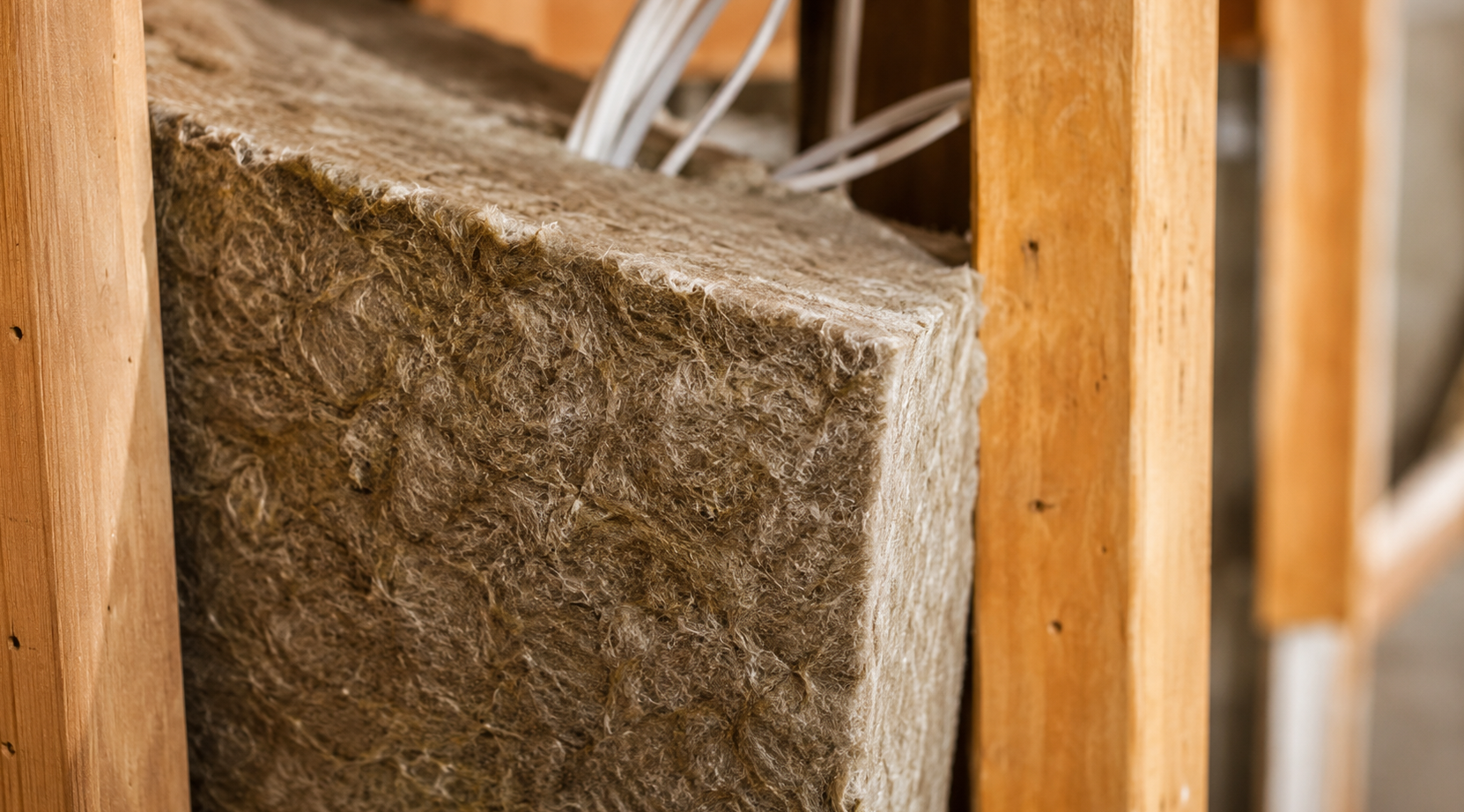
Rock wool is batt insulation spun from molten basalt or industrial slag into a dense mat of mineral fibers. It ships unfaced in friction-fit batts sized for 16-inch and 24-inch on-center framing.
Two product lines cover most residential uses. Acoustic batts such as ROCKWOOL Safe'n'Sound come in 3-inch and 6-inch thicknesses for interior partitions, floors and ceilings; the manufacturer lists a nominal density above 2.5 lb/ft³ and an NRC of 1.05 at 3 inches. Thermal batts such as Comfortbatt carry published R-values for exterior walls and attics.
What Fiberglass Insulation Is
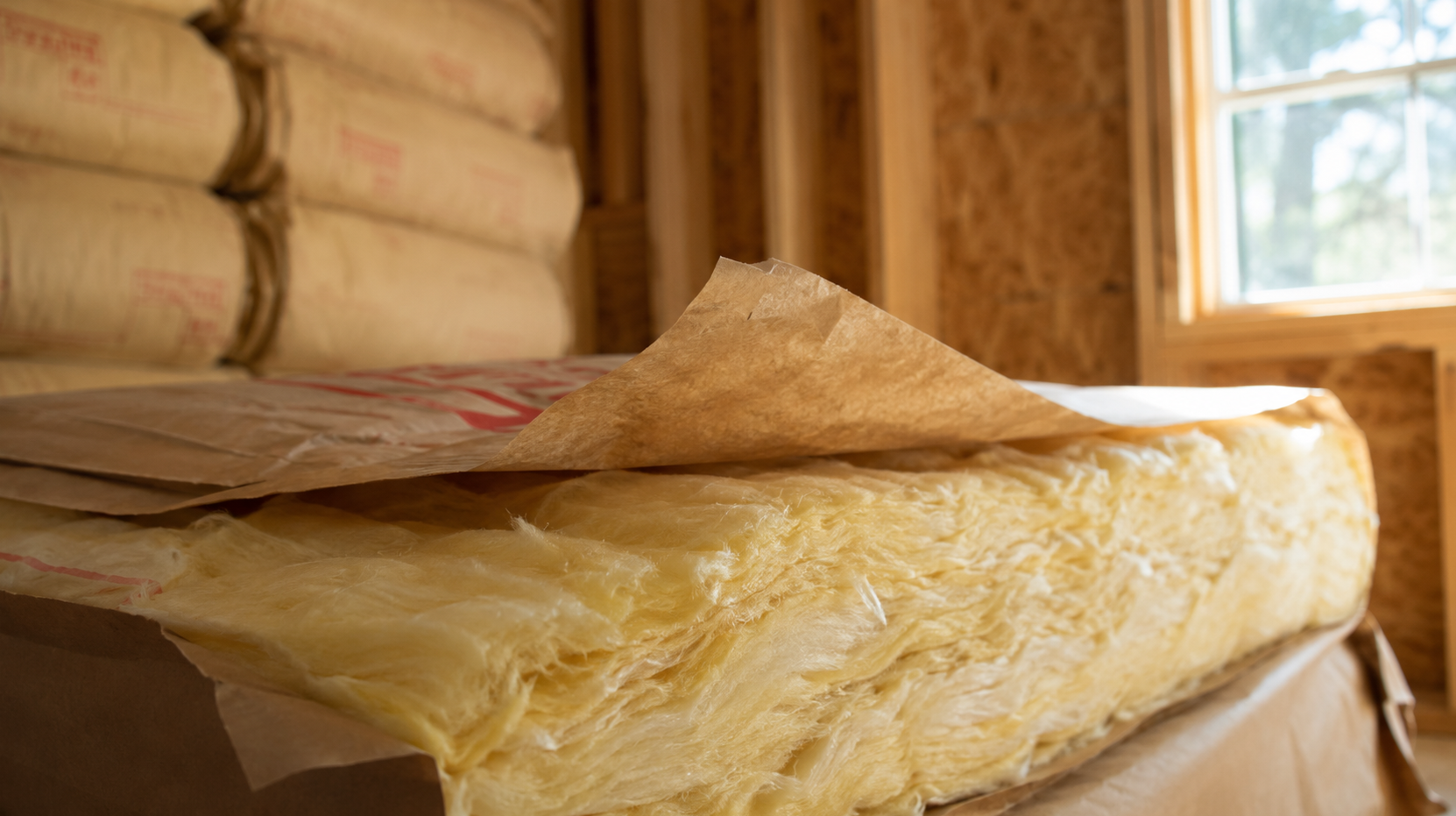
Fiberglass is insulation made from fine glass fibers bonded into batts, rolls or loose fill. It is the most widely installed residential insulation in the United States.
The format choice matters more than the brand. Batts come unfaced, kraft-faced or foil-faced, with the facing acting as a vapor retarder where code requires one. Blown-in fiberglass suits attics and closed wall cavities. Rigid fiberglass board - the 703-type material used inside acoustic panels - is a separate product class and is not a substitute for cavity batts.
Thermal Performance - R-Value Compared
Rock wool holds a modest R-value advantage per inch: roughly R-3.7 to R-4.2, against about R-2.9 to R-3.8 for standard-density fiberglass batts. In a 2x4 wall that usually means R-15 versus R-13.
High-density fiberglass narrows the gap almost entirely, reaching R-15 in the same 3.5-inch cavity for a fraction of the price premium.
Installation quality swings the result far more than material choice. A batt compressed into an undersized cavity loses R-value, because the trapped air doing the insulating is squeezed out. Gaps at studs, headers and electrical boxes cost more performance than the difference between the two materials ever will.
Sound Control
Cavity insulation affects sound in two distinct ways, and mixing them up leads to disappointment. Absorption describes how much sound energy the material soaks up. Transmission loss describes how much sound gets from one room to the next through the finished assembly.
Absorption Inside the Cavity
Rock wool absorbs slightly more, and its density is why. Published NRC figures put acoustic rock wool batts at about 1.00-1.05, with fiberglass batts commonly in the 0.85-0.95 range.
Absorption inside a cavity is a different job from absorption inside a room. Echo, flutter and long reverberation are treated with sound-absorbing panels on the finished surfaces - no amount of insulation behind the drywall changes how a room sounds to the person standing in it.
Transmission Between Rooms
Filling an empty cavity is the step that matters. A standard 2x4 wall with drywall on both sides sits around STC 33-34; insulating the cavity typically lifts it by five to eight points. An empty cavity resonates and undercuts every layer added on top of it, which is why filling it is the inexpensive first move in any wall isolation assembly.
Swapping one fibrous material for the other adds very little on top of that. Johns Manville, which manufactures both, states that the acoustic difference between mineral wool and fiberglass in a wall cavity is small enough that people cannot distinguish it.
What Moves the Needle More
Three things outrank insulation choice once the cavity is full: decoupling the two faces of the wall, adding mass, and damping the layers. Resilient isolation clips break the mechanical path between framing and drywall, a damping compound between two layers of board converts vibration into heat, and mass-loaded vinyl adds weight where framing depth is limited.
Sealing comes last and is skipped most often. Perimeter joints, outlet boxes and pipe penetrations need acoustical sealant, and an untreated door will leak more sound than the entire wall around it - which is why door seals usually belong in the same scope of work.
Fire Resistance
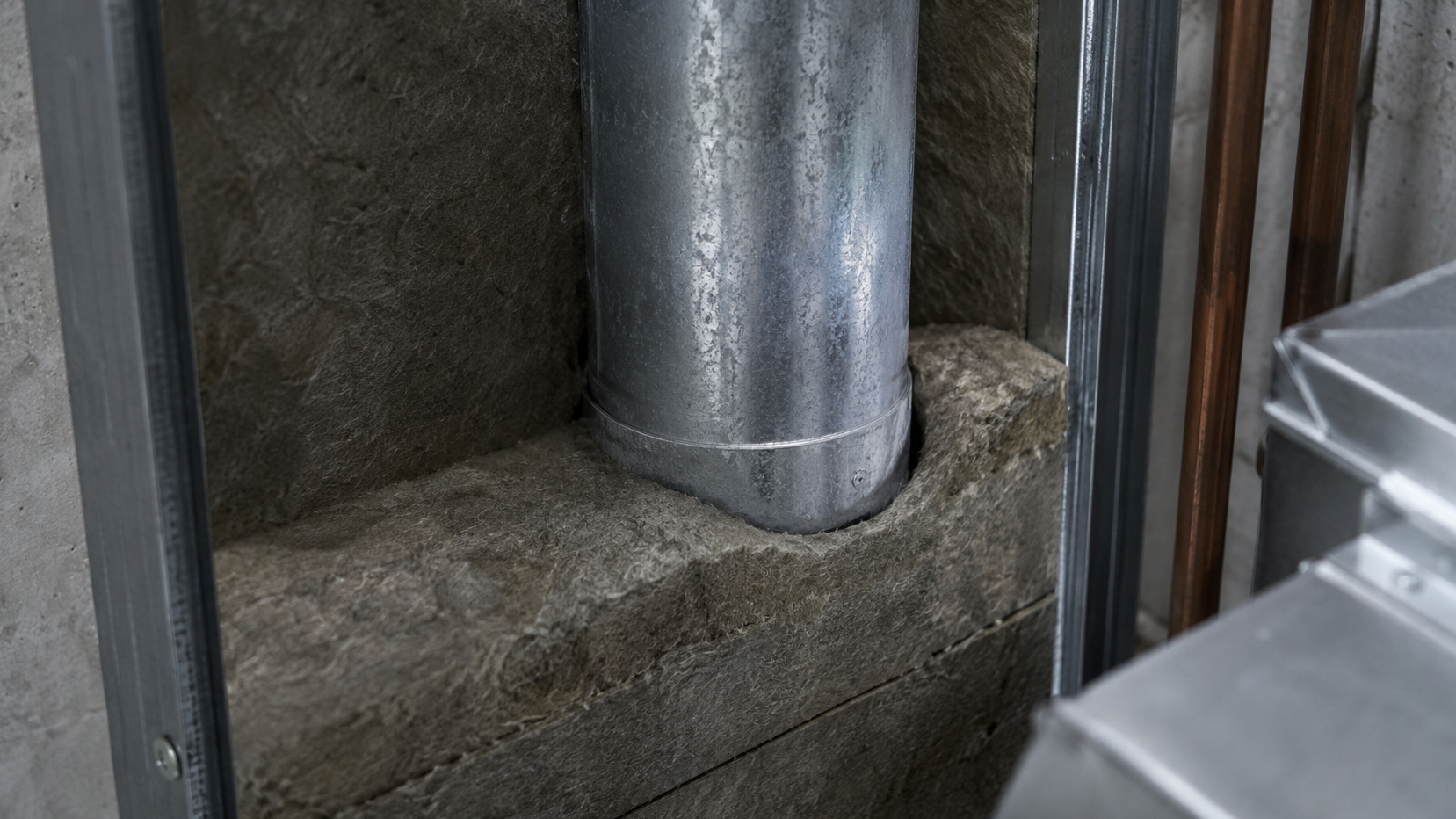
Rock wool is non-combustible and holds its form to about 2,150°F. Manufacturer data sheets for acoustic stone wool batts list a flame spread index of 0 and a smoke developed index of 0 under ASTM E84, with non-combustibility confirmed under ASTM E136.
Glass fibers soften and melt at roughly 1,200°F. Unfaced fiberglass batts are still tested as non-combustible, but kraft facing is a combustible material and must be covered by a code-approved finish rather than left exposed.
This gap is the reason rock wool is specified around mechanical rooms, garage-to-house walls, chimney and flue clearances, and fire-rated partitions. Neither material substitutes for a listed fire-rated assembly - the rating belongs to the tested wall design, not to the insulation alone.
Moisture, Weight and Handling
Rock wool is hydrophobic: water runs through and off it rather than soaking in, so a brief wetting event does not destroy its performance. Fiberglass absorbs and holds moisture, loses loft while wet and can sag afterward.
Neither material is a water control layer or a vapor retarder. Both depend on correct flashing, drainage and vapor control detailing to stay dry.
Weight decides some jobs on its own. Rock wool batts are heavy enough that piling them across an attic ceiling adds meaningful dead load to joists and drywall below - fiberglass is the practical choice for large horizontal coverage.
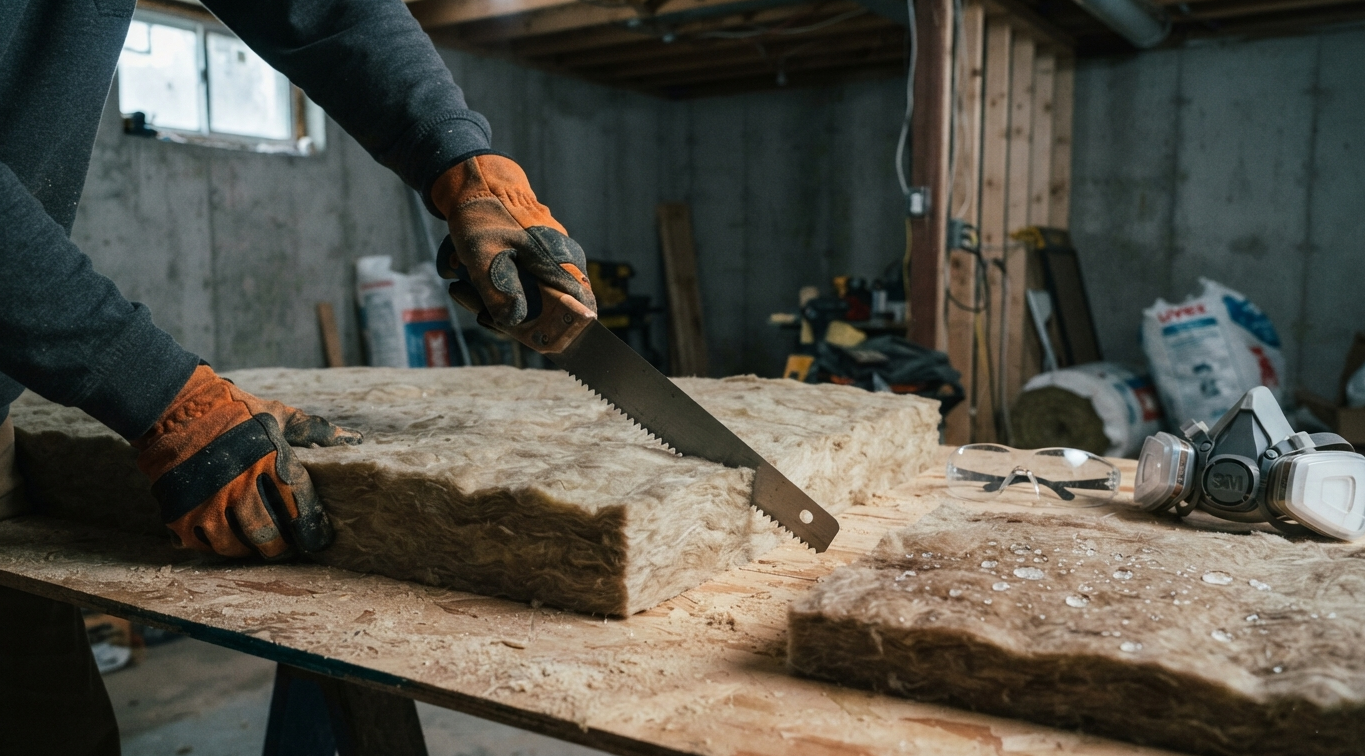
Handling differs in the field. Rock wool cuts cleanly with a serrated blade and stands on its own between studs, but working it around wiring, junction boxes and pipes takes patience. Fiberglass tears and splits easily around obstructions, though it needs support to stay put. Both irritate skin and airways - gloves, long sleeves, eye protection and a respirator apply to either.
Cost
Fiberglass is the cheaper material by a wide margin. Retail pricing for batts commonly falls somewhere between $0.30 and $1.50 per square foot depending on R-value and region, while rock wool typically runs $0.80 to $2.50 - most comparisons put the premium at 25% to 50%.
The premium is worth paying when the project needs what rock wool actually delivers: fire performance, moisture tolerance, or a rigid friction fit in an open cavity. On a large attic where the goal is simply R-value per dollar, it rarely pays back.
Which One to Choose for Your Project
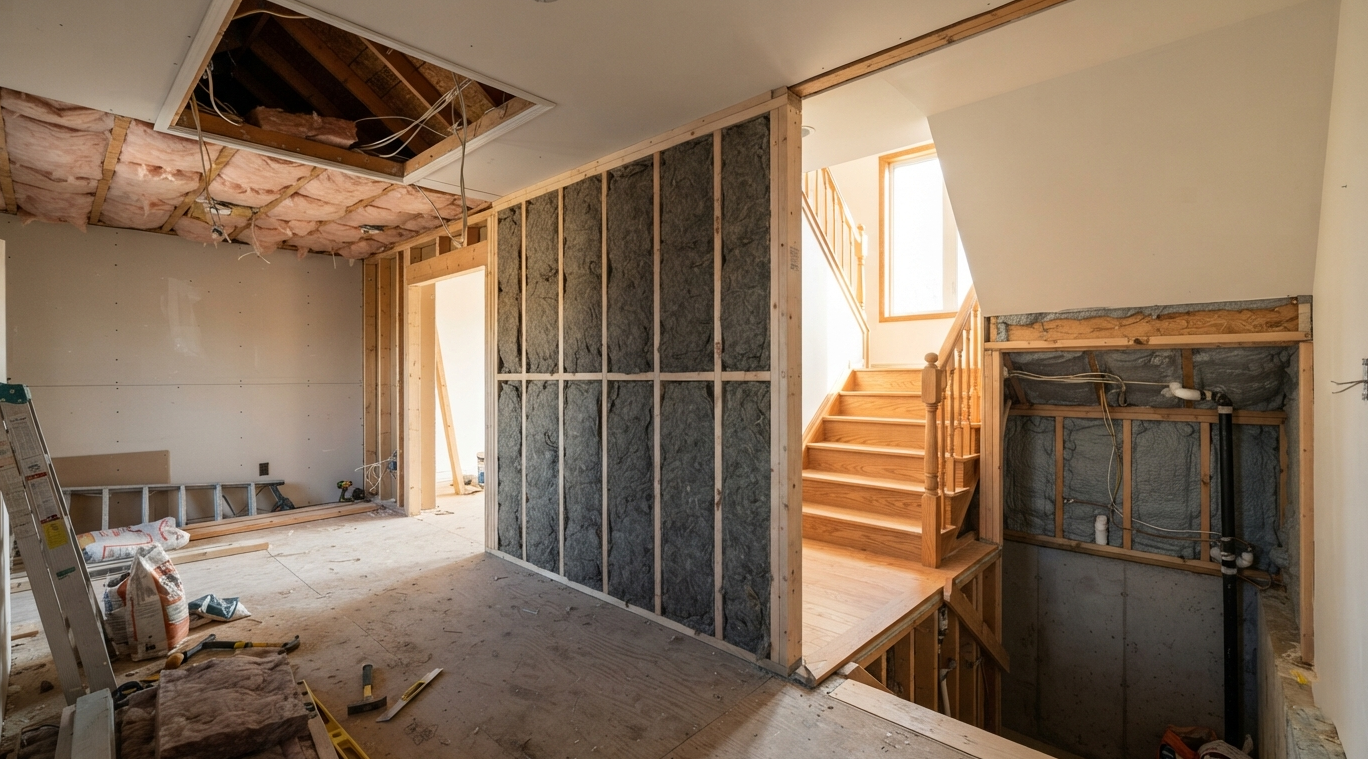
Match the material to the dominant requirement of the assembly, not to a general ranking. In most projects one factor - fire, moisture, weight or budget - decides on its own.
When Rock Wool Is Worth the Premium
Fire performance and water tolerance are what you're paying for. Mechanical rooms, furnace and flue areas, and the wall between an attached garage and living space all sit in that category, and rock wool is the standard specification for them.
Moisture exposure points the same direction. Basements, rim joists and crawl space perimeters see occasional wetting, and a material that sheds water instead of holding it will still be performing in ten years.
When Fiberglass Is the Better Call
Weight and cost decide large horizontal areas. An attic covered in rock wool adds real dead load to ceiling joists and drywall below, and at that square footage the price premium buys nothing the assembly needs - fiberglass is the practical choice.
Exterior walls in cold climate zones are close to a coin flip. High-density fiberglass batts hit R-15 in a 2x4 cavity, matching rock wool's rating for meaningfully less money.
When the Choice Barely Matters
Interior partitions and bedroom walls perform nearly the same either way. Acoustic rock wool is a modest upgrade if the budget allows; standard fiberglass gets you most of the result.
Home theaters and recording spaces are where this comparison misleads people most. Fill the cavity with whichever material is cheaper to get, then put every remaining dollar into decoupling, mass and damping - that's where the audible difference lives.
Getting the Assembly Right
Insulation is one layer in a system, and the layer with the least influence on how much sound reaches the next room. Once the cavity is full, further gains come from the wall design.
If you're planning a partition, ceiling or floor where noise control is the goal, our team can walk through the assembly with you and identify where added mass, decoupling and damping will make a measurable difference. Browse the sound isolation materials we supply, or call +1-888-661-7233, Monday through Friday, 8am-4pm EST.
See how rock wool vs fiberglass compare on R-value, sound, fire, moisture and cost, and which one to choose for walls, attics and mechanical rooms.
Recent posts


