
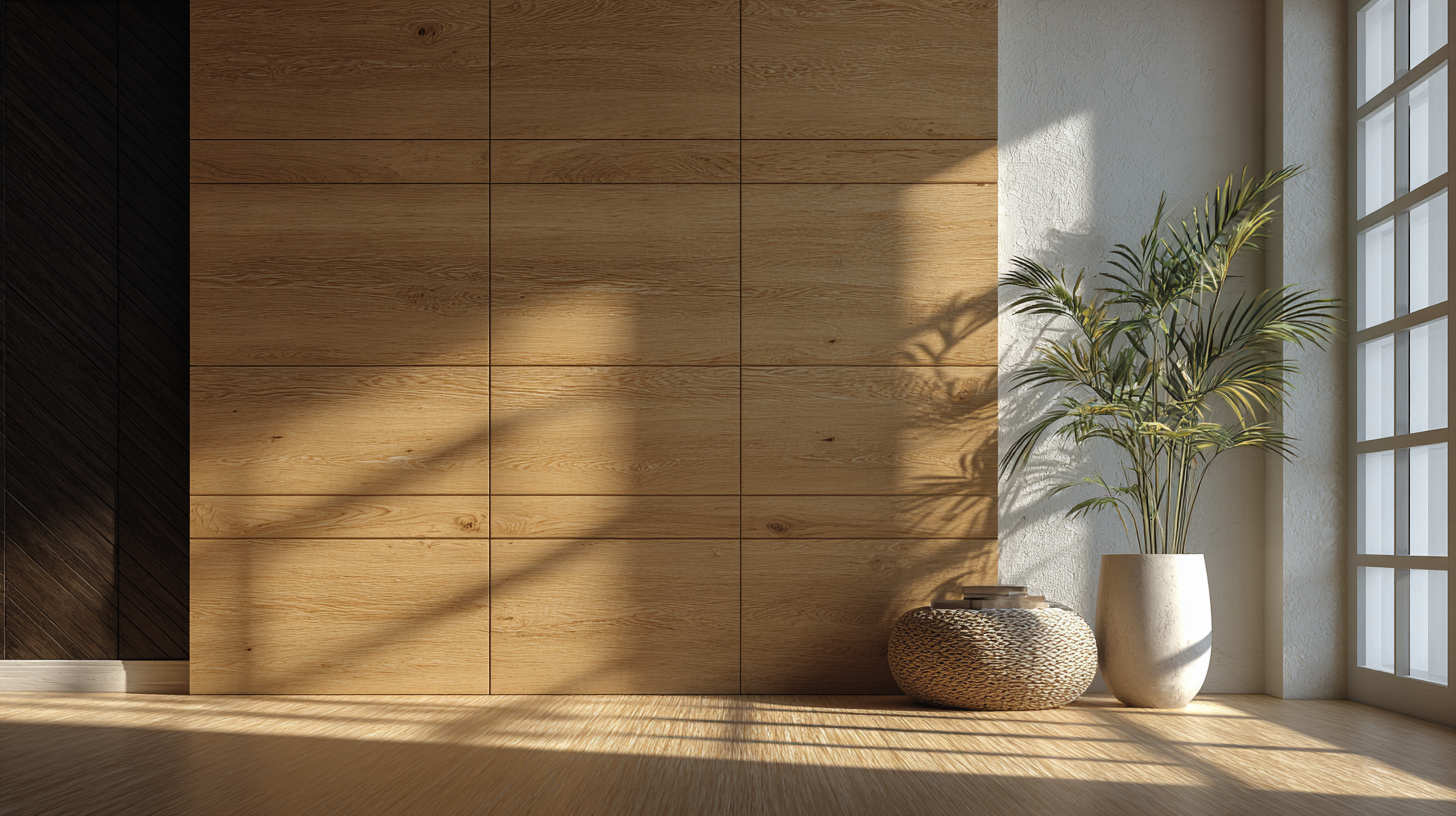
Wood panel walls add texture, depth, and warmth to interior spaces in a way that paint alone cannot achieve. The right panel type changes the perceived proportions of a room, defines its architectural character, and - in the case of acoustic wood panels - improves its sound quality as well.
Types of Wood Panel Walls
Seven main wood panel wall types are used in US residential and commercial interiors. Each differs in construction, visual effect, installation complexity, and the room types where it performs best.
|
Type |
Visual Effect |
Best Rooms |
DIY Difficulty |
Price Range (installed, per sq ft) |
|
Shiplap |
Horizontal lines, shadow gaps, casual texture |
Living room, bedroom, kitchen |
Easy-Medium |
$3-$10 |
|
Board-and-batten |
Vertical rhythm, architectural height |
Entryway, bedroom, hallway |
Easy-Medium |
$2-$8 |
|
Wainscoting |
Lower-wall coverage, formal or transitional look |
Dining room, foyer, bathroom |
Medium |
$5-$15 |
|
Acoustic wood slat |
Vertical ribbed texture, sound absorption |
Home theater, office, bedroom |
Easy-Medium |
$8-$25 |
|
3D wood panels |
Geometric relief, light-and-shadow play |
Accent wall, media wall |
Easy |
$6-$20 |
|
Tongue-and-groove |
Tight seamless planking, clean surface |
Bathroom, ceiling, bedroom |
Medium |
$4-$12 |
|
Reclaimed / barnwood |
Weathered texture, natural variation |
Living room, fireplace wall |
Easy-Medium |
$5-$18 |
Installation difficulty and cost vary significantly based on wall preparation, panel thickness, and whether a professional installer is used. The ranges above reflect DIY material and basic labor costs; specialty or custom panels fall outside these ranges.
Shiplap Wood Panels
Shiplap is a style of wood wall paneling where boards are installed with a small, consistent gap between them, creating a horizontal line and a shallow shadow detail along each joint. The term originally referred to boards with a rabbet cut along the edge - today it is used broadly for any horizontal plank wall with visible spacing.
The shadow line between boards is the defining visual feature of shiplap. It gives the wall a sense of rhythm and depth without heavy texture, making it suitable for rooms where warmth is desired without visual complexity.
Shiplap is most closely associated with farmhouse and coastal interior styles, but white-painted or stained versions integrate naturally into transitional and even modern spaces. The horizontal orientation visually widens a room and lowers the perceived ceiling height - an effect that adds coziness to large, open spaces but can make small rooms feel more compressed. Installing shiplap vertically reverses this effect: vertical planks draw the eye upward and make ceilings feel higher, which works well in entryways, hallways, and rooms with low ceilings.
Shiplap performs well in living rooms, bedrooms, kitchens, and covered outdoor areas. It is not recommended for high-moisture environments such as bathrooms or laundry rooms unless moisture-resistant or PVC-based alternatives are used.
Board-and-Batten Paneling
Board-and-batten paneling consists of wide, flat vertical boards (the boards) covered at their seams by narrow strips of wood (the battens). The result is a wall surface with consistent vertical lines at regular intervals - typically every 12 to 16 inches.
The vertical structure of board-and-batten creates a strong sense of height. In rooms with standard 8-foot ceilings, floor-to-ceiling board-and-batten makes the walls feel taller and more architectural. In rooms with high ceilings, the same treatment adds visual weight and grounding.
Board-and-batten is traditionally associated with craftsman, colonial, and farmhouse architecture but has been widely adopted in modern and transitional interiors - particularly when painted in a single color. A deep, saturated color on board-and-batten creates a bold feature wall effect; white or off-white produces a clean, understated backdrop.
The panel can be installed as full-wall coverage from floor to ceiling, or as wainscoting-height coverage (typically the lower third of the wall) topped with a horizontal rail and painted wall above. The wainscoting configuration is common in bedrooms, dining rooms, and entryways.
Wainscoting
Wainscoting is a wall treatment that covers the lower portion of a wall with wood paneling, typically from the baseboard to a height of 32 to 48 inches, finished at the top with a horizontal cap rail. The wall surface above the cap rail is left as painted drywall or finished with wallpaper.
The three most common wainscoting styles differ in their panel profile. Raised panel wainscoting features frames with a center panel that projects slightly forward, creating shadow lines and a formally traditional appearance. It is standard in dining rooms, studies, and period-style interiors. Flat panel wainscoting uses flush, recessed center panels in a simpler frame - more contemporary in character and suitable for transitional and modern spaces. Beadboard wainscoting uses narrow vertical planks with a rounded bead detail along each seam, producing a cottage, coastal, or casual farmhouse aesthetic most often used in kitchens, bathrooms, and sunrooms.
Contemporary designers have extended wainscoting beyond its traditional lower-wall position. Full-wall wainscoting - from floor to ceiling - is used in foyers, hallways, and formal rooms to create a fully paneled, architectural effect. At this scale, wainscoting functions less as a protective wall covering and more as a primary design statement.
Wainscoting adds practical value in high-traffic areas. The lower portion of walls in hallways, kitchens, and mudrooms is the zone most susceptible to scuffs, dents, and marks - wood wainscoting protects the wall surface and is easier to clean and repair than painted drywall.
Acoustic Wood Slat Panels
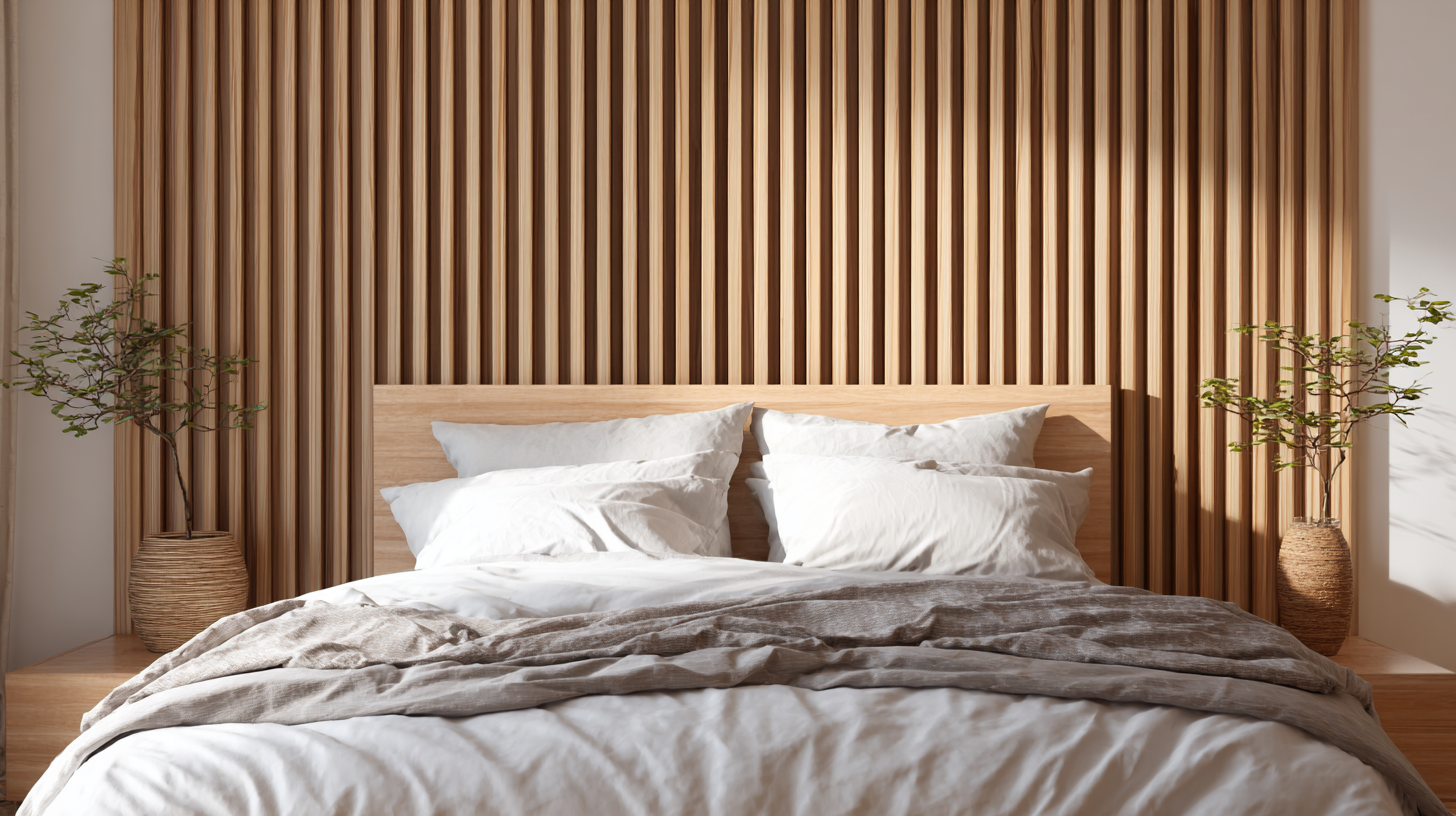
Acoustic wood slat panels are a paneling system that combines a row of narrow wood slats mounted to a felt or fabric backing. The construction serves two functions simultaneously: the wood slats create a visual surface with deep vertical shadow lines, and the backing layer absorbs sound energy that passes between the slats.
The acoustic performance of wood slat panels is determined by the backing material and the spacing between slats. Panels with a dense felt backing typically achieve NRC (Noise Reduction Coefficient) values of 0.40-0.65, meaning they absorb 40-65% of mid-frequency sound energy that reaches the panel. This makes them meaningfully effective at reducing echo and reverberation in rooms with hard parallel surfaces - a common problem in home theaters, home offices, living rooms with high ceilings, and bedrooms with hardwood floors.
The visual effect of acoustic slat panels differs from other wood panel types. The parallel vertical slats - typically 0.5 to 1.5 inches wide with gaps of 0.25 to 0.75 inches - create a ribbed texture with pronounced depth and shadow that changes in appearance throughout the day as light direction shifts. The felt backing between the slats is visible through the gaps, and dark backing (black or charcoal) creates the impression of greater depth.
Acoustic slat panels are appropriate in any room where both aesthetics and sound control matter. Home theaters and media rooms benefit most, as the panels reduce the reverberation that degrades dialogue clarity and low-frequency definition. Home offices with hard walls benefit from reduced echo during video calls. Bedrooms gain a quieter acoustic environment and a design feature simultaneously.
Unlike standard acoustic foam or fiberglass panels, acoustic wood slat panels do not require additional fabric wrapping or special finishing - the wood surface is the finished face, making them practical for visible, prominent wall positions, including accent walls, headboard walls, and TV feature walls.
3D Wood Wall Panels
3D wood wall panels are panels with a sculpted or relief surface that creates a three-dimensional pattern - geometric shapes, stacked blocks, chevron patterns, or organic wave forms - rather than a flat plank profile.
The primary design function of 3D panels is the play of light and shadow across the relief surface. As ambient light and artificial lighting change direction, the shadows cast by the raised geometry shift, making the wall appear to change throughout the day. This effect is most pronounced under directional lighting - recessed spotlights or wall-mounted sconces positioned at an angle to the surface amplify the three-dimensional quality significantly.
3D wood panels are most effective as accent walls in living rooms, dining rooms, and home offices - typically limited to a single feature wall rather than full-room coverage. Full-room application of heavily textured 3D panels in a small space creates visual overload. In large, minimalist rooms with otherwise flat surfaces, a single 3D panel wall provides the focal point the space needs without additional decoration.
Installation varies by panel type. Interlocking tile-format 3D panels are the most DIY-friendly option and are available in peel-and-stick configurations. Larger custom relief panels require adhesive or mechanical fastening and precise alignment during installation.
Wood Panel Wall Ideas by Room
The appropriate panel type for any room is shaped by three factors: the room's function, its ambient moisture levels, and the visual effect needed for its specific proportions and design style.
Best Wall Panels for the Living Room
Living room walls benefit most from shiplap and acoustic wood slat panels. Shiplap on a fireplace surround or behind a sofa creates warmth without dominating the space. Acoustic slat panels on a TV feature wall address both the visual and acoustic problems of a hard-surfaced media wall simultaneously - reducing glare reflection and echo in a single installation.
Wall Panel Ideas for the Bedroom
The bedroom headboard wall works well with both board-and-batten and acoustic slat panels. Board-and-batten creates strong vertical architecture behind the bed. Acoustic slat panels add sound control - reducing early morning echo and creating a quieter sleeping environment - in addition to the visual benefit. Both work in horizontal and vertical orientations, depending on ceiling height.
Wall Panels for the Home Office
The home office desk wall is one of the most practical applications for acoustic wood slat panels. They reduce echo audible during video calls and create a visually appropriate, professional-looking backdrop in a single installation. Board-and-batten in a saturated color adds design character to what is often a plain, converted spare room.
Wall Treatment for the Home Theater / Media Room
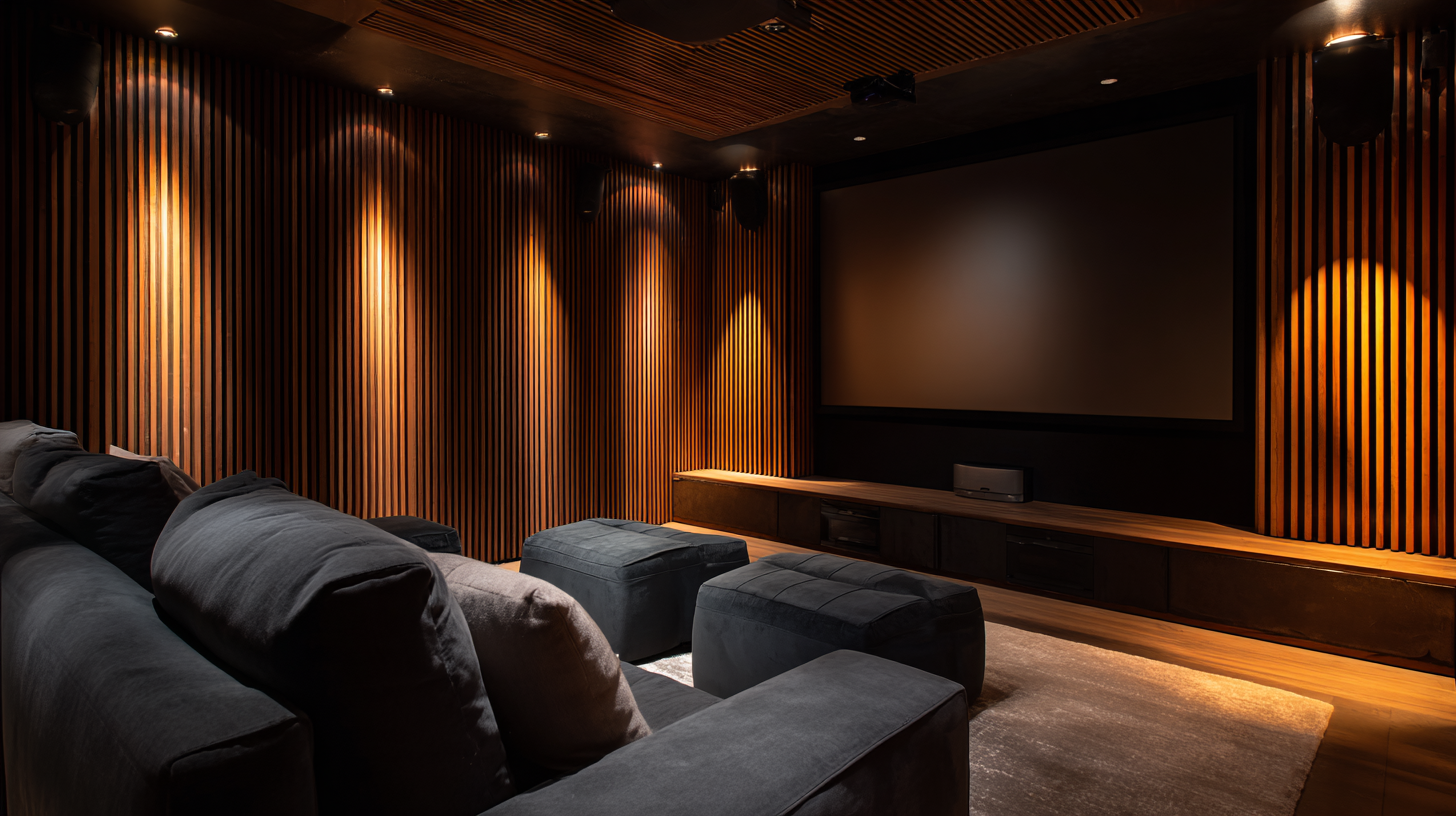
The home theater / media room is where acoustic wood slat panels deliver the strongest combined return. The sound absorption and visual depth make them appropriate for all four walls, or for the front and side walls at a minimum. Dark-toned panels - walnut, charcoal, espresso - reduce light reflection from the screen and enhance perceived contrast.
How to Choose Wood Wall Panels
The right wood wall panel is determined by four decision factors: interior design style, installation method, budget, and functional requirements.
Design style is the first filter. Shiplap and board-and-batten suit farmhouse, coastal, and transitional interiors. Raised panel wainscoting fits traditional and formal spaces. Acoustic slat panels and 3D panels align with contemporary, Scandinavian, and mid-century modern aesthetics. Reclaimed barnwood is appropriate in industrial and rustic environments.
The installation method determines what is feasible as a DIY project. Peel-and-stick plank panels and interlocking 3D tile panels require no tools beyond a utility knife and level and can be completed in a single day. Traditional wainscoting with routed rails and stiles requires a miter saw, nail gun, and joinery experience. Acoustic slat panel systems fall in the middle - most are installed with construction adhesive and basic fasteners on a flat substrate.
Budget affects both material selection and finishing. Prefinished panels - those with a factory-applied stain or paint - cost more per square foot but eliminate sanding, staining, and sealing steps on-site. Unfinished solid wood costs less initially but requires finishing labor and materials. For large rooms, the difference between prefinished and unfinished panels can outweigh the material cost gap.
Functional requirements are the deciding factor when standard design criteria are equal. Rooms with echo, reverberation, or sound privacy problems require panels with acoustic performance - acoustic slat panels with an NRC-rated backing are the appropriate choice. Rooms adjacent to bathrooms or in humid climates require moisture-resistant panel materials or sealed finishing. Rooms in high-traffic areas (hallways, mudrooms) benefit from harder wood species and scuff-resistant finishes.
Recent posts


