
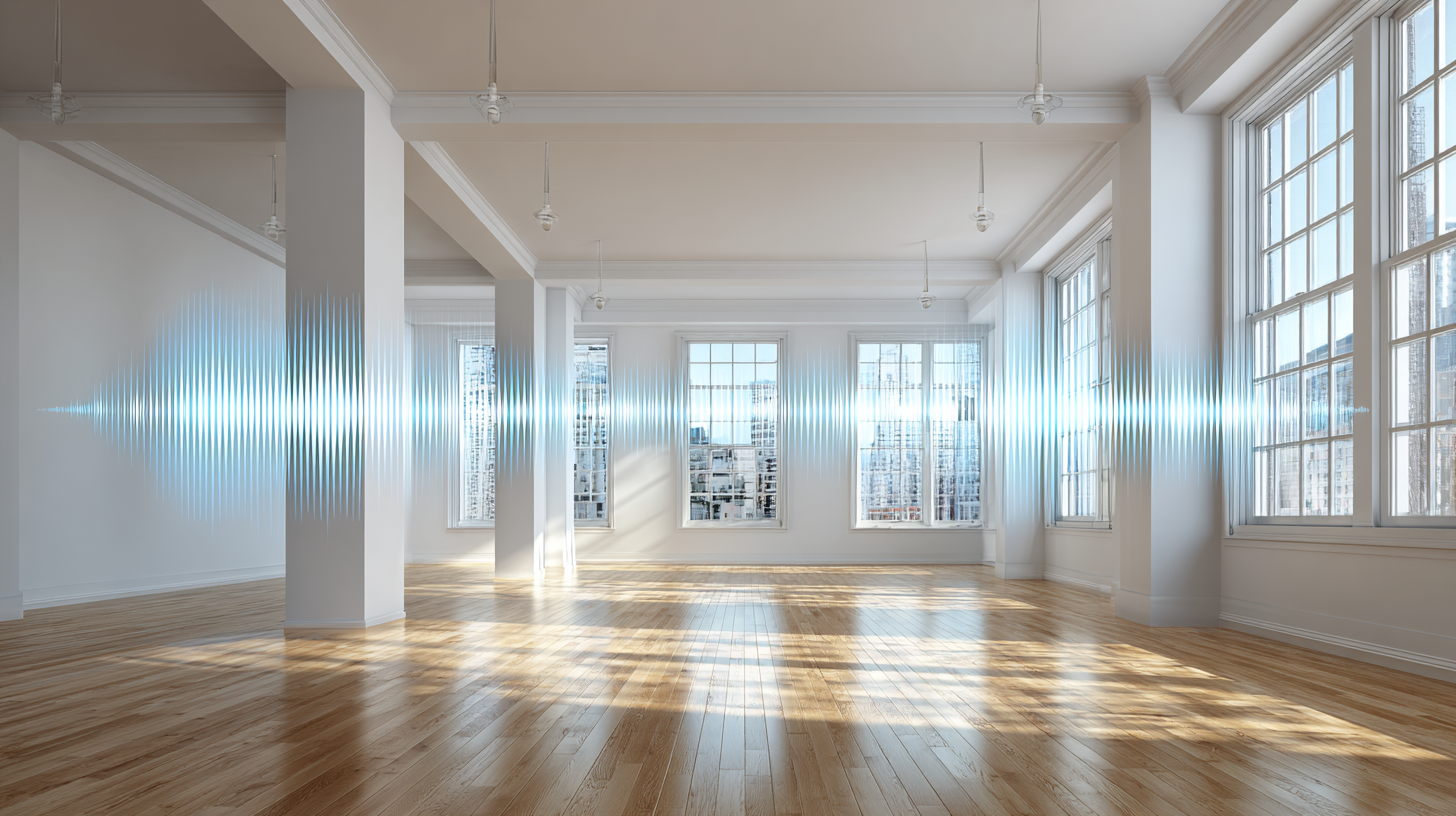
Why does my house echo all of a sudden? You didn't notice it during the walkthrough. The previous owners never mentioned it. But now it's impossible to ignore.
Here's the thing. Echo isn't just annoying. It actually affects how well you understand speech. It ruins video calls. It makes your beautiful open-concept living room feel cold and uninviting. That gorgeous minimalist aesthetic you worked so hard to achieve? It's working against you acoustically.
The good news is that echo has causes. And causes have solutions. In this article, we'll break down exactly why your home sounds the way it does and what you can do about it, from quick fixes that cost almost nothing to professional treatments that transform a space completely.
What Causes Echo in a House?
Let's start with basic physics. Don't worry, I'll keep it simple.
Sound travels in waves. When those waves hit a surface, they either get absorbed or reflected. Soft, porous materials absorb sound energy. Hard, smooth surfaces bounce it right back. When sound bounces multiple times before dying out, you hear an echo.
The formula is straightforward. Large empty space plus hard surfaces equals echo. The more reflective surfaces you have, the worse it gets.
Quick terminology check. Echo and reverberation aren't quite the same thing. An echo is when you hear a distinct repeat of a sound. Reverb is more of a prolonged, blended decay. Most homes deal with reverb, though we commonly call it echo. Either way, the solutions overlap.
So what creates these reflections in your home?
Hard flooring tops the list. Hardwood looks stunning. Tile is practical. Polished concrete screams modern industrial. But all of them sound like a racquetball court.
Bare walls come next. Standard drywall and plaster reflect almost everything that hits them. That fresh paint job isn't helping either.
High or vaulted ceilings give sound more room to travel and bounce. Cathedral ceilings are beautiful. They're also acoustic nightmares.
Large windows act like mirrors for sound. Glass reflects nearly 100% of the audio energy that hits it.
Minimal furniture means fewer obstacles to interrupt sound waves. That sleek, uncluttered look has acoustic consequences.
Open floor plans combine all these problems into one massive reverberant space. No walls to stop sound from traveling. No separation between kitchen, dining, and living areas. Just one big echo chamber.
Why Does My Room Echo? Room-by-Room Breakdown
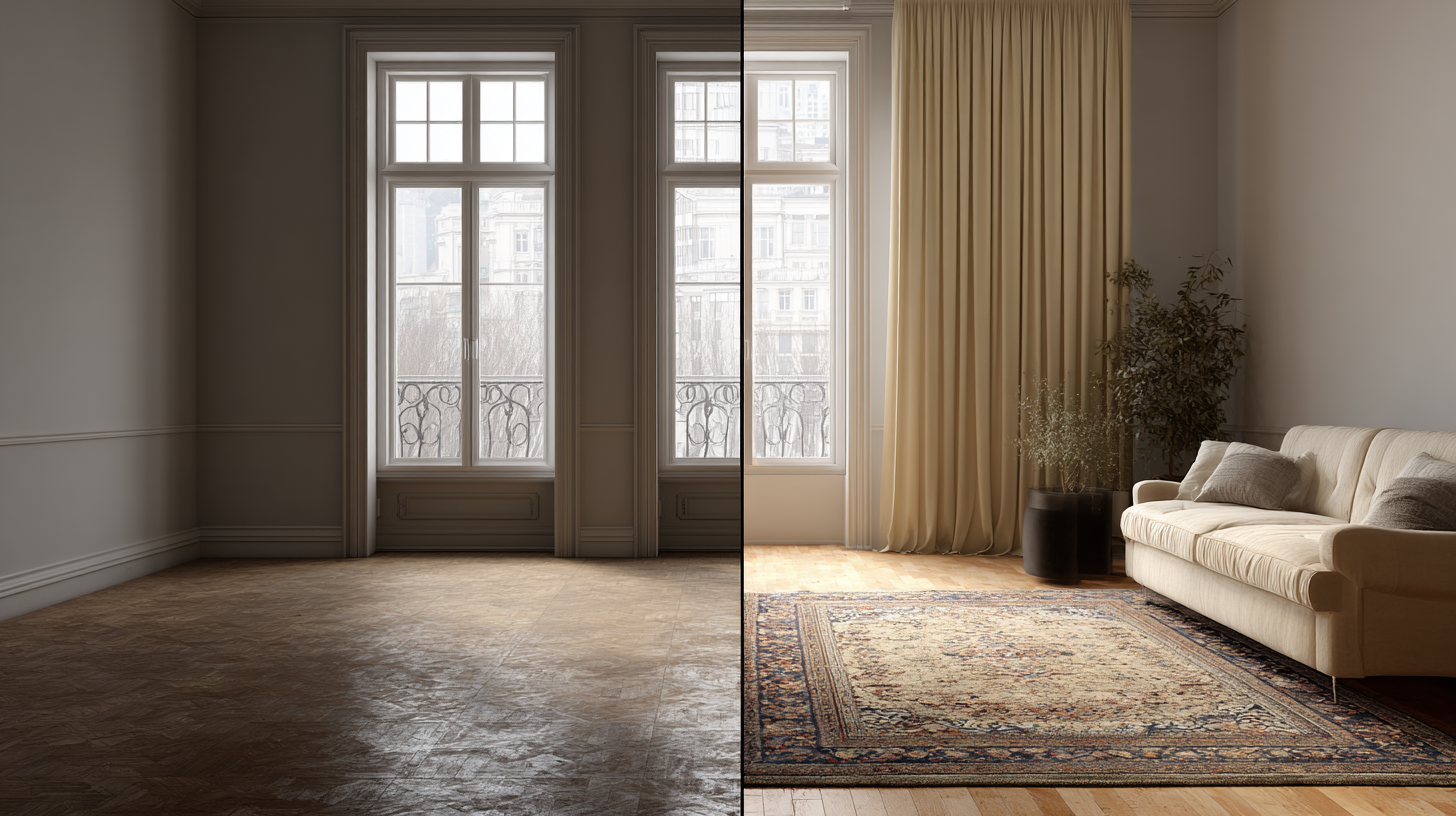
Different rooms have different acoustic challenges. Understanding yours helps you target the right solution.
Living Rooms & Open Spaces
This is ground zero for most echo complaints. Why does my room echo so badly when it didn't before? Usually, because something changed. You removed a rug. Swapped upholstered furniture for leather. Took down heavy curtains for minimalist blinds.
Large living rooms with open floor plans suffer most. High ceilings make it worse. That gorgeous two-story great room with floor-to-ceiling windows? Acoustically, it's a cave.
The fix usually involves the strategic placement of soft materials. Area rugs. Fabric furniture. Acoustic panels that double as art. We'll get into specifics later.
Why Are Bathrooms So Echoey?
Ever notice how your singing sounds amazing in the shower? That's reverb working in your favor for once. But for normal conversation, bathrooms are brutal.
Why are bathrooms so echoey compared to other rooms? Everything in them reflects sound. Ceramic tile on floors. Tile on walls. Sometimes tile on ceilings. Glass shower doors. Porcelain fixtures. Mirrors everywhere.
It's a small space completely surrounded by hard reflective surfaces. Sound has nowhere to go but back at you, repeatedly, in rapid succession.
Bathrooms are also the hardest rooms to treat. You can't exactly hang fabric panels where water sprays. Rugs get wet. Curtains grow mold. The solutions that work elsewhere don't translate well here.
What actually helps? Textured tiles that scatter sound instead of reflecting it cleanly. Fabric shower curtains instead of glass doors. Plush bath mats. Towels are stored on open shelving rather than hidden in cabinets. These small changes won't eliminate the problem, but they take the edge off.
Home Offices & Conference Rooms
Remote work changed everything. Suddenly, your spare bedroom became your office. And suddenly, you noticed how terrible you sound on Zoom calls.
Echo kills video conferencing. Your colleagues hear that hollow, distant quality. Your voice overlaps with its own reflections. The laptop microphone picks up every bounce. You sound unprofessional even when you're saying smart things.
The typical home office setup works against you. Hard desk surface. Computer monitor acting as a reflector. Empty walls painted a nice neutral color. Maybe a window behind you for natural light. Acoustically, it's a disaster.
Reducing echo in a room used to be optional. Now it's essential for anyone who takes calls from home. The good news? Home offices are relatively small spaces. Treating them doesn't require a massive investment.
Bedrooms
Bedrooms usually get a pass. They naturally contain soft materials. Mattresses absorb sound. Pillows and bedding help. Carpeting is still common in bedrooms, even when the rest of the house has hard floors. Curtains block both light and sound reflections.
When bedrooms do echo, it's typically a design choice causing the problem. Platform beds with minimal bedding. Hardwood or concrete floors with no rugs. Minimalist decor with bare walls. Floor-to-ceiling windows without proper window treatments.
The fix is usually simple. Add what bedrooms traditionally have. A plush rug under the bed. Heavier curtains. Artwork on walls. An upholstered headboard. These aren't acoustic products. They're just normal bedroom furnishings that happen to absorb sound.
Basements & Garages
Concrete is the enemy of good acoustics. And basements are concrete boxes. Floor, walls, sometimes ceiling. Add low ceilings that keep sound compressed and you've built an echo chamber.
Finished basements that become living spaces are particularly tricky. You cover the walls with drywall. You put down laminate flooring. You add recessed lighting. It looks great. It sounds awful.
Garages converted to home gyms, studios, or workshops face the same challenge. All that concrete reflects everything. Drop a weight and hear it bounce around for seconds.
These spaces often need the most aggressive treatment. We'll cover options in a moment.
How to Reduce Echo in Your House
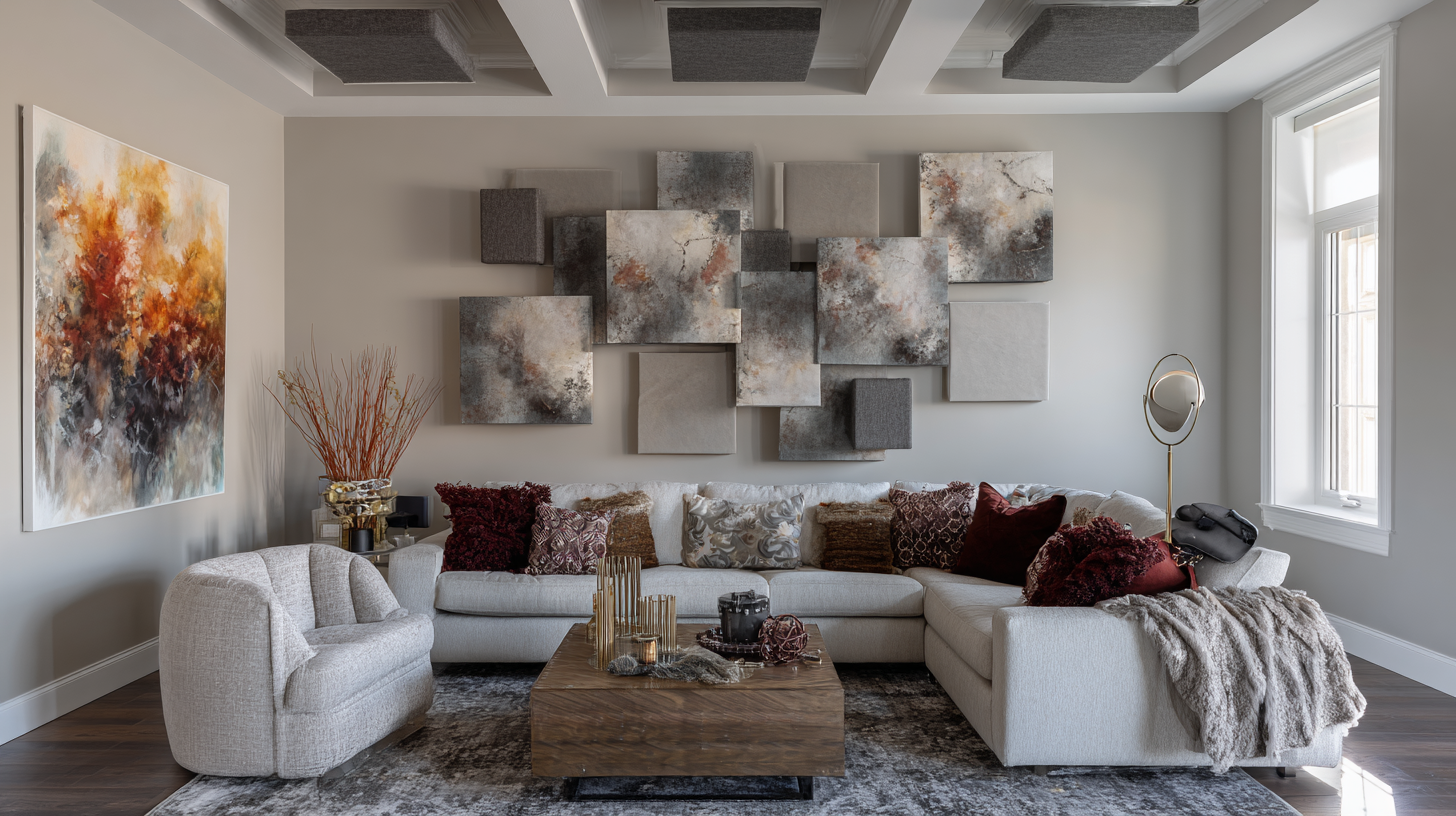
Now the practical part. Solutions range from free to professional-grade. Start with the easy stuff and work up until you're satisfied.
Quick Fixes (Low Cost)
You might already own what you need to reduce echo in room spaces throughout your home.
Area rugs on hard floors make an immediate difference. The thicker and larger, the better. A 5x7 rug helps. An 8x10 with a thick pad underneath transforms a room.
Heavy curtains do double duty. They soften window reflections and add mass to your walls. Velvet and thick cotton work best. Those sheer decorative panels? Acoustically useless.
Upholstered furniture absorbs sound that leather and wood furniture reflect. If you're shopping for a new sofa anyway, fabric beats leather for acoustics.
Bookshelves filled with books break up wall reflections and add absorption. The irregular surface scatters sound. The paper absorbs it. Built-ins work even better because they cover more wall space.
Soft textiles everywhere. Throw pillows. Blankets draped over furniture. Fabric wall hangings. Tapestries. These aren't just decorations. They're acoustic treatment in disguise.
Effective Solutions (Moderate Investment)
When quick fixes aren't enough, step up to purpose-built products.
Acoustic panels mount on walls and absorb sound directly. They come in various sizes, thicknesses, and colors. Some look like art. Others disappear into your decor. For most rooms, four to six panels on key reflection points solve the problem.
Acoustic ceiling tiles or hanging clouds address overhead reflections. High ceilings especially benefit. Clouds float below the ceiling line and catch sound before it bounces.
Wall-to-wall carpeting remains the gold standard for floor treatment. If that's not your style, thick area rugs with quality padding get close. The pad matters as much as the rug itself.
Professional-Grade Treatment
Some spaces need more. Home theaters. Recording studios. Podcast rooms. Serious home offices where audio quality is non-negotiable.
Fabric-wrapped acoustic panels offer custom sizes, shapes, and colors. Match your decor exactly. Cover large wall sections. Achieve specific acoustic targets.
Ceiling baffles hang vertically from high ceilings. They catch sounds that horizontal panels miss. Dramatic looking and highly effective.
Bass traps fit into corners where low frequencies build up. If your echo has a boomy quality, bass traps address what regular panels can't.
Full room acoustic design means calculating exactly what treatment you need and where. This is how to reduce echo in house spaces that resist simpler solutions. It's an investment, but the results are measurable and guaranteed.
What's Next?
Start with observation. Walk through your home and clap loudly in each room. Listen to how long the sound lingers. Identify your problem spaces.
Try the free fixes first. Move furniture. Add textiles. Rearrange what you already own.
If that's not enough, measure your rooms and consider acoustic panels. A few well-placed panels solve most residential echo problems.
Need help figuring out what your space requires? Browse our acoustic panel collection or call us at +1-888-661-7233. We'll help you find the right solution for your specific situation because every room deserves to sound as good as it looks.
Recent posts


