

Street noise doesn't ask permission. It wakes you at 2 AM. It ruins conference calls. It makes your home studio borderline unusable. If you've been researching diy soundproof windows, you already know the internet is full of contradictory advice. Some methods work. A shocking number don't.
This guide cuts through the noise. Twelve proven methods ranked by effectiveness, with honest costs and realistic dB reductions. No theory, no filler. Whether you're an NYC renter stuck with single-pane glass, a homeowner near a busy road, or a musician building a budget studio, every method has been evaluated for practicality and real-world performance.
One rule before anything else. Diagnose first, fix second. The most expensive soundproofing windows diy approach will fall flat if you're attacking the wrong weak spot. That's why this guide starts with diagnosis.
How to Find Where Noise Enters Your Windows
Before you spend a dollar, figure out where the problem lives. Grab a stick of incense and hold it near every edge of your window frame. Watch for smoke movement. Any disruption means air is leaking, and air leaks are noise highways.
Check your window type. Single-pane glass is the worst performer and the most common in older buildings. Double-pane is better, but degraded seals and failed gas fills can drop its rating close to single-pane territory.
Now identify the source. Press your palm flat against the glass while traffic passes. If you feel vibration, the glass itself is transmitting sound. If you feel air movement at the edges, your seals have failed. These are different problems requiring different solutions. Effective diy window soundproofing means matching the right fix to the right failure point.
NYC renters: every method in this guide is removable. Co-op boards, landmark buildings, strict landlords. None of that will be an issue.
12 DIY Methods to Soundproof Your Windows
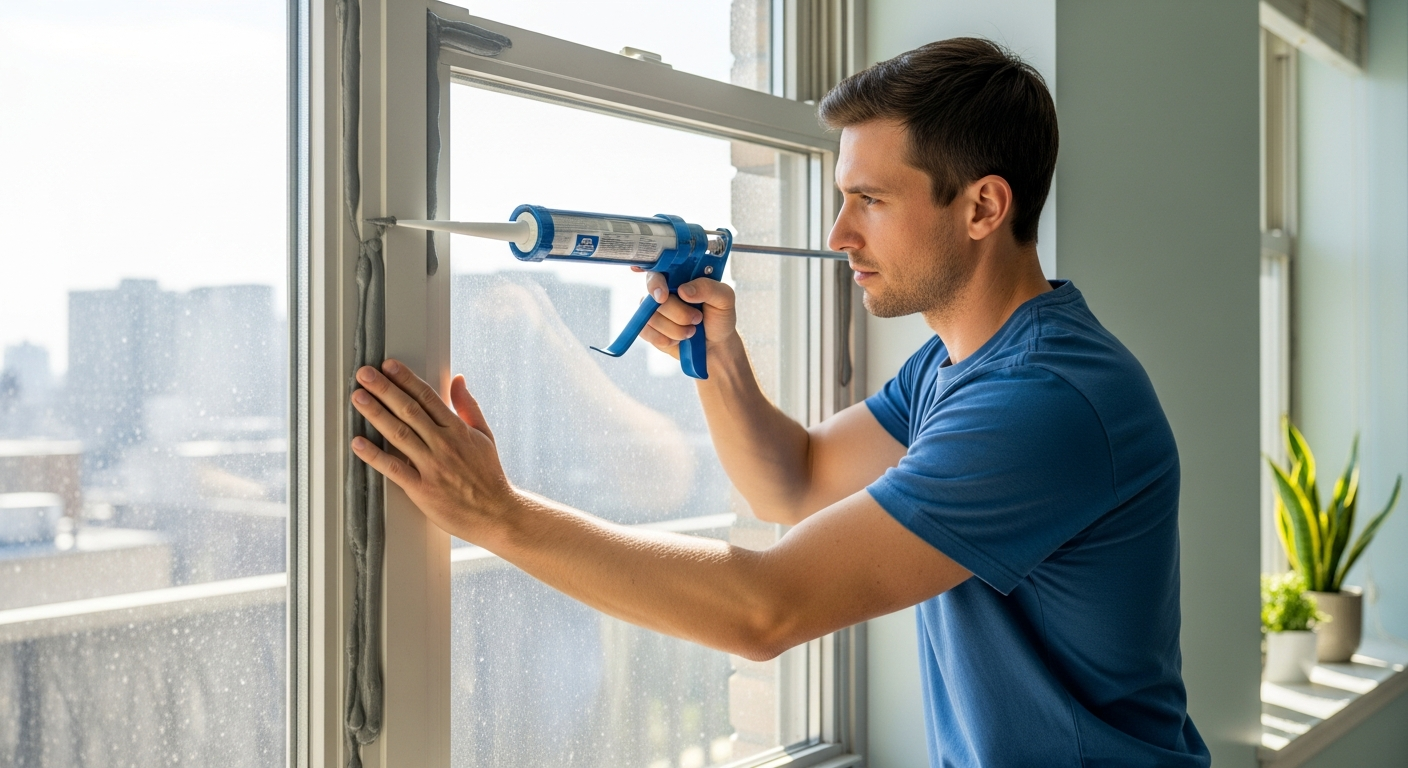
These methods run from simple and cheap to more involved and effective. Start with sealing. It's the foundation everything else builds on.
1. Acoustic Caulk
Standard caulk cracks over time. Acoustic caulk stays flexible permanently, which matters because buildings shift and settle. Run a bead along every joint where your window frame meets the wall. Hit the sill, the side jambs, and the head. Cost: $5 to $15 per tube. Expected reduction: 3 to 5 dB.
This is step zero. No other method performs at full potential if air is sneaking past the frame. Learning how to soundproof windows diy effectively starts right here, with a $10 tube of caulk and ten minutes of your time.
2. Weatherstripping
Weatherstripping seals the moving parts that caulk can't reach. V-strip slides into the channel where sash meets frame on double-hung windows. Rubber compression strips handle casement windows well. Vinyl is a budget middle ground. Cost: $5 to $20 per window. Reduction: 3 to 7 dB. Bonus: your heating bill drops.
3. Self-Adhesive Foam Tape
The fastest, cheapest option for renters who need results tonight. Peel, stick, done. Foam tape goes along the fixed edges where the sash closes. Cost: $3 to $10. Reduction: 2 to 5 dB.
It won't last forever. Foam degrades within a year of daily compression, and pulling it off can take paint with it. But for a temporary fix that costs less than lunch, it delivers.
4. Soundproof Window Plug
This is where serious noise reduction begins. A window plug is a dense, removable panel that press-fits into your opening. Build one from MDF or plywood, layer on Mass Loaded Vinyl, and top with acoustic foam facing the room. Add handles for easy removal.
Measure the opening at multiple points. Frames are almost never perfectly square. Cut the panel slightly undersized and use a compression weatherstrip around the edges for a snug seal.
Cost: $30 to $80 per window. Reduction: 10 to 15 dB. That's a massive jump from sealing methods.
The downside is total. No light. No view. Plugs are ideal for bedrooms at night and recording studios during sessions, but impractical for living areas during the day.
5. DIY Acrylic (Plexiglass) Window Insert
This is where you keep both quiet and daylight. A clear acrylic panel mounts inside your existing frame with a 2 to 4 inch air gap between it and the glass. That gap does the heavy lifting. The principle behind diy acoustic window inserts is simple, but execution demands precision. Measure your opening at a minimum of six points. Order cast acrylic at least a quarter inch thick, cut to exact dimensions. Mount with magnetic tape or a compression frame. Cost: $50 to $150 per window. Reduction: 8 to 12 dB. Even a tiny gap around the perimeter will let noise through, so accuracy is everything.
6. Interior Storm Window Panel
A glass or acrylic panel in a rigid frame, installed on the interior side of your window. Ready-made kits or custom sizes are available. The rigid frame creates a tighter seal than magnetic tape alone, making these among the most effective diy soundproof window inserts for older buildings and landmark properties. Cost: $100 to $400 per window. Reduction: 10 to 15 dB. Additional benefit: serious energy savings on heating and cooling.
7. Mass Loaded Vinyl (MLV) Sheet
A heavy, flexible vinyl mat that adds raw mass to your window. Hang it from hooks or incorporate it into a window plug build. At $1 to $2.50 per square foot, MLV delivers 8 to 12 dB of reduction. It blocks light completely and looks industrial. Best used as a layer inside composite solutions. MLV sandwiched between MDF and foam is the combination that delivers maximum results for the money.
8. Heavy Soundproof Curtains
Thick, multilayered curtains made from velour, vinyl, or fiberglass-backed fabric. They must overlap the window frame by 6 to 10 inches on all sides. Anything less and sound flanks around the edges. Cost: $40 to $200 per pair. Reduction: 5 to 8 dB. They won't stop low-frequency noise like construction or bass, but they soften mid and high-range sounds noticeably.
9. Cellular (Honeycomb) Shades
Double-cell honeycomb shades trap air in tiny pockets that absorb sound. Side-rail mounting eliminates gaps. Cost: $30 to $150 per window. Reduction: 4 to 7 dB. They look clean, filter light rather than blocking it, and work well when aesthetics matter as much as noise control.
10. Soundproof Blankets
Heavy moving blankets hung over the window on hooks or a curtain rod. Cost: $15 to $50. Reduction: 5 to 8 dB. Ugly, yes. Effective for the price, surprisingly so. Perfect for nighttime or temporary situations.
11. Acoustic Window Film
Transparent laminated film is applied directly to the glass. It adds mass and dampens vibration. Cost: $20 to $80 per window. Reduction: 2 to 4 dB. Minimal visual impact, minimal acoustic impact. Treat it as a supplement, not a solution.
12. Strategic Furniture Placement
A loaded bookshelf near the window absorbs and scatters sound. A thick rug underneath helps. Cost: zero if you rearrange what you own. Reduction: 1 to 3 dB. Not a standalone fix, but combined with sealing and a curtain or insert, it adds a meaningful layer.
DIY Methods That Waste Your Money

Bubble wrap on glass does almost nothing. Negligible mass, no air gap. Egg carton foam treats echo inside a room but does not block sound from entering. Thin curtains and standard blinds provide cosmetic comfort only. And any single method applied without sealing gaps first is money wasted. Soundproofing is cumulative. Seal plus mass plus air gap equals results.
Quick Wins That Multiply Your Results
Soundproofing one weak spot while ignoring others is like locking the front door and leaving the back wide open. Windows matter, but they're rarely the only problem.
Doors are the second biggest noise leak in most rooms. A standard interior door with a half-inch gap at the bottom lets in almost as much sound as a cracked window. Acoustic door seals close that gap permanently. Pair them with the window fixes above and you'll notice the difference immediately.
Walls and ceilings carry sound, especially in apartments and older buildings. If you're hearing bass, footsteps, or muffled voices through shared surfaces, the issue goes deeper than windows. Products like Mass Loaded Vinyl, Green Glue, and isolation clips target structural sound paths that no window treatment can reach.
Once outside noise is under control, the room itself still shapes what you hear. Echo, flutter, and reverb make everything feel louder than it is. Acoustic panels absorb those internal reflections and bring the perceived noise level down another notch. For home studios, offices, and media rooms, this is often the step that makes the space finally feel finished.
Start with your windows. Seal your doors. Then treat the room. That sequence delivers the best results for the least money. Sound Pro Solutions carries everything you need for each stage — explore the full product catalog or call +1-888-661-7233 for a personalized recommendation.
Recent posts


