
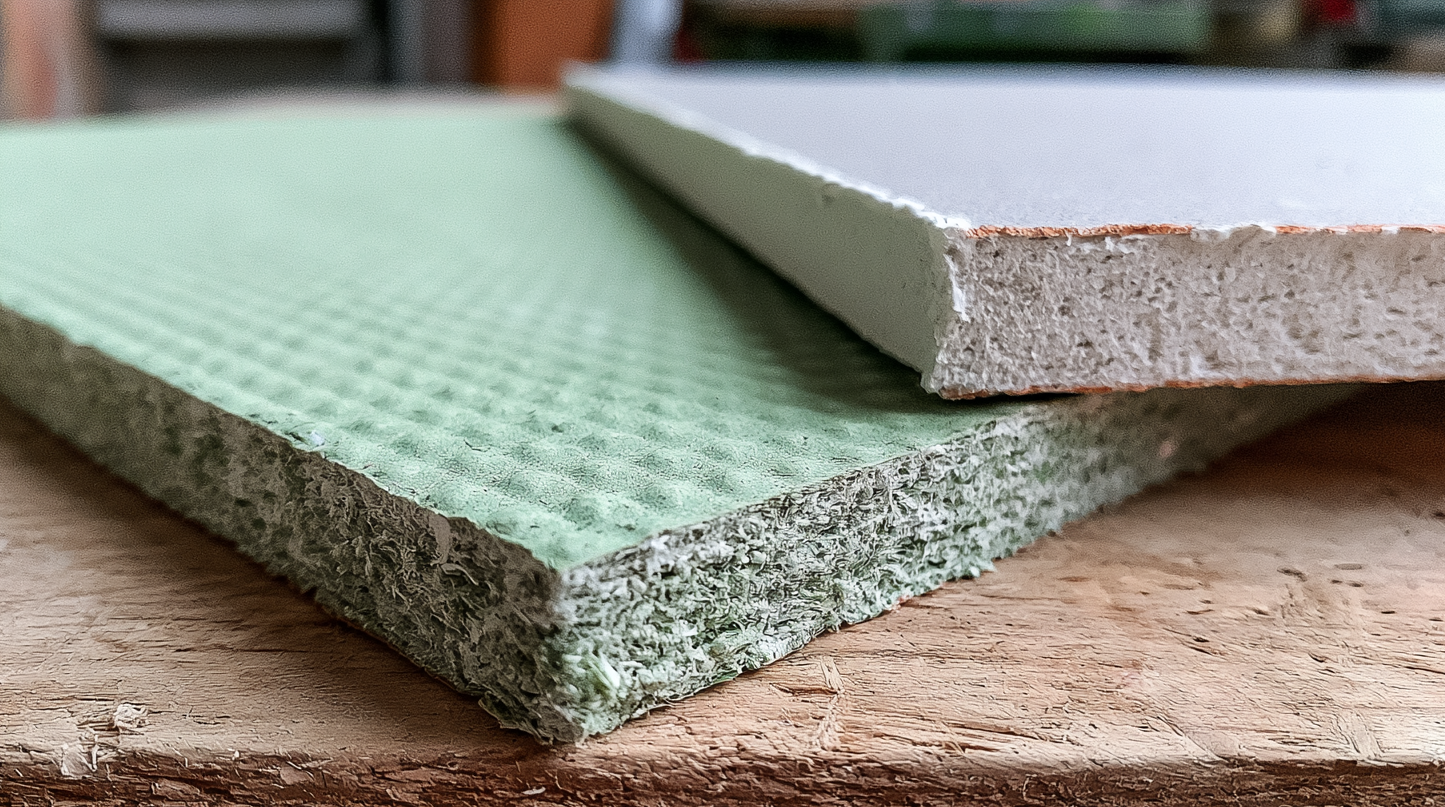
Both options get screwed to the same studs and both claim to cut sound transmission, so the question comes down to what each one actually contributes to the assembly. One adds mass. The other adds a softer layer between the framing and the finish surface, then requires a drywall face over the top.
SONOpan vs Double Drywall - The Short Answer
If the goal is adding mass to a wall, a second sheet of 5/8 inch drywall wins on every practical measure: more surface weight, lower price, and a finished surface ready for tape and paint. SONOpan earns its place when weight or available thickness rules that out.
|
SONOpan |
Second layer of 5/8" drywall |
|
|
Sheet size |
4' x 8' |
4' x 8' |
|
Thickness |
3/4 in |
5/8 in |
|
Weight per sheet |
About 26 lb |
About 70 lb |
|
Surface mass |
Roughly 0.8 lb/sq ft |
Roughly 2.2 lb/sq ft |
|
STC on its own |
27 |
Not rated alone |
|
Finished surface |
No, needs drywall over it |
Yes |
|
Typical sheet price |
Around $30 to $40 |
Around $10 to $20 |
|
Thermal value |
R-2.45 |
Negligible |
The last two rows explain most of the disagreement online. Comparing sheet to sheet makes SONOpan look expensive; comparing assembly to assembly is the only fair method, since SONOpan never ends up as the visible face of a wall.
What SONOpan Is
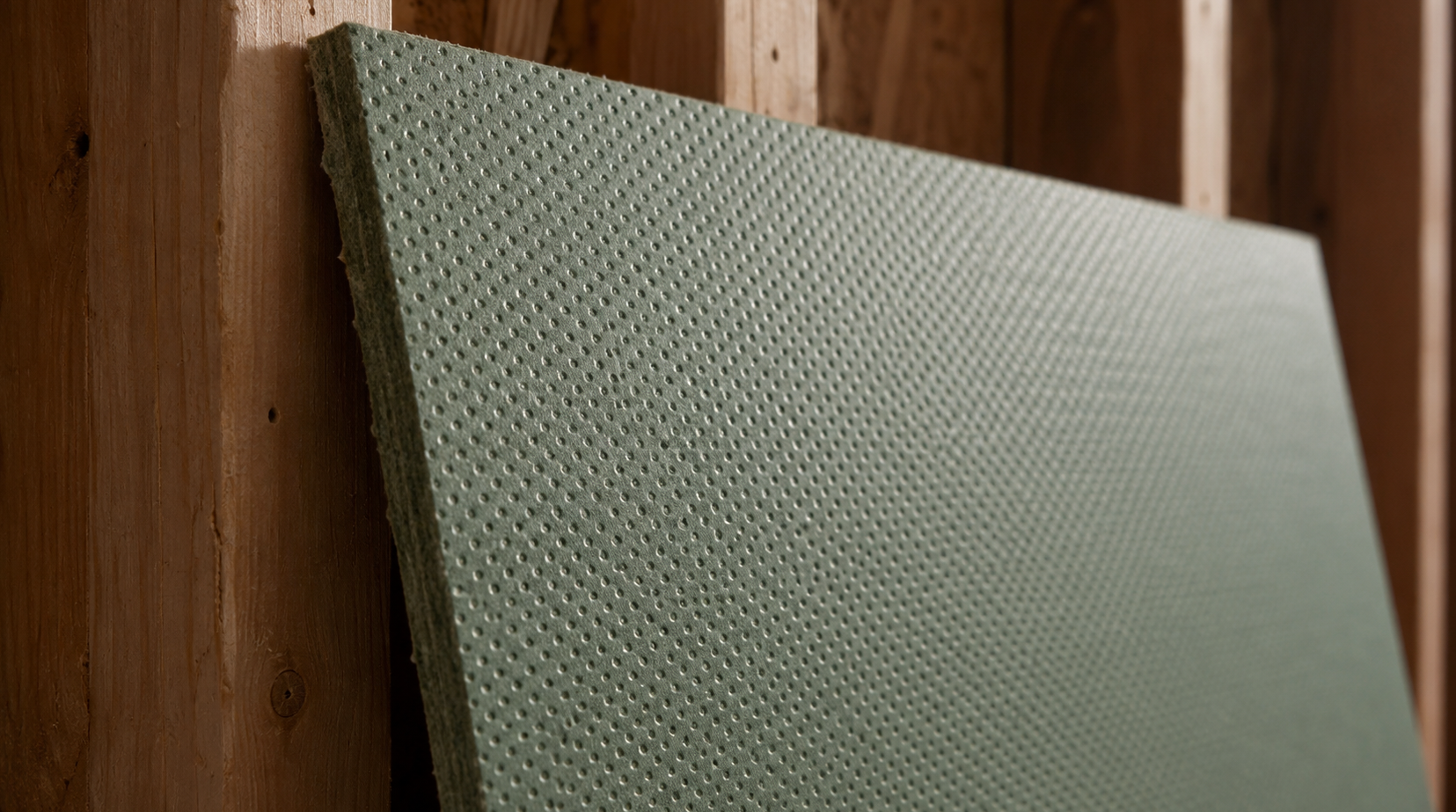
SONOpan is a panel pressed from recycled wood fibre, embossed with thousands of impressions on both faces to vary its density across the thickness. Sheets measure 4 by 8 feet at 3/4 inch, weigh around 26 pounds, and carry a published STC of 27 measured on its own.
Installation runs either over the studs before drywall goes up, or over existing drywall during a retrofit, with a new drywall layer on top in both cases. Standard drywall screws hold it, a utility knife cuts it, and the material is rated for interior use only.
The manufacturer also produces SONOpanX for floors, a 4 by 4 foot panel at 7/16 inch. Independent testing by Intertek returned IIC 72 and STC 62 with a Delta IIC of 25 in the tested floor assembly. Those figures belong to the floor product and do not transfer to wall applications.
What a Second Layer of Drywall Does
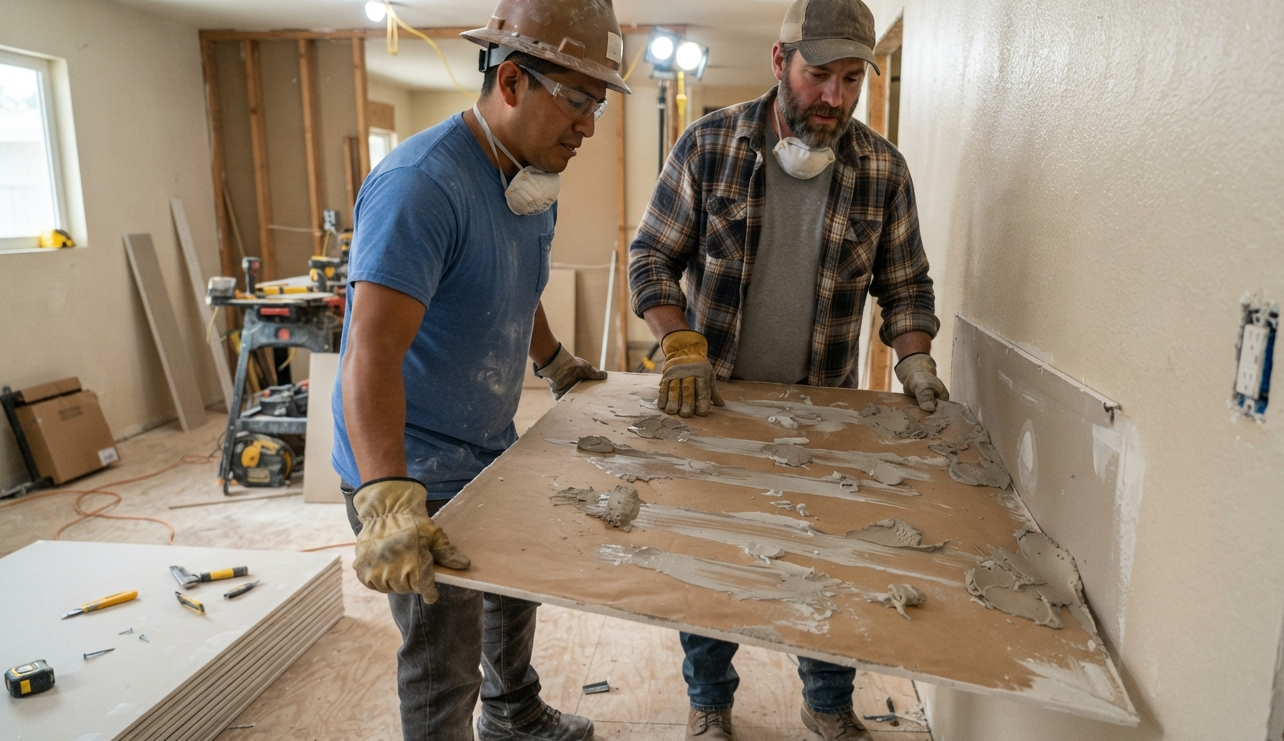
Adding a second sheet of drywall raises the surface mass of the wall, and mass is what resists the pressure of a sound wave. Doubling the weight of a single leaf buys roughly five to six decibels of transmission loss on its own.
Type X 5/8 inch board is the standard choice over 1/2 inch. The core is denser, the sheet weighs more, and it is the thickness specified in most fire rated designs.
Spreading a damping compound between the two layers changes the behaviour of the pair. The layers shear against each other instead of vibrating as one board, and that shearing turns vibration into a small amount of heat.
Mass Compared
Surface mass decides most of this comparison. SONOpan works out to roughly 0.8 pounds per square foot, while 5/8 inch drywall sits near 2.2, so the drywall sheet brings about 2.7 times the weight to the same plane.
Nothing in the SONOpan literature disputes that. The panel is marketed on a different mechanism, and its published STC of 27 in isolation reflects the low mass honestly.
Two situations flip the logic. Ceilings have a weight limit before the framing and fasteners become a concern, and 26 pounds overhead handles very differently from 70. Rooms with tight dimensions run out of thickness before they run out of budget, and a wall that gains three inches on every side loses real floor area.
How the Two Assemblies Compare on Paper
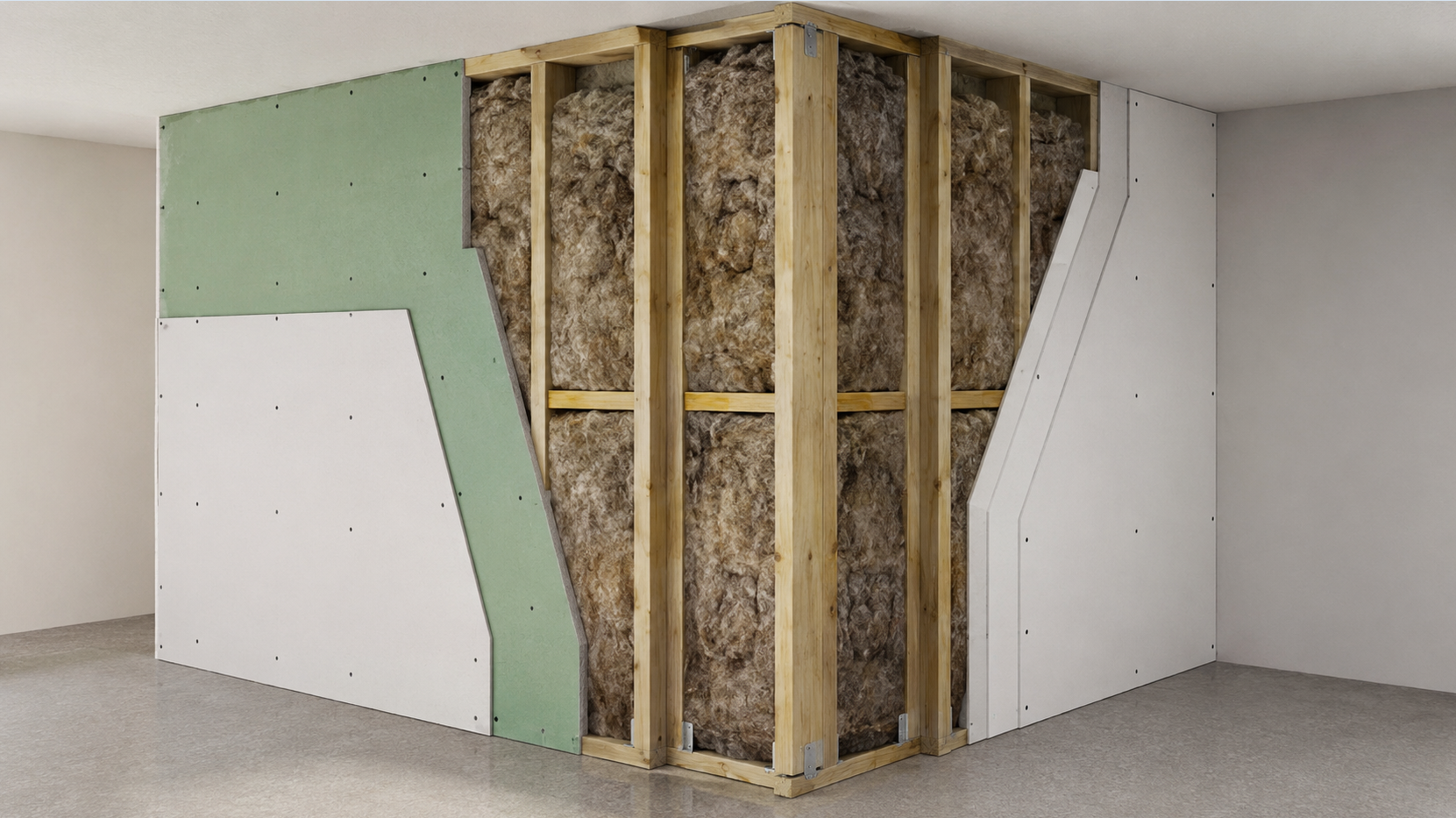
Published assembly ratings show gains in the range of three to five STC points from adding SONOpan to a double stud wall, against the same wall built without it.
Read that number with the right expectation. A difference of three to five STC points sits close to the threshold of what most people notice, and the same range is what a damping compound between two drywall layers typically returns. The bulk of the rating in any of these walls comes from the cavity depth, the insulation, the decoupling and the sealing.
STC also stops at 125 Hz. Bass from a subwoofer, a kick drum or a passing truck falls below the measured range, so neither product carries a promise there regardless of its published number.
Test provenance is worth checking on either side. SONOpanX floor data comes from Intertek. Published wall assembly ratings for SONOpan come largely from the manufacturer, which is common practice in this category and still worth knowing before a specification goes out.
Thickness, Weight and Handling
The 3/4 inch panel is thicker than a 5/8 inch board, and the SONOpan assembly ends up thicker than double drywall because it carries a drywall face as well. Around 1 3/8 inches against 1 1/4 for the same coverage.
Handling favours the panel by a wide margin. One person can carry, position and screw a 26 pound sheet without a lift, and a knife scores it cleanly without gypsum dust filling the room.
Handling favours drywall on the finishing side. Tape, mud and paint go straight onto a drywall face, while a SONOpan installation still has a full drywall layer ahead of it.
Cost of the Finished Assembly
Compare completed assemblies rather than individual sheets, since only one of the two options reaches a paintable surface on its own.
Two sheets of 5/8 inch drywall cover 32 square feet for roughly $20 to $40 in materials. SONOpan plus one drywall sheet covers the same area for roughly $40 to $60. The panel assembly runs somewhere between 50 and 90 percent more in material cost, with equivalent finishing labour on both.
Regional pricing moves both numbers, and the gap narrows where drywall runs expensive. Neither figure includes fasteners, sealant or insulation.
Fire Ratings
SONOpan appears in UL designs U309, U314, U423 and U465 and in ULC designs W301, W415 and W453 when installed exactly as those designs specify.
Type X drywall is the material most fire rated residential assemblies are built around, and a second Type X layer usually pushes an assembly toward a longer rating rather than complicating it.
Where a rated assembly applies, follow the listed design rather than assembling a wall from parts that individually appear in ratings elsewhere. Substitutions void the listing.
Which One to Choose
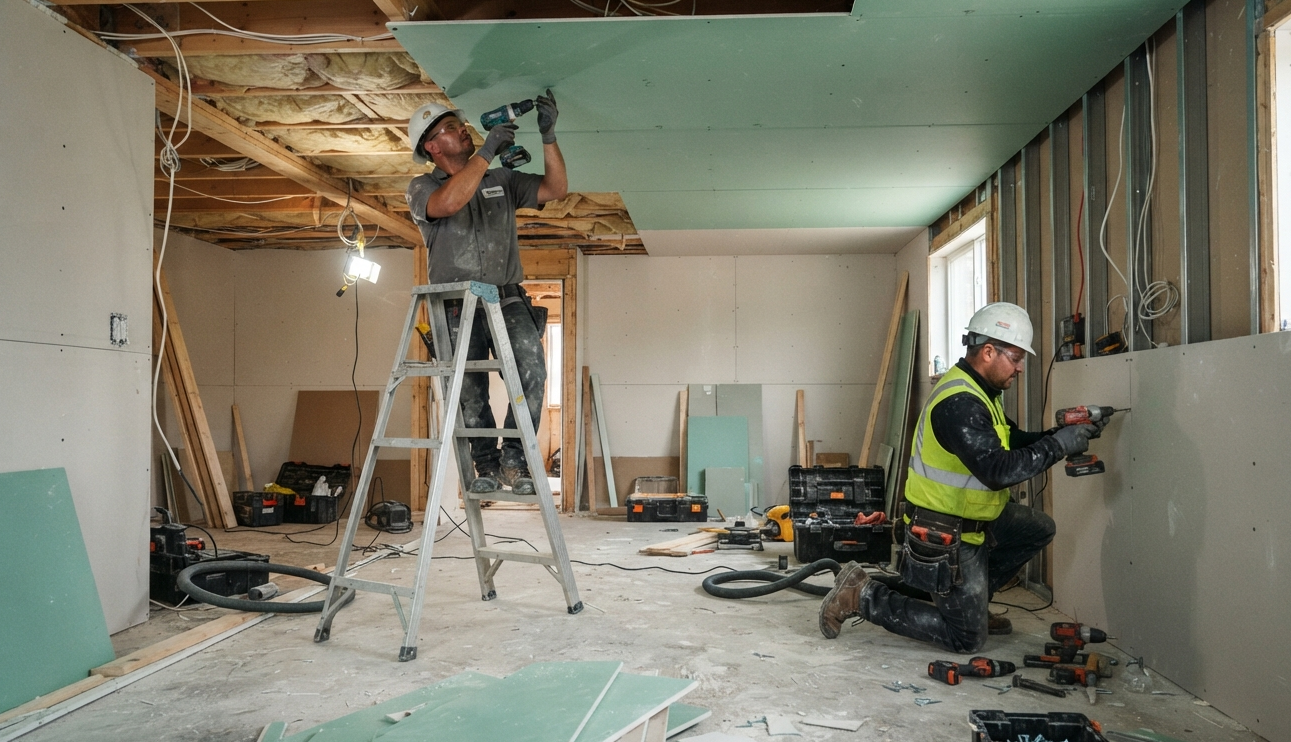
The choice rarely comes down to acoustics alone. In most projects one constraint decides it before the STC numbers matter: how much weight the structure can carry, how much thickness the room can spare, or how far the material budget stretches.
When SONOpan makes more sense
Ceilings where added weight is a concern, particularly older framing or long joist spans. Rooms where an extra inch of wall thickness costs usable space. Retrofits going over existing finished walls, where the lighter panel is far easier to place solo. Projects where a modest thermal contribution from the same layer has some value.
When a second layer of drywall makes more sense
Open framing during construction or renovation. Any project measured on isolation per dollar. Fire rated assemblies where Type X board is already specified. Walls where you want the added layer to also be the finished surface.
When both belong in the same wall
Demanding rooms such as home theatres and rehearsal spaces already run two layers of drywall on each face. Adding SONOpan behind them contributes another element to the stack, and the published assemblies that reach the highest numbers are built exactly this way. Check the ceiling load and the room dimensions before committing.
What Neither Option Replaces
Adding material to one plane of a wall has a ceiling on what it can deliver, and both products hit it.
Resilient isolation clips carrying hat channel break the mechanical path between framing and finish surface, which returns more than either sheet material discussed here. Filling the cavity with fibrous insulation lifts a bare assembly by several STC points. Acoustical sealant at every joint, outlet and penetration protects everything else you paid for.
An untreated door in a treated wall leaks more than the whole assembly around it, which is why door seals often outrank the choice between these two materials entirely.
Planning the Assembly
Decide on the basis of what constrains the project. Weight and thickness point toward the panel, budget and finish surface point toward the second board, and neither choice moves the needle as much as decoupling and sealing do.
We supply SONOpan alongside clips, damping compound, barriers and sealants, and our team can review your framing and target before you order anything. Call +1-888-661-7233, Monday through Friday, 8am to 4pm EST.
Recent posts


