
White Acoustic Ceiling Tiles

$48.00
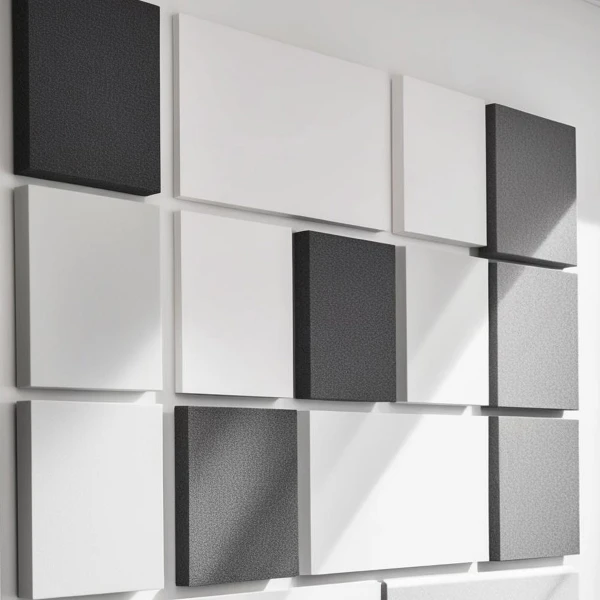
$48.00
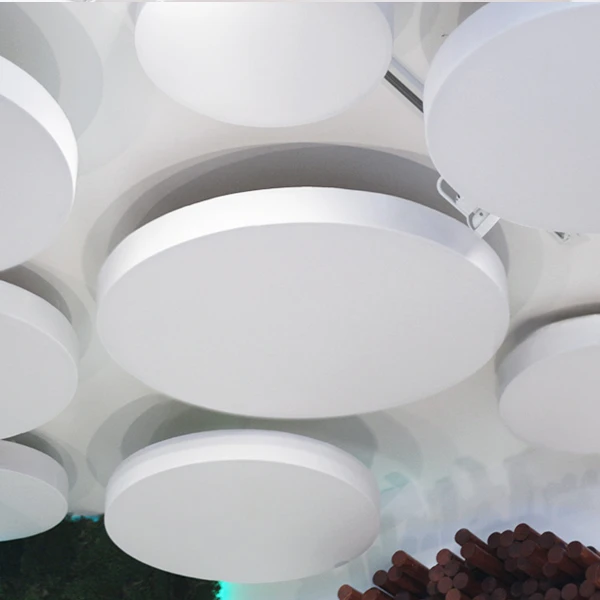
$105.00
White acoustic ceiling tiles from Sound Pro Solutions are rigid fiberglass panels wrapped in white polyester fabric. They absorb echo at the ceiling, which is usually the largest bare surface in a room. You can fasten them directly to drywall, plaster, wood, or concrete, or hang them below the ceiling as floating clouds.
Each tile comes in smooth Matte White or textured Anchorage White, in five sizes and two thicknesses. People use them in offices, classrooms, restaurants, home theaters, and studios, anywhere speech gets hard to follow, or a room sounds louder than it should.
What White Acoustic Ceiling Tiles Do
An acoustic ceiling tile absorbs sound energy that would otherwise reflect off the ceiling and back into the room. With fewer reflections, reverberation decays faster, voices stay clear, and background noise stops building on itself.
The ceiling deserves attention because it's one large, hard, uninterrupted plane. Walls get broken up by doors, windows, shelving, and furniture, while the ceiling has none of that and sends sound straight back down to everyone below. In rooms where windows, screens, or cabinets already take up the walls, it's often the only big surface left to treat.
White is the practical default for overhead work. A white tile blends with a standard painted ceiling, keeps the room feeling open, and doesn't compete with overhead lighting or decorative fixtures. Most people want acoustic treatment on the ceiling to go unnoticed, and white makes that easy.
Fabric-Wrapped Fiberglass vs Mineral Fiber Ceiling Tiles
Home centers mostly sell white mineral fiber tiles that drop into a suspended T-grid. Our tiles are fabric-wrapped fiberglass panels that mount directly to the ceiling or hang from it. Both types reduce echo, but they're built for different ceilings and give a room a different look.
|
Fabric-wrapped fiberglass tiles |
Mineral fiber lay-in tiles |
|
|
Material |
Rigid fiberglass board wrapped in polyester fabric |
Pressed mineral fiber with a painted face |
|
Installation |
Direct mount, or suspended on chain or wire |
Laid into a suspended T-grid |
|
Surface |
Smooth (Matte) or woven (Anchorage) fabric |
Paint, often with a fissured or textured pattern |
|
Thickness |
1" or 2" |
Varies by product |
|
Sizes |
1'x4', 2'x2', 2'x3', 2'x4', 3'x4' |
Mostly 2'x2' and 2'x4' grid modules |
|
Color |
Matte White, Anchorage White, plus other Matte fabric colors |
Mostly white |
|
Best fit |
Solid ceilings and targeted treatment |
Rooms that already have a drop ceiling |
Mineral fiber tiles make sense when a room already has a drop ceiling and you plan to replace the whole field. They're designed to fill every opening in the grid, so the treatment covers the entire ceiling by default.
Fabric-wrapped tiles suit rooms with solid ceilings: drywall in an apartment, exposed concrete in a loft office, plaster in an older house. You place them where the reflections are, and the fabric face serves as the finished surface. When the tiles hang as clouds, the open back lets them absorb sound from both sides.
Absorption ratings vary widely within each type. Check the NRC on each product's datasheet before you compare two specific tiles.
How to Choose White Acoustic Ceiling Tiles
Choosing white acoustic ceiling tiles comes down to four decisions: size, thickness, edge profile, and fabric. Room size and ceiling layout drive the first two, while the last two are mostly about appearance.
Tile Size
You can order tiles in 1'x4', 2'x2', 2'x3', 2'x4', and 3'x4'. The 2'x2' and 2'x4' formats match the proportions people already expect from a ceiling, so they line up neatly with light fixtures and room edges.
Square 2'x2' tiles are the easiest to arrange in grids, checkerboards, or offset patterns. Larger 2'x4' and 3'x4' tiles cover more area per piece, so there are fewer mounting points to drill. Narrow 1'x4' tiles work as strips between rows of lights or along a long, narrow room.
1-Inch or 2-Inch Thickness
Thickness sets which frequencies a tile absorbs best. A 1-inch tile handles the mid and high frequencies of speech, which is often all a small office or bedroom requires. A 2-inch tile reaches lower into the frequency range, and it's the thickness we recommend for most ceilings, especially in larger rooms, music spaces, and home theaters.
Square or Beveled Edge
Square edges give each tile a crisp outline that reads well in tight grids and modern interiors. Beveled edges are slightly softened and look gentler from below, which is why they're a common pick for homes and hospitality spaces. The edge profile has no effect on absorption, so the decision is purely aesthetic.
Matte White or Anchorage White
Matte White is a smooth, flat fabric that looks closest to a painted ceiling. Anchorage White has a visible weave, so the texture shows even from the floor.
If you're matching an existing white ceiling, Matte usually blends in best. If you'd like the tiles to read as a deliberate design feature, Anchorage gives them more presence without adding color.
How to Install White Acoustic Ceiling Tiles
White acoustic ceiling tiles go up in one of two ways: fastened directly to the ceiling with snap-on anchors, or suspended below it on chain or wire. Both methods rely on mechanical hardware, and both start with careful layout before you drill the first hole.
Before You Start
Plan the layout on the ceiling first. Measure the room, snap chalk lines for each row, and mark the mounting points, keeping clear of light fixtures, HVAC vents, and sprinklers.
Find the joists with a stud finder, since fasteners driven into wood joists hold best. On drywall or concrete, use anchors or toggles rated for the load, and don't count on drywall alone to carry a panel.
You'll need a tape measure, chalk line, pencil, stud finder, laser level, a drill with the right bits, and a stable ladder or scaffold. Wear eye protection and gloves, which also keep white fabric free of fingerprints, and have a second person on site for any overhead work.
Direct Mount with Snap-On Anchors
Direct mounting holds each tile flat against the ceiling and gives the cleanest look from below. Here's the sequence:
- Mark the anchor positions for each tile, using the laser level to keep rows straight.
- Drill pilot holes, then fasten the snap-on anchors into joists or into drywall or concrete anchors rated for the tile's weight.
- Lift the tile into place with a helper and attach it to the anchors.
- Check each tile for gaps, sagging, or loose edges before you start the next row.
Construction adhesive can back up the anchors, but never rely on glue alone to hold a tile on a ceiling.
Suspending Tiles as Ceiling Clouds
Suspended tiles hang below the ceiling at a height you choose, so sound reaches both faces of the panel. Our ceiling-only hardware kits pair chain or wire with insulation anchors.
Each tile hangs from four points spaced symmetrically, so mark those first and install ceiling anchors or eye bolts rated for at least twice the tile's weight. Then attach the chain or wire to the tile and to the ceiling points, and adjust each corner until the tile hangs level and lines up in height with its neighbors.
Drop Ceiling Grids
Our product pages don't list a lay-in option for suspended T-grids. If you plan to set tiles into an existing grid, contact us before ordering, and we'll confirm whether a given size and thickness will work with it. A tile that's drilled, cut, or otherwise modified during installation can't be returned, so it pays to confirm the fit first.
Здесь уместнее текст: у каждого применения по одной-две мысли, отдельные подзаголовки получились бы пустыми. Разбил список на абзацы разной длины, сгруппировав помещения по задаче. Все ссылки сохранены.
Where White Ceiling Tiles Work Best
White ceiling tiles fit any room where people talk, listen, or work together under a hard, bare ceiling. These rooms all revolve around speech, and when reflections pile up, people raise their voices and the whole room gets louder.
In offices and conference rooms, a group of tiles over the table cuts the echo that makes video calls hard to follow. Classrooms face the same problem at a larger scale, because students at the back hear the teacher mostly through reflected sound. Treating the ceiling improves speech intelligibility across the room. You'll find options for both in our acoustic panels for conference rooms and acoustic panels for classrooms.
Restaurants need the ceiling treated for a different reason: during busy hours, every table talks a little louder to be heard over the next one. Ceiling tiles keep that noise from climbing. More options are in our acoustic panels for restaurants.
At home, white tiles calm ceiling reflections in a theater or living room without darkening a space that doubles as an everyday living area. Studios and podcast rooms usually go further, with a cloud of 2-inch tiles hung above the recording or mixing position to control reflections from overhead. See our acoustic panels for home theater and acoustic panels for studios.
If you're comparing shapes and finishes beyond white, the full range lives in acoustic ceiling tiles and panels. For walls in the same color, see white acoustic panels.
Acoustic ceiling tiles control echo inside the room where they're installed. They won't stop footsteps from the apartment upstairs or keep a conversation from carrying into the next office, because blocking sound between spaces takes mass and decoupling. If that's the problem, look at our sound isolation products, including sound isolation clips for ceilings.
Ordering, Shipping, and Returns
Tiles ship by FedEx anywhere in the contiguous United States. Shipping is calculated at checkout from weight, dimensions, and address, and each product page lists its own ship-out time.
Every package is insured for the full order value, with that coverage built into the shipping charge. If a tile arrives damaged, email us within 5 days of delivery with photos, and we'll send a free replacement once the insurance review is done.
Finished panels carry a 1-year limited warranty for interior installations that follow our mounting guidelines. Returns go through an RMA within 30 days of purchase, and custom or made-to-order tiles are final sale. In New York City, pickup and delivery are free on orders over $150.
Send us the room dimensions and a photo if you're unsure which configuration fits your ceiling, and we'll help you choose.
FAQs
Frequently Asked Questions. Here are some common questions about Acoustic panels.
/01Can white acoustic ceiling tiles go into a drop ceiling grid?
Our product pages list direct-mount and suspension hardware, with no lay-in option for T-grids. Send us your grid size before ordering, and we'll tell you whether a specific tile will fit.
/01What thickness works best on a ceiling?
We recommend 2-inch tiles for most ceilings, since the extra depth absorbs a wider range of frequencies. A 1-inch tile is usually enough when the main goal is clearer speech in a small room.
/01Can I install the tiles myself?
Yes, if you're comfortable on a ladder and know how to find joists. Plan the layout first, use mechanical anchors rated for the load, and keep a second person on site for every overhead step.
/01Do white acoustic ceiling tiles block noise from other rooms?
They reduce echo and reverberation inside the room where they're installed. Keeping noise from passing between rooms or floors calls for isolation materials such as isolation clips, mass-loaded vinyl, or damping compound.
/01Are the tiles available in other colors?
Yes, the Matte fabric collection includes 22 colors besides white, from Stone and Grey to Navy and Black, all available in the same sizes and thicknesses.
/01Can I return white ceiling tiles?
Stock tiles can be returned within 30 days through an RMA, minus the original shipping cost. Made-to-order tiles, tiles drilled or modified for installation, and white fabric panels that show signs of use can't be returned.