
Acoustic Panels for Large Rooms

$48.00
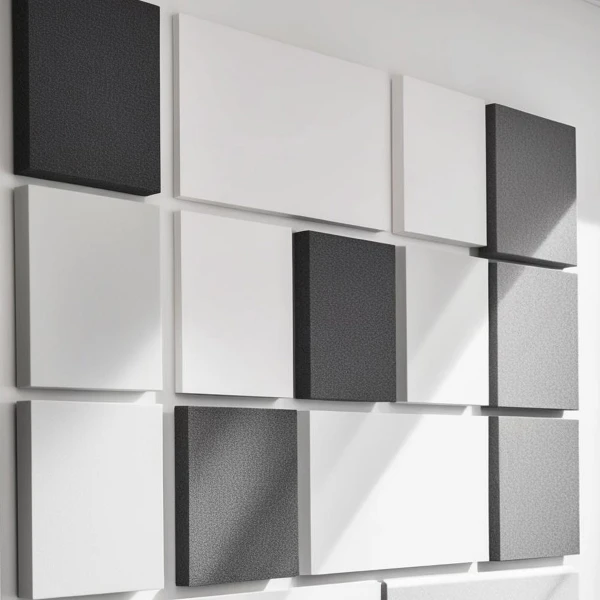
$48.00
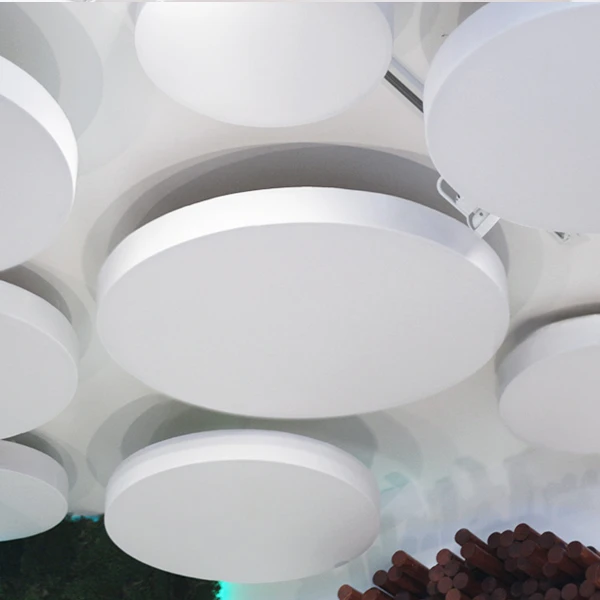
$105.00
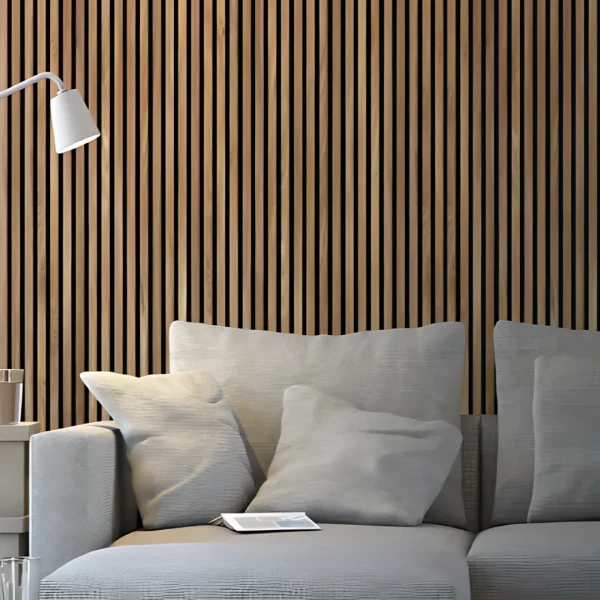
$225.00
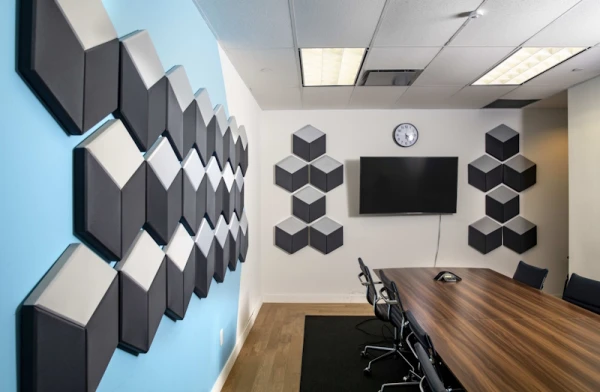
$79.00
$55.00
$85.00
Large rooms amplify every acoustic problem that smaller spaces have - and add several of their own. More surface area, higher ceilings, and greater distances between walls create conditions in which sound bounces longer, builds up faster, and reaches the listener from multiple directions at once. Sound Pro Solutions carries fabric-wrapped, frameless, wood, and curtain-based acoustic panels suited to large room installations, all with certified NRC ratings and available in custom sizes.
Why Large Rooms Present Unique Acoustic Challenges
Acoustic problems scale with room size. A treatment approach that works in a 200 sq ft office requires a fundamentally different configuration in a 2,000 sq ft event space. Understanding what makes large rooms acoustically difficult is the starting point for choosing the right panels.
More Surface Area Means More Reflections
Every untreated wall, floor, and ceiling surface reflects sound back into the room. In a large space, there are simply more of those surfaces - and more distance for reflections to travel before they decay. The result is a room where sound arrives at the listener from multiple directions with varying delays, creating a dense, overlapping reverb tail that makes speech difficult to understand and music hard to follow.
Higher Ceilings and Longer Reverberation Times
Ceiling height has a direct effect on reverberation time. Taller rooms have greater air volume, so sound energy takes longer to decay after the source stops. A room with 14-foot ceilings will have a significantly longer reverb time than an identically proportioned room with 9-foot ceilings, even with the same wall treatment. Acoustic panels for large rooms need to address ceiling surfaces - not just walls - to bring reverberation time down to a functional range.
Uneven Sound Distribution Across the Space
In a large room, the acoustic conditions at one end of the space often differ substantially from those at the other. Hard parallel walls create flutter echo in some zones, while other areas experience bass buildup in corners. Open floor plans introduce additional variables - furniture, partitions, and flooring materials - that affect how sound behaves in different parts of the room. Effective treatment requires panels distributed across the space rather than concentrated in one area.
How to Choose Acoustic Panels for a Large Room
Selecting acoustic panels for a large room involves more variables than for a standard residential space. Panel size, thickness, total coverage, and placement all affect the outcome - and getting any one of them wrong reduces the effectiveness of the treatment significantly.
Panel Size - Why Larger Panels Perform Better in Big Spaces
In large rooms, standard 2×2 ft panels require a high panel count to achieve meaningful coverage, which increases both cost and installation time. Larger panel formats - 2×4 ft, 4×4 ft, or custom dimensions - cover more surface area per mounting point and deliver stronger absorption per installation. For commercial and institutional spaces, larger panels also present a cleaner visual result, as fewer mounting points mean less hardware visible on the wall.
Panel Thickness - 1-Inch vs. 2-Inch for Large Rooms
Panel thickness determines how far down into the frequency range absorption is effective. One-inch panels perform well in the mid- and high-frequency range (500 Hz and above) and are appropriate for large residential rooms, such as open-plan living areas and home theaters. Two-inch panels extend absorption into the low-mid range, making them the standard recommendation for commercial large rooms - restaurants, offices, event halls, houses of worship - where the combination of hard surfaces and high occupancy creates broadband noise problems. For any large room with a sound system or live music, 2-inch panels are the more effective choice.
Coverage Area - How Many Panels You Actually Need
A common rule of thumb for large room acoustic treatment is to cover 25-40% of the total wall and ceiling surface area. The lower end of that range is appropriate for spaces where the primary goal is to reduce echo and improve speech clarity. The upper end applies to rooms requiring tighter reverberation control - recording spaces, broadcast studios, lecture halls, and performance venues. Room geometry, ceiling height, and the type of activity taking place all shift the required coverage in one direction or the other. Our team can calculate recommended panel quantities based on room dimensions before you order.
Placement Strategy - Walls, Ceilings, and Corners
In large rooms, panel placement matters as much as panel quantity. The first priority is the ceiling or upper wall sections, where sound energy accumulates at high room volumes. Side walls at mid-height are the second priority for spaces with fixed seating or workstations. Rear walls help manage late reflections that degrade speech clarity and audio quality. Distributing panels across multiple surfaces - rather than covering a single wall comprehensively - produces better acoustic results and more even conditions throughout the room.
Types of Acoustic Panels for Large Rooms
Sound Pro Solutions offers four panel types suited to large room installations. Each differs in construction, appearance, and performance profile, and each is appropriate for different space types and design requirements.
Fabric-Wrapped Acoustic Panels
Fabric-wrapped panels are the most widely used solution for acoustic treatment in large commercial and residential spaces. A high-density fiberglass core is covered with acoustically transparent fabric, delivering consistent broadband absorption with a finished, professional appearance. Available in standard and custom sizes with a range of fabric colors, these panels are the default choice for offices, conference rooms, event halls, and large residential spaces where both performance and aesthetics matter.
Frameless Acoustic Panels
Frameless panels deliver the same absorption performance as framed versions with a lower profile and lighter weight - both practical advantages in large room installations where the panel count is high. They mount flush to the wall and are easier to handle and position during installation. The exposed fabric edge gives a clean finish without additional trim, making them a cost-effective option for spaces where a minimal look is preferred.
Wood Acoustic Panels
Wood acoustic panels introduce diffusion alongside absorption, scattering some sound energy at the surface while the backing absorbs it. In large rooms, full absorption across all surfaces can make the space sound unnaturally flat - particularly in rooms designed for music, speech performance, or hospitality. Wood panels allow a more controlled acoustic response, maintaining some natural liveliness while still reducing reverberation time. They are common in restaurants, hotels, auditoriums, and corporate reception areas where the acoustic treatment is expected to function as part of the interior design.
Acoustic Curtains
Acoustic curtains are a practical option for large rooms where permanent wall treatment isn't feasible or where the space configuration changes regularly. Mounted on standard curtain tracks, they can be drawn closed to increase absorption and opened when not needed. In large rooms with significant glazing - floor-to-ceiling windows, glass partitions, skylights - curtains address one of the most acoustically problematic surface types without requiring structural changes.
Materials and Construction of Large Room Acoustic Panels
Panel performance in large rooms depends on core material, fabric selection, and construction quality. These factors determine absorption depth, frequency range, and long-term durability under commercial conditions.
Fabric Facing Options and Acoustic Transparency
The fabric covering a panel must allow sound to pass through freely to reach the absorptive core. Decorative or tightly woven fabrics can reflect high-frequency energy at the panel surface, reducing effective NRC even when the core material is correctly specified. Sound Pro Solutions panels use verified acoustically transparent fabric across all product lines. Color options are available to match the space's interior requirements - particularly relevant in large commercial installations where panel aesthetics are part of the design specification.
Frame Construction and Mounting Systems
Panel frames are constructed from wood or metal channels. Frame depth affects both the panel's total thickness and its low-frequency performance - a deeper frame allows a thicker core, which extends absorption into lower frequencies. For large room installations with multiple mounting points, hardware consistency matters: framed panels use impaling clips or Z-clip systems that mount securely to standard drywall or masonry with the correct anchors. Frameless panels use direct-mount or adhesive attachment. All mounting hardware is included with each order.
Professional Applications for Large Room Acoustic Panels
Large room acoustic treatment covers a wide range of commercial and institutional applications. The specific panel configuration varies by room type, but the core challenge - managing reverberation and controlling noise in an oversized space - is consistent across all of them.
Open-Plan Offices and Coworking Spaces
Open-plan offices are among the most acoustically problematic large room environments. High occupancy, hard surfaces, and continuous background noise from conversations, phones, and HVAC systems combine to create conditions that reduce concentration and increase fatigue. Acoustic panels for large office spaces are typically distributed across the ceiling and upper walls to reduce overall reverberation time, supplemented by freestanding or partition-mounted panels in high-density work zones.
Conference Rooms and Boardrooms
Conference rooms demand clear speech intelligibility - the ability to hear and understand every participant without strain. In larger boardrooms and executive conference spaces, untreated walls create reverberation that degrades call quality, masks quieter voices, and makes extended meetings physically tiring. Panel treatment at first reflection points on side walls and the ceiling brings reverb time into the range recommended for speech-primary spaces.
Event Halls and Multipurpose Rooms
Event halls and multipurpose rooms present the most demanding large room acoustic scenario - the space needs to perform acceptably across multiple use cases, from seated presentations to standing receptions to amplified performances. Panel coverage in these rooms is typically higher than in single-use spaces, and the distribution of treatment needs to account for the full range of room configurations. Fabric-wrapped and wood panels are often combined to balance absorption and diffusion across the space.
Churches and Auditoriums
Houses of worship and auditoriums combine large volume with a requirement for both speech clarity and musical quality - two acoustic goals that pull in opposite directions. Achieving both requires careful panel placement rather than maximum coverage. Treatment is typically concentrated at the rear wall and upper side walls, where late reflections have the greatest negative effect on clarity, while front and mid-room surfaces are left partially reflective to support the room's natural sound.
Commercial Restaurants and Dining Areas
Restaurant acoustics directly affect customer experience. Excessive reverberation in a large dining room increases the ambient noise level with each additional table, creating a feedback loop in which patrons speak louder to be heard, further raising the background noise. Acoustic panels for large restaurant spaces - typically 2-inch fabric-wrapped or wood panels mounted on upper walls and ceilings - break that cycle by reducing reverberation time and limiting how much noise the room amplifies.
Advantages of Sound Pro Solutions Acoustic Panels
Sound Pro Solutions supplies acoustic panels for large rooms backed by verified NRC ratings, flexible sizing, and support from specialists who understand the scale and complexity of large space installations.
Certified NRC Ratings - Verified Performance
Every panel in our lineup carries a documented NRC rating based on standardized laboratory testing. In large room installations where panel count is high and the investment is significant, selecting on verified performance data - not marketing estimates - is the difference between a treatment that works and one that doesn't. NRC values are frequency-specific, allowing you to confirm panel performance in the range most relevant to your space's primary use.
Custom Sizes for Non-Standard Large Spaces
Large commercial and institutional rooms rarely conform to standard dimensions. Column spacing, structural bays, non-standard wall heights, and existing architectural elements all create constraints that standard panel sizes can't always accommodate. Sound Pro Solutions offers custom panel dimensions across the full product range, allowing treatment to be designed around the room rather than around catalog sizes.
Easy Installation - No Specialist Required
All Sound Pro Solutions panels ship with the hardware needed for installation. Framed panels use impaling clips or Z-clip systems compatible with standard drywall. For large room projects with a high panel count, our team is available by phone to walk through layout planning, panel distribution, and hardware requirements before installation begins. Most installations can be completed without a specialist contractor.
Sound Pro Solutions Coverage Areas
Sound Pro Solutions ships acoustic panels for large rooms to customers across the United States. We serve residential and commercial clients throughout New York City, New Jersey, and Connecticut, with free local delivery available across the NYC metro area. For projects anywhere else in the country, nationwide shipping is available on all orders.
To discuss panel selection and coverage requirements for your large room project, call our team at +1-888-661-7233, Monday through Friday, 8 am-4 pm EST.
FAQs
Frequently Asked Questions. Here are some common questions about Acoustic panels.
/01How many acoustic panels do I need for a large room?
The standard starting point is 25–40% of the total wall and ceiling surface area. For a large room used primarily for speech — a conference room, office, or classroom — the lower end of that range is typically sufficient. For rooms with amplified sound, music, or high occupancy, coverage closer to 40% produces better results. Room geometry and ceiling height both affect the final number. Contact our team with your room dimensions, and we can calculate a recommended panel quantity before you order.
/01What thickness acoustic panel should I use for a large room?
Two-inch panels are the standard recommendation for large commercial and institutional spaces. The additional thickness extends absorption further into the low-mid frequency range, which is where large rooms accumulate the most problematic energy — particularly in high-occupancy environments with hard floors, high ceilings, and minimal soft furnishings. One-inch panels are appropriate for large residential spaces where the acoustic problem is primarily echo and flutter in the mid and high frequency range.
/01Is it better to treat the walls or the ceiling in a large room?
In most large rooms, the ceiling is the higher priority. Upper wall sections and ceilings are where sound energy accumulates at high volumes, and treating them reduces overall reverberation time more efficiently than equivalent coverage on lower walls. That said, the most effective approach distributes treatment across both surfaces — ceiling and upper walls first, then mid-height wall panels at key reflection points. Concentrating all treatment on one surface produces uneven acoustic conditions across the room.
/01Can acoustic panels be used on the ceiling of a large room?
Yes. Fabric-wrapped and frameless panels can be mounted directly to the ceiling using appropriate hardware or suspended as ceiling clouds on hanging wire systems. For large rooms with high ceilings, suspended ceiling clouds are often more practical than direct-mount ceiling panels — they can be positioned at a height that maximizes their effect on the listening zone without requiring work at full ceiling height.
/01What type of acoustic panel works best for large commercial spaces?
Fabric-wrapped panels with a 2-inch fiberglass core are the most widely specified option for large commercial rooms — offices, conference rooms, restaurants, event halls, and houses of worship. They deliver strong broadband absorption, carry Class A fire ratings, and are available in color options that suit commercial interiors. Wood acoustic panels are a common choice in hospitality and high-end commercial environments where the treatment needs to function as part of the design.
/01Do acoustic panels for large rooms require professional installation?
No. Sound Pro Solutions panels ship with all hardware needed for installation. Framed panels use impaling clips or Z-clip systems that mount to standard drywall without specialist tools. For large room projects with a high panel count, the main planning consideration is layout — distributing panels evenly across surfaces rather than concentrating them in one area. Our team is available by phone to help with layout planning before you begin.
/01Will acoustic panels completely eliminate echo in a large room?
Panels significantly reduce echo and reverberation, but complete elimination is neither achievable nor desirable. A certain level of natural room sound is normal and comfortable for occupants — a fully anechoic large room would feel unnatural and fatiguing. The goal of acoustic treatment in large rooms is to bring reverberation time down to a functional range for the room's intended use: tighter for speech-primary spaces, slightly more open for music and hospitality environments.