
Acoustic Panels for Apartments

$48.00
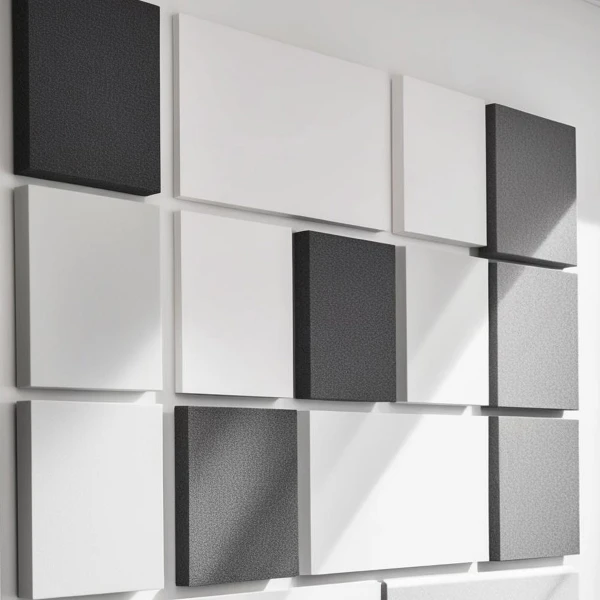
$48.00
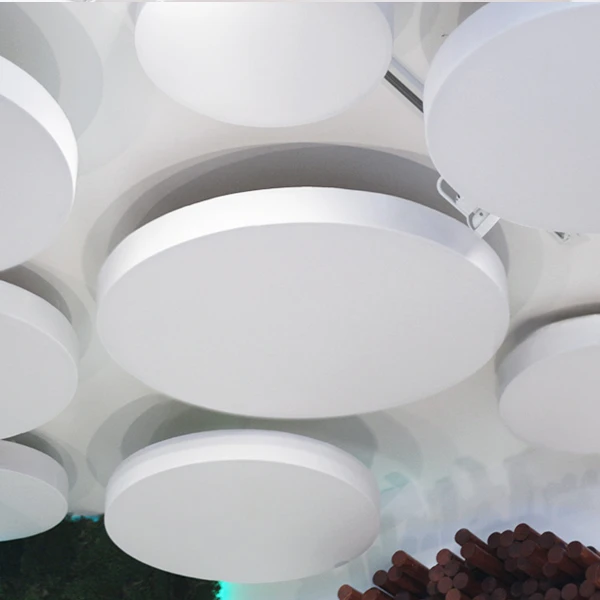
$105.00
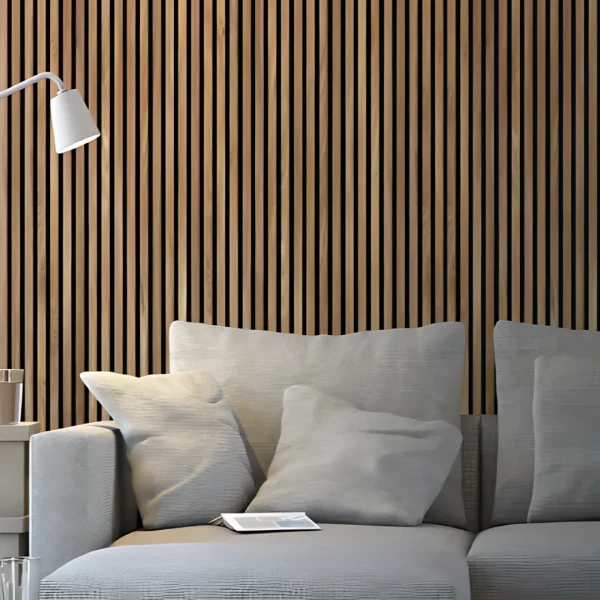
$225.00
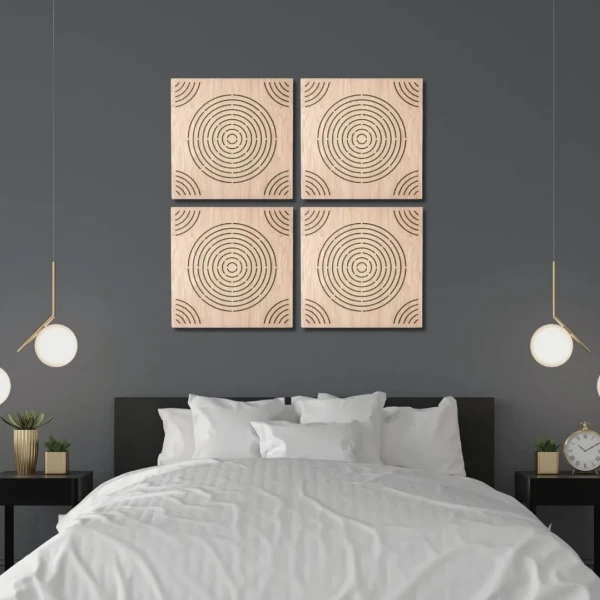
$38.00
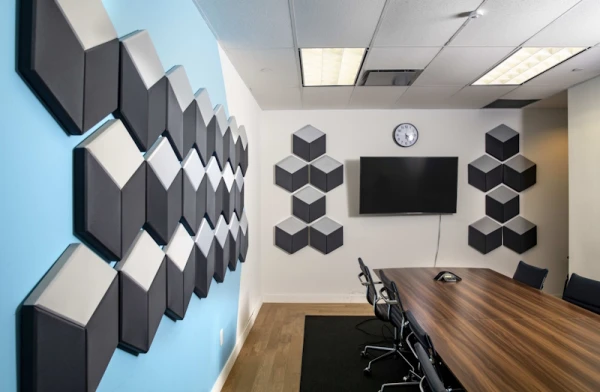
$79.00
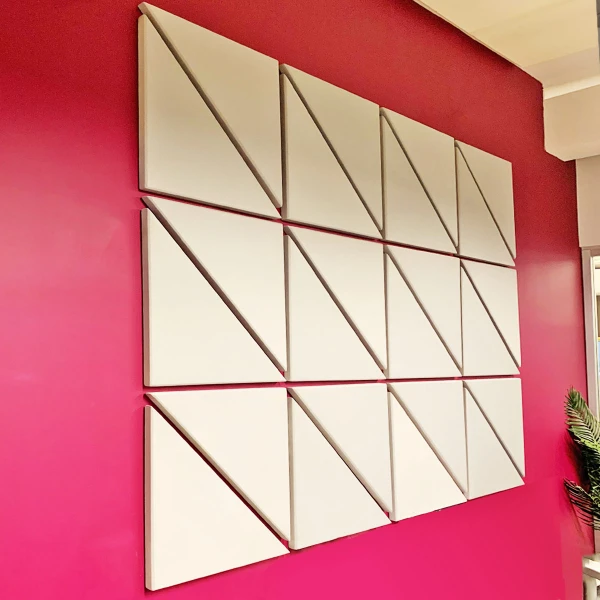
$55.00
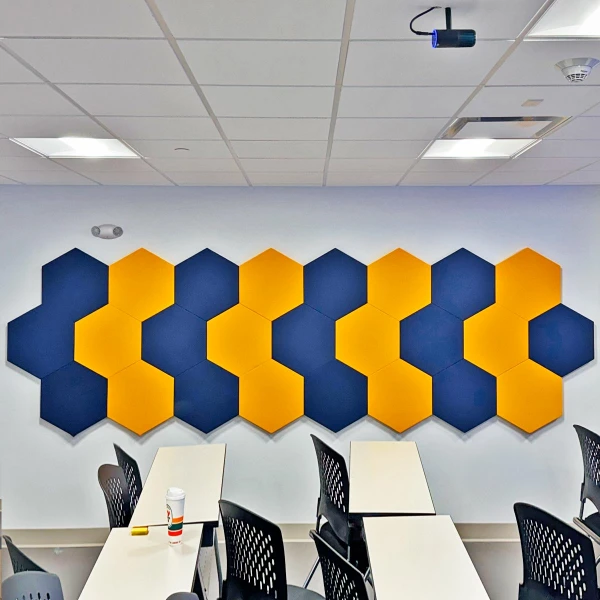
$85.00
Acoustic panels for apartments are sound-absorbing panels that reduce echo and reverberation inside a room, making speech clearer and music or media easier to hear. They treat the acoustics of the room you are in, not the wall between you and a neighbor. For renters, the main appeal is that quality panels improve a room's sound without permanent changes to the walls.
Why Spaces Need Acoustic Panels for Apartments
Apartments create echo because they combine small volumes with hard, parallel surfaces such as drywall, windows, and laminate or tile floors. Sound bounces between these surfaces rather than being absorbed, making rooms sound hollow and speech harder to follow.
Sound-absorbing panels for apartments solve this by converting reflected sound energy into a small amount of heat inside the panel's core. The result is shorter reverberation, cleaner speech, and better audio for calls, music, and video.
It is important to separate the two different problems. Acoustic panels handle sound inside a room (echo and reverberation). They do not, on their own, block sound transmission between apartments, which requires added mass and structural decoupling.
In practice, panels are the right tool when the issue is your own room sounding boomy on calls, recordings, or media. When the issue is a neighbor's TV through a shared wall, apartment sound dampening with panels helps only marginally, and a dedicated soundproofing approach is needed instead.
Types of Acoustic Panels for Apartments
Apartment panels fall into a few main types, and the right one depends on how much absorption you need and how the panel needs to look in a lived-in space.
Fabric-Wrapped Panels
Fabric-wrapped panels are an absorptive core covered in acoustically transparent fabric, available with an inner frame or as frameless edge-wrapped panels. They offer the best balance of absorption and appearance, which makes them the most common choice for living rooms and home offices.
Wood Acoustic Panels
Wood acoustic panels combine a slatted or perforated wood face with an absorptive backing. They absorb sound while reading as a design feature, which suits renters who want treatment that looks intentional rather than utilitarian.
Acoustic Foam Panels
Acoustic foam panels are lightweight open-cell foam shapes, usually the lowest-cost option. They absorb mid and high frequencies well and are common in home recording corners, but they do little for low frequencies, and look less finished than fabric or wood.
Printed and Art Panels
Printed acoustic panels place an image on the fabric face, so the panel doubles as wall art. For apartments, this is useful because the treatment disguises itself as décor and does not read as studio gear.
Ceiling Panels and Baffles
Ceiling panels and hanging baffles absorb sound from above, which is effective in rooms with high ceilings or hard floors where reflections come from every direction. They are a good addition when wall coverage alone does not calm a room.
Materials and Construction of Acoustic Panels for Apartments
A panel's performance comes from its construction: an absorptive core, a facing, a frame or backing, and the hardware that holds it up. The core material and thickness determine which frequencies the panel controls.
Absorptive Core
The core is the working part of the panel and is typically fiberglass, mineral wool, or PET polyester. Denser mineral cores absorb a wider frequency range, while PET cores are lighter and easier to handle in a rental.
Facing and Fabric Cover
The facing is an acoustically transparent fabric or perforated surface that lets sound pass into the core. The fabric determines the panel's look and protects the core without blocking absorption.
Frame and Backing
The frame gives the panel rigidity and a clean edge, and the backing affects how the panel mounts to the wall. A rigid frame makes a panel easier to hang and remove cleanly, which matters in an apartment.
Thickness, Density, and NRC
Absorption is measured by NRC (Noise Reduction Coefficient), a scale from 0 to 1 where a higher number means more absorption. Thicker, denser panels absorb lower frequencies, so a 2-inch panel controls a wider range than a thin foam tile of the same area.
Renter-Safe Mounting Hardware
Mounting hardware decides whether installation is reversible. Adhesive strips, removable hooks, and impaling clips on small fasteners let panels come down without large holes, which protects a security deposit.
Professional Applications for Acoustic Panels for Apartments
The number and placement of panels depend on how the room is used. The applications below are the most common reasons apartment residents add acoustic treatment.
Home Offices and Video Calls
In a home office, panels reduce the echo that makes a voice sound distant or hollow on video calls. Treating the wall behind and beside the desk noticeably improves microphone clarity.
Home Recording and Streaming Studios
For recording and streaming, panels control early reflections that color a vocal or instrument. Placing panels at the first reflection points around the mic produces a cleaner, drier recording without a built-in room.
Living Rooms and Home Theaters
In living rooms and home theaters, panels sharpen dialogue and tighten bass-heavy soundtracks that otherwise smear in a reflective room. The effect is clearer speech in films and more controlled music playback.
Bedrooms and Quiet Rooms
In bedrooms, panels reduce the hollow, boomy quality of a sparse hard-surfaced room. The space feels calmer and quieter, even though the panels are treating reflection rather than blocking outside noise.
Advantages of Acoustic Panels for Apartments
For apartment use, the most important advantages are effectiveness, reversible installation, and appearance. The points below reflect functional benefits rather than generic claims.
Renter-Friendly, No-Damage Installation
Quality panels can be mounted with removable hardware that leaves walls intact. This lets renters treat a room and reverse it fully before moving out.
Clearer Speech and Better Call Quality
By shortening reverberation, panels make speech easier to understand in person and on calls. This is the most immediate benefit of a home office.
Improved Audio for Media and Music
Panels reduce the reflections that muddy music and film audio. Dialogue becomes clearer, and the bass sounds more controlled.
Decorative and Customizable Finishes
Fabric, wood, and printed options let panels match a room instead of standing out. This makes acoustic treatment acceptable in a living space, not just a studio.
Easy to Reposition and Reuse
Because panels mount without permanent changes, they can be repositioned as needs change and reused in a new apartment after a move. That portability adds value for renters.
Sound Pro Solutions Coverage Areas
Sound Pro Solutions supplies acoustic panels for apartments across the United States, with local service in the New York City area.
New York City - Free Pickup and Delivery
We offer free pickup and delivery for acoustic panels throughout New York City, including Manhattan, Brooklyn, Queens, the Bronx, and Long Island City. Local customers can coordinate delivery directly with our team.
Nationwide Shipping Across the USA
Orders ship nationwide to apartments anywhere in the United States. Made-to-order panels are produced and dispatched on our standard lead times.
Local Consultation and Support
Our team helps you choose panel types and quantities for your specific room. Reach Sound Pro Solutions at 40-08 22nd Street, Long Island City, NY 11101, by phone at +1-888-661-7233, Monday to Friday, 8am-4pm EST.
FAQs
Frequently Asked Questions. Here are some common questions about Acoustic panels.
/01Do acoustic panels block noise from neighbors?
Not on their own. Acoustic panels absorb echo and reverberation inside your room, but they do not block sound transmission through a shared wall, floor, or ceiling. Blocking neighbor noise requires added mass and decoupling, which are separate soundproofing approaches.
/01Will acoustic panels damage my walls, and can I remove them?
No, if you use removable hardware. Adhesive strips, removable hooks, and small-fastener clips let panels come down cleanly, which protects a rental deposit.
/01How many acoustic panels do I need for a bedroom or living room?
As a starting point, treating roughly 15–20% of a room's wall area produces a clear improvement for speech and media. Larger or more reflective rooms benefit from greater coverage and from treating first-reflection points.
/01Foam or fabric — which is better for an apartment?
Fabric-wrapped panels generally perform better and look more finished, making them the stronger choice for living spaces. Foam is cheaper and fine for a recording corner, but it absorbs a narrower frequency range and looks less polished.
/01Do acoustic panels help with Zoom calls and recording?
Yes. Panels reduce the reflections that make a voice sound hollow, so microphones capture clearer speech. Treating the surfaces around your desk or mic gives the biggest improvement.
/01Are "soundproof" and "noise-canceling" panels the same as acoustic panels?
Mostly no. Panels marketed as soundproof or noise-canceling panels for apartments are usually sound-absorbing panels that improve room acoustics, not products that block outside noise. Check whether a product is rated for absorption (NRC) or for blocking transmission before buying.