
Door Gasket Seals
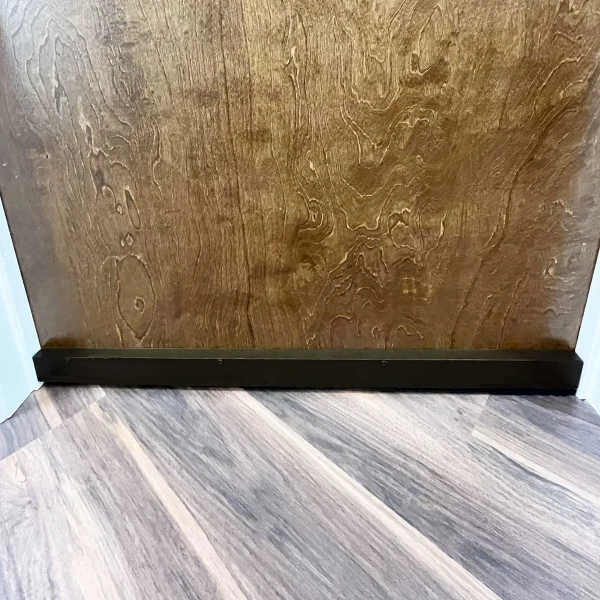
$149.00
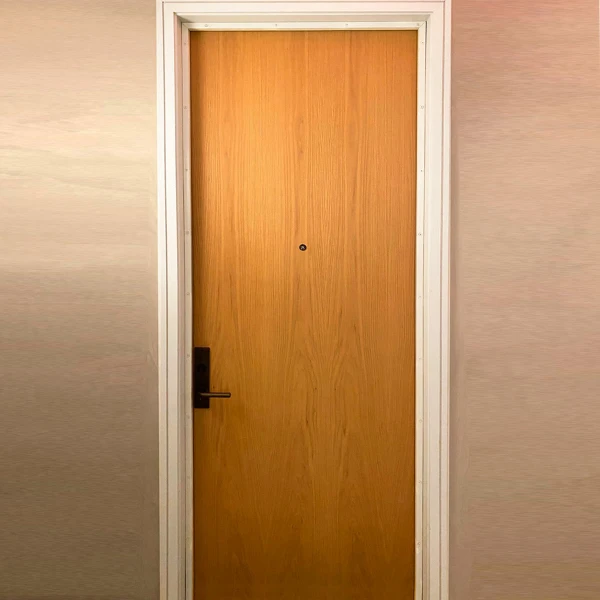
$125.00
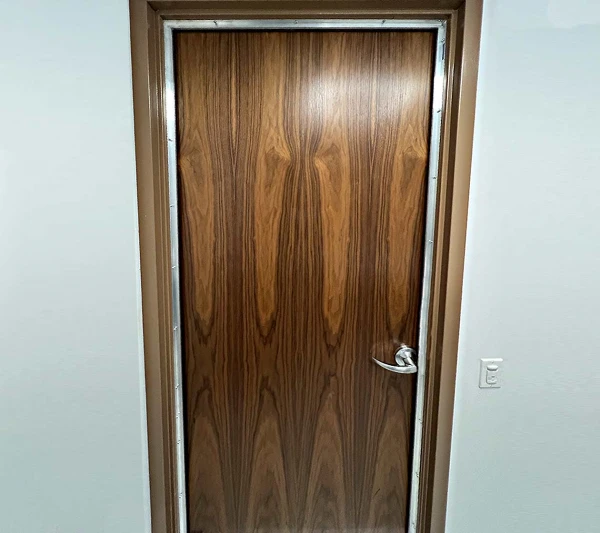
$49.00
A door gasket seal is a compression seal installed around a door frame and along the door bottom to close the gaps between the door leaf, the jamb, and the floor. Once those gaps are sealed, sound, drafts, light, dust, and odors lose their easiest path in and out of the room.
Sound Pro Solutions carries surface-mount door gasket systems built around rigid aluminum housings: an L-shape perimeter seal, a heavy-duty adjustable perimeter seal, and an automatic door bottom. These are hardware-grade retrofit products, designed to hold consistent compression for years, unlike adhesive foam tape that flattens and peels within a season. Prices start at $49, and every system installs on an existing door without replacing it.
Why Spaces Need Door Gasket Seals
The door is almost always the weakest point in a wall. A typical interior door sits inside a frame with visible gaps along the sides, the top, and especially at the floor, and airborne sound travels through those openings far more easily than through the wall itself. You can add mass to the wall, hang acoustic panels, even build a double-stud assembly, and an unsealed door will still leak conversation, footsteps, and HVAC noise around its perimeter.
Gap size matters less than people expect. An opening of 1/8 inch around a door already undermines the isolation of the entire assembly, because sound follows the path of least resistance and an air gap offers effectively no resistance at all.
Sealing the door also changes how the room feels day to day. Drafts stop, conditioned air stays inside, light no longer spills under the door at night, and dust and cooking odors from hallways stay in the hallway. In apartment buildings and offices, that combination of quiet and climate stability is usually the most noticeable upgrade per dollar spent on the whole project.
Types of Door Gasket Seals
Door gasket seals fall into two functional groups: perimeter seals that close the gaps along the jambs and head of the frame, and door bottom seals that close the gap at the floor. A door needs both groups covered to perform, so the catalog below is organized around that split.
Perimeter Door Seals (L-Shape)
The L-Shape Door Seal mounts on the face of the door frame along the sides and top. Its aluminum L-profile carries a resilient seal insert that the closing door compresses against, closing the perimeter gap on every cycle. This is the entry point of the range, from $49, and suits residential doors, home offices, and interior commercial doors where the frame is reasonably straight and the gap is consistent.
Adjustable Perimeter Seals
The Heavy Duty Adjustable Door Seal adds a compression adjustment to the same surface-mount principle. Slotted mounting lets you fine-tune how firmly the insert presses against the door leaf, which solves two common field problems: frames that are slightly out of square, and older doors that have settled and no longer sit evenly in the opening. From $125, this is the choice for high-traffic commercial doors and for retrofits where gap width varies around the perimeter.
Automatic Door Bottom Seals
An automatic door bottom closes the floor gap only when the door is closed. A plunger contacts the strike-side jamb as the door shuts and drives the seal insert down against the floor or threshold; when the door opens, the seal retracts, so nothing drags across carpet or hardwood. The Heavy-Duty Automatic Door Bottom Seal, from $149, is the standard solution for recording studios, conference rooms, and any door where a fixed sweep would either scrape the floor or leave a gap over uneven flooring.
Complete Door Seal Systems
A perimeter seal and a door bottom work as one system, and skipping either half leaves the job unfinished. Sealing three sides of a door while leaving a half-inch floor gap produces a result close to no seal at all, because the remaining opening carries the sound that the sealed sides no longer do. For a door that needs real isolation, plan on the full perimeter plus an automatic bottom from the start.
Materials and Construction of Door Gasket Seals
Construction quality determines whether a door seal continues to seal properly after thousands of open-close cycles. The sections below cover the components that determine the lifespan.
Aluminum Housings
Each seal in the range is built on an extruded aluminum housing. The rigid housing keeps the seal insert aligned and at consistent compression along the full length of the door, which soft self-adhesive products cannot do once they begin to sag or detach. Housings come in several finishes, including chrome, so the hardware reads as an intentional part of the door rather than an add-on.
Seal Inserts: Silicone and Neoprene
The flexible insert does the actual sealing. Silicone and neoprene are the working materials here because both recover their shape after repeated compression and stay flexible instead of hardening or cracking with age and temperature swings. Vinyl and rubber inserts appear in some configurations where the application allows a simpler profile.
Surface-Mount Design
Every system in this category mounts to the face of the existing frame or door with screws. Surface mounting means no routing, no kerf cutting, and no door replacement: the seal installs over what is already there, on wood, metal, or fiberglass doors, and can be removed or repositioned later without rebuilding the opening.
Sizing and Cut-to-Fit
Standard lengths fit common door widths, and aluminum housings can be cut down on site to match the exact opening. Custom lengths are available for oversized or nonstandard doors; send your door dimensions, and we will confirm the right configuration before you order.
Professional Applications for Door Gasket Seals
Door gasket seals show up wherever a room needs controlled sound and stable climate. The typical settings below also indicate which product mix fits each case.
Recording Studios and Podcast Rooms
Studio doors carry the isolation burden of the whole room, and an automatic door bottom paired with an adjustable perimeter seal is the baseline treatment. Sealed doors keep external noise out of the takes and keep late-night sessions from reaching the rest of the building. Panels and bass traps handle what happens inside the room; the door seal handles what crosses its boundary.
Offices and Conference Rooms
Speech privacy is the driver in workplaces. A sealed office or meeting room door keeps confidential conversations inside and open-plan noise outside, and the reduction in distraction is immediately audible to the people using the room. Adjustable perimeter seals suit commercial frames, which are often steel and rarely perfectly square.
Hotels and Multifamily Housing
Corridor noise, elevator traffic, and light bleeding under guest room doors all trace back to unsealed door gaps. Retrofitting perimeter seals and automatic bottoms to existing doors improves sleep quality for guests and residents without altering the doors themselves, which matters in older buildings where the original doors remain for architectural or budget reasons.
Healthcare and Education
Clinics, counseling rooms, and testing areas need doors that protect privacy and concentration. Sealed doors reduce noise transfer between treatment rooms and corridors and help maintain the controlled environment these spaces require. The same logic applies to classrooms and lecture halls that share walls and hallways with active spaces.
Home Offices, Bedrooms, and Media Rooms
At home, a sealed door separates a video call from a living room, a sleeping child from a kitchen, or a movie at full volume from the rest of the house. A perimeter seal plus an automatic bottom on a solid-core interior door is one of the least invasive soundproofing upgrades available for a finished home.
Advantages of Door Gasket Seals
Compared with other steps in a soundproofing project, door sealing delivers unusually high returns for the cost and effort. The specific advantages below explain why it usually comes first.
Highest Impact per Dollar in a Soundproofing Project
Sealing air gaps addresses the largest leak in the room before any material goes on the walls. A door seal system costs a fraction of a wall treatment and targets the opening that carries a disproportionate share of the transmitted sound, which makes it the logical first purchase in almost any isolation plan.
Retrofit Without Replacing the Door
Surface-mount hardware installs on the door and frame you already have. Drill, screw, adjust, done: a homeowner with basic tools can complete a door in an afternoon, and a facilities team can work through a corridor of offices without a carpenter.
Adjustable, Long-Life Compression
Aluminum-housed seals with silicone or neoprene inserts hold their compression through years of daily use, and the adjustable models let you restore a perfect fit if the door or building shifts over time. Foam tape offers none of that; it compresses permanently within months and takes the finish off the frame when it peels away.
Part of a Complete Isolation System
Door seals integrate with the rest of the sound isolation catalog: Green Glue and mass-loaded vinyl add mass and damping to the partition, acoustical sealant closes construction gaps, and the door gasket system closes the operable opening. Treating the door and the wall as a single assembly produces a result you can hear.
Sound Pro Solutions Coverage Areas
Sound Pro Solutions supplies door gasket seals nationwide from its facility in Long Island City, New York, with local pickup and delivery options for the NYC metro area.
New York City and the Tri-State Area
Customers in Manhattan, Brooklyn, Queens, the Bronx, Staten Island, and the surrounding tri-state region can order with free pickup and delivery in NYC on orders over $150. Local customers can also schedule a consultation, and for larger projects, our team can review the doors on site to recommend the right seal configuration. We supply the hardware and the guidance; installation is handled by you or your contractor.
Nationwide Shipping
Orders ship via FedEx throughout the continental United States, and every package is insured for the full order value with insurance included in the shipping cost. Remote consultations by phone or email cover product selection, gap measurement, and configuration for any project outside our local area. Stock items can be returned within 30 days through our RMA process.
FAQs
Frequently Asked Questions. Here are some common questions about Acoustic panels.
/01What is the difference between a door gasket seal and regular weatherstripping?
A door gasket seal features a rigid aluminum housing with a dense compression insert engineered to block airborne sound and drafts. Regular weatherstripping is soft foam or vinyl tape designed to block drafts; it flattens quickly and does little to reduce noise.
/01Do I need both a perimeter seal and a door bottom seal?
Yes. Sound passes through any remaining gap, so sealing the sides and top while leaving the floor gap open erases most of the benefit. A perimeter seal plus an automatic door bottom covers all four edges and works as one system.
/01Can I install door gasket seals on an existing door?
Yes. All seals in this category are surface-mount and attach to existing wood, metal, or fiberglass doors and frames with screws. No door replacement, routing, or special tooling is required.
/01Will a door gasket seal make my door harder to close?
Not when fitted correctly. The adjustable perimeter seal lets you set the compression so the door latches normally, and the automatic door bottom drops its seal only after the door is closed, so there is no drag as the door moves.
/01How do I measure my door gaps before ordering?
Measure the gap width between the door leaf and the frame at the top, along both sides, and between the door bottom and the floor. Gaps are rarely uniform, so take readings at several points; if the numbers vary widely, choose the adjustable seal and send us your measurements for confirmation.
/01Do door gasket seals completely block sound?
No single product does. A gasket system removes the air paths around the door, which is the dominant leak, but total performance also depends on the mass of the door itself and the wall around it. A sealed solid-core door within a treated wall delivers the strongest result.