
Acoustic Panels for Gymnasium

$48.00
$48.00
$105.00
$225.00
$79.00
$55.00
$85.00
Gymnasiums are among the most acoustically difficult spaces to manage. High ceilings, hardwood floors, concrete block walls, and metal bleachers create an environment where sound bounces in every direction, building up reverberation that overwhelms speech and makes audio systems nearly useless. Sound Pro Solutions offers a full range of acoustic wall panels, frameless panels, and ceiling baffles specifically suited for gymnasium environments - from K-12 school gyms and university athletic centers to multipurpose halls and commercial fitness facilities. All products ship nationwide, with free delivery in NYC.
Why Gymnasiums Have Poor Acoustics
Parallel hard surfaces and large open volumes are the core reasons gymnasium acoustics are so difficult to control. In a typical gym, the reverberation time - measured as RT60, the time it takes for sound to decay by 60 decibels - falls between 3 and 6 seconds. For comparison, the recommended RT60 for spaces where speech intelligibility matters is 0.8 to 1.2 seconds. That gap is the difference between a speaker being understood clearly and every word dissolving into noise.
The materials that make gymnasiums functional for sports are the same ones that make them acoustically problematic. Hardwood floors reflect sound with almost no absorption. Concrete and masonry walls bounce mid and high frequencies across the room. Metal bleachers and exposed steel framing add additional reflective surfaces at multiple heights. There is virtually nothing in a standard gymnasium that absorbs sound energy.
The Speech Transmission Index (STI) - the standard measure of how well speech is understood in a space - drops significantly in untreated gymnasiums. An STI below 0.45 is considered poor, and many untreated gym environments fall into that range during occupied events. Coaches, teachers, and presenters find themselves competing with their own echo.
Crowd noise compounds the problem further. In a closed reflective space, sound energy from a large group accumulates rather than dissipates. Each wave of noise reflects off every surface and returns before the previous one has faded. This is why a gymnasium filled with students at an assembly can quickly reach noise levels that are physically uncomfortable - not just loud, but acoustically chaotic.
How Acoustic Panels Work in a Gymnasium
Acoustic panels reduce reverberation by converting sound energy into heat as sound waves pass through a porous absorptive core - typically fiberglass or mineral wool. When correctly specified and positioned in a gymnasium, panels progressively reduce RT60 with each additional square foot of coverage, restoring intelligibility and making the space usable for speech, music, and amplified audio.
It is important to distinguish sound absorption from sound isolation. Acoustic panels absorb sound energy within a space - they reduce echo, reverberation, and sound buildup inside the room. They do not prevent sound from passing through walls or stop outside noise from entering. For gymnasium applications, absorption is the primary need: the goal is to bring RT60 down to a functional range so that voices and audio systems can be understood clearly.
The NRC (Noise Reduction Coefficient) rating tells you how much sound a panel absorbs across the frequency spectrum, on a scale of 0 to 1. For gymnasium applications, panels with an NRC of 0.85 or higher are recommended. At that level, the panel is absorbing 85% or more of incident sound energy rather than reflecting it back into the room. Panels with NRC ratings below 0.70 are generally insufficient for high-volume, high-reflectivity environments like gyms.
Effective treatment in a gymnasium typically combines upper wall panels and ceiling baffles. Wall panels installed at 7 to 12 feet target the zone of first reflections - the height at which sound from a speaker or PA system first strikes a wall and redirects. Ceiling baffles suspended horizontally or vertically in the central zone address the overhead reflection path and provide absorption without occupying wall space. Corner treatment addresses low-frequency buildup at room boundaries. A gymnasium that starts at an RT60 of 4.5 seconds can realistically reach 1.0 to 1.4 seconds with proper panel coverage - a transformation that is immediately audible.
Best Acoustic Panels for Gymnasium - Product Overview
Not every acoustic panel is built for a gymnasium environment. Gym spaces demand panels with a high NRC rating, a durable surface that resists scuffs, impacts, and moisture, and a mounting system that stays secure under the physical demands of an active facility. Decorative office panels or standard studio foam are not appropriate substitutes.
Sound Pro Solutions carries several panel types that meet gymnasium-grade requirements.
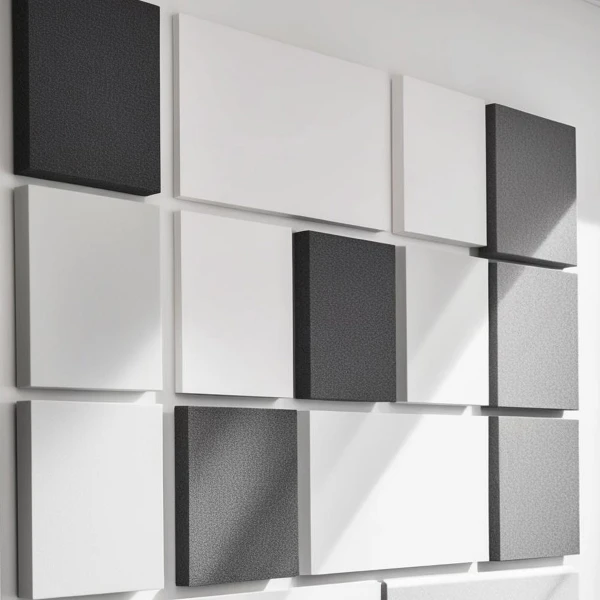
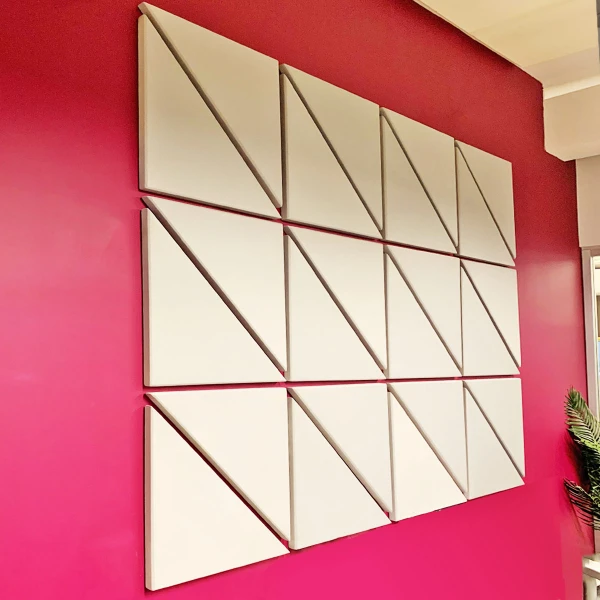
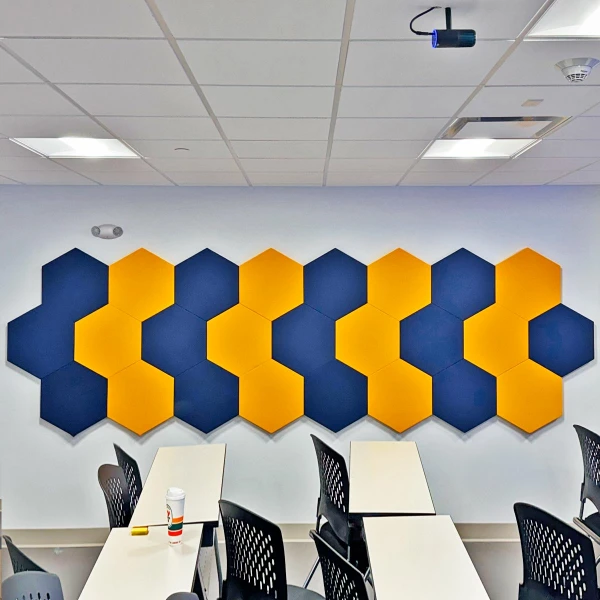
Acoustic Panels with Inner Frame are a reliable choice for gymnasium walls. The rigid internal frame gives the panel structural stability and keeps the fabric facing taut over the years of use. Available in multiple sizes and fabric colors, these panels are straightforward to mount using impact-resistant hardware and can be positioned precisely at first-reflection zones. NRC ratings typically range from 0.85 to 1.0, depending on panel thickness and core material.
Frameless Acoustic Panels offer a lower-profile option where aesthetics matter alongside performance. Without an exposed frame, these panels present a cleaner appearance on finished gymnasium walls - appropriate for multipurpose facilities that serve as event spaces as well as athletic venues. Performance characteristics are comparable to framed panels at equivalent thickness.
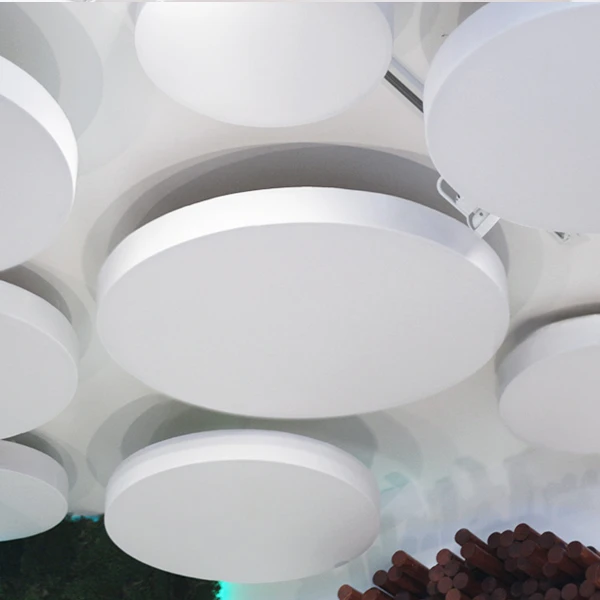
Ceiling Baffles are essential for gymnasiums with ceiling heights above 18 to 20 feet, where wall panels alone cannot address overhead reflections. Suspended horizontally, baffles provide absorption on two faces simultaneously and are particularly effective in large-volume spaces. Vertical baffle configurations are also available for installations where aesthetic differentiation is needed.
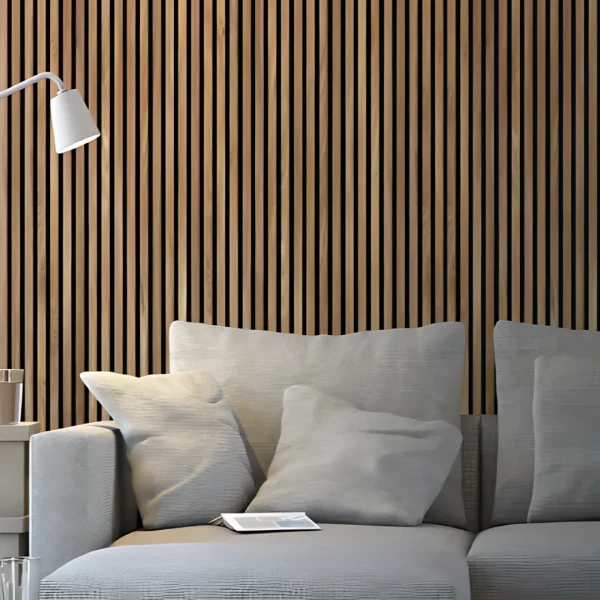
Fabric-wrapped panels are the standard choice for most gymnasium applications - they are durable, available in fire-rated configurations, and effective across the mid and high frequency ranges most responsible for speech intelligibility problems. Perforated metal or wood-faced panels are better suited for permanent architectural installations where appearance is a primary concern and impact resistance is less critical.
For gymnasium walls specifically, framed panels with a 2-inch core offer strong performance across the speech frequency range (500 Hz-4 kHz). A 3-inch core provides additional low-frequency absorption and is worth specifying in larger gyms with particularly long RT60 at low frequencies.
Browse our full selection of gym acoustic panels or contact our team for product recommendations matched to your specific space.
How to Choose Acoustic Panels for Your Gymnasium
Selecting acoustic panels for a gymnasium comes down to four variables: the square footage of the space, the ceiling height, the primary use of the facility, and the required durability of the panel surface. Underestimating the coverage area is the most common reason acoustic treatment underperforms after installation - too few panels placed in the wrong zones will reduce RT60 modestly but not enough to reach a functional threshold.
Room size and coverage area
As a starting point, gymnasium acoustic treatment typically requires absorptive coverage of 20 to 35 percent of the total wall and ceiling surface area. Larger rooms with harder surfaces and higher ambient noise levels need to trend toward the upper end of that range. A smaller, lower-ceiling gym used primarily for assemblies can often achieve satisfactory results at 20 to 25 percent coverage.
Ceiling height
In gymnasiums with ceilings below 18 feet, wall panels installed at upper wall height can address both lateral and overhead reflection paths effectively. When ceiling height exceeds 18 to 20 feet, wall panels alone leave a large overhead reflective surface untreated. In those cases, ceiling baffles become a necessary part of the treatment system rather than an optional addition.
Type of use
A K-12 school gymnasium used primarily for assemblies and physical education requires panels optimized for speech clarity - high NRC in the 500 Hz to 4 kHz range, with fabric surfaces that meet school fire codes. A commercial fitness center has different priorities: the focus is on music playback clarity and reducing the fatigue caused by HVAC and equipment noise at lower frequencies, which may call for thicker panels or a combination of wall and ceiling treatment.
Panel thickness and NRC
A 2-inch fiberglass or mineral wool core panel with NRC 0.90 to 1.0 handles the mid and high frequencies that drive speech intelligibility problems. If a gymnasium has noticeable bass buildup - common in spaces with masonry walls and concrete floors - 3-inch panels or supplemental corner treatment will address the lower frequency range more effectively.
Not sure how much coverage your gymnasium needs? Contact our acoustic specialists for a free consultation. We can help you calculate square footage requirements based on your room dimensions and use case.
Gymnasium Acoustic Panel Installation - Wall, Ceiling, and Corner Placement
Placement determines performance. A gymnasium treated with the right number of panels in the wrong locations will show limited RT60 improvement. The same panels installed at first-reflection zones and in the overhead volume will produce a measurable, audible result.
Wall panel placement
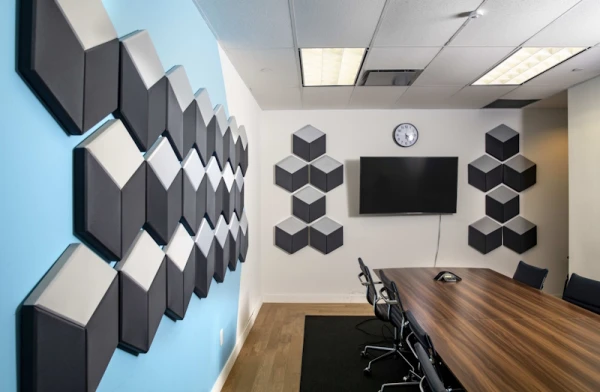
The most impactful wall zone in a gymnasium is the upper wall between 7 and 12 feet - this is where sound from speakers, coaches, and PA systems first strikes a reflective surface and redirects across the room. Panels installed in this band interrupt that reflection path before it builds into reverberation. Secondary placement behind bleachers and at the ends of the court addresses reflection paths from crowd noise and sideline activity. Avoid placing all panels at eye level, which is a common installation error that leaves the high-energy upper wall zone untreated.
Ceiling baffles
Baffles suspended from the ceiling work best in the central zone of the gym, covering the overhead area directly above the court. Horizontal orientation maximizes the absorptive surface area exposed to sound from below and above. Vertical baffles - hung parallel to the floor in rows - are an option when architectural or structural constraints limit horizontal mounting. A typical baffle spacing of 12 to 24 inches between panels allows air movement and maintenance access while providing effective mid and high frequency absorption.
Corner treatment
Low-frequency energy concentrates at room boundaries and corners, where pressure builds up from standing waves. In most gymnasium applications, bass buildup is a secondary concern compared to mid-frequency reverberation - but in multipurpose gyms used for music performance or events with subwoofer-level audio, corner bass traps or thick-section panels at corner junctions will address that frequency range.
Mounting hardware
Gymnasium environments require mounting systems built for durability. Z-clip systems allow panels to be removed and repositioned without wall damage and hold panels securely, even with the vibration caused by impact sports. French cleats provide a similar removable mounting option with high weight capacity. For permanent installations, panel mounts should be anchored into studs or masonry anchors rated for the panel weight - adhesive mounting alone is not appropriate for gymnasium environments.
Acoustic Panels for Different Types of Gymnasiums
The acoustic requirements of a gymnasium depend heavily on how the space is used. A school gym with weekly assemblies has different priorities than a university athletic center hosting conference-level competitions, and a commercial fitness studio has different priorities than both. Panel selection, coverage targets, and mounting specifications should reflect the specific demands of the facility.
School and K-12 gymnasiums prioritize speech intelligibility above all else. When a principal addresses the student body, a coach gives halftime instructions, or a presenter runs a school-wide event, the room needs to support clear voice transmission. Panels for school gyms should carry a Class A fire rating (ASTM E84), meet school facility codes, and be fabric-wrapped to resist damage from student activity. Coverage should prioritize the upper wall zone and, where budgets allow, ceiling baffles in the overhead volume.
University and college athletic centers typically involve larger rooms, higher ceilings, and greater acoustic complexity. These spaces often serve multiple functions - competitive athletics, convocations, recruitment events, and performing arts programs - and need acoustic treatment that performs across speech and amplified music. Panel systems in these venues tend to be larger in scope, with ceiling baffle arrays as a standard component of the treatment rather than an add-on.
Multipurpose halls and event spaces require a balance between speech clarity and musical warmth. Rooms used exclusively for speech benefit from RT60 targets in the 0.8 to 1.0 second range. Rooms that also host amplified music or theatrical events may target 1.0 to 1.4 seconds to preserve some acoustic liveliness. In these cases, a phased approach - treating the most reflective surfaces first and assessing performance before completing coverage - allows fine-tuning toward the right acoustic character.
Commercial gyms and fitness centers face a different set of priorities. The goal is not speech clarity at large scale but rather music playback quality, reduction of mechanical noise from HVAC and exercise equipment, and management of the overall noise level that causes listener fatigue during extended workouts. Wall panels in fitness facilities are often placed lower than in school gyms - at 4 to 8 feet - to target the zone where music and voice interaction occurs at close range.
Why Choose Sound Pro Solutions for Gymnasium Acoustic Panels
Sound Pro Solutions supplies professional-grade acoustic panels for gymnasium applications to customers across the United States, with free pickup and delivery in New York City. Every panel in our catalog is sourced from manufacturers with documented NRC test data, and our commercial-grade product lines meet the fire rating and durability requirements of institutional and public assembly facilities.
Our products are independently tested to ASTM standards, and NRC ratings are based on certified laboratory measurements - not manufacturer estimates. For applications where building code compliance requires Class A fire-rated materials, we carry panel options that meet ASTM E84 Class A specifications.
When you contact our team, you are not filling out a form to receive a generic reply. Our acoustic specialists review your room dimensions, intended use, and existing conditions to recommend the specific panel types, quantities, and mounting configurations that will produce the result you need. We will not recommend more products than your space requires.
We offer nationwide shipping on all orders and free delivery within New York City. Our return policy covers products that arrive damaged or do not match your order specifications.
If you are sourcing acoustic panels for a gymnasium project - whether a single school facility or a multi-site institutional program - contact Sound Pro Solutions to discuss your requirements. We are based in Long Island City, NY, and support projects of all scales across the country.
FAQs
Frequently Asked Questions. Here are some common questions about Acoustic panels.
/01How many acoustic panels do I need for a gymnasium?
Target 20 to 35 percent of the total wall and ceiling surface area. For a typical school gym with 20-foot ceilings, that's roughly 400 to 700 square feet of panel coverage. Larger rooms with harder surfaces trend toward the upper end. Not sure about your specific space? Contact our team for a free coverage estimate.
/01What NRC rating should gymnasium acoustic panels have?
NRC 0.85 or higher. At that level, the panel absorbs 85 percent or more of incident sound energy. Panels below NRC 0.70 are generally insufficient for high-reflectivity gym environments and will produce limited improvement regardless of how many you install.
/01Can acoustic panels be mounted on gymnasium ceilings?
Yes - and in gyms with ceilings above 18 to 20 feet, ceiling treatment is essential. Wall panels alone cannot address the overhead reflective surface at that height. Ceiling baffles suspended horizontally on aircraft cable are the standard solution, providing absorption on two faces simultaneously and covering the largest overhead volume efficiently.
/01What is the difference between sound absorption and soundproofing in a gymnasium?
Acoustic panels reduce echo and reverberation inside the room. Soundproofing products - mass-loaded vinyl, resilient clips, door seals - prevent sound from passing between rooms. If voices and audio are unclear inside your gym, you need absorption. If gym noise is disturbing adjacent spaces, you need isolation. Most gymnasium projects require absorption; isolation is a separate scope.
/01Are acoustic panels safe for school gymnasiums?
Panels for school and institutional facilities should carry a Class A fire rating under ASTM E84. Sound Pro Solutions carries gymnasium panels that meet Class A requirements. Look for impact-resistant fabric facings and hardware-mounted installation - both are important for high-activity school environments.
/01Do acoustic panels block outside noise from entering the gymnasium?
No. Acoustic panels absorb sound inside the room but do not stop sound transmission through walls, doors, or ceilings. External noise intrusion is a sound isolation problem that requires different products - door seals, acoustic sealants, or mass-loaded vinyl - used alongside or independently of absorption treatment.
/01What mounting hardware works best for gymnasium wall panels?
Z-clips and French cleats are the standard choice. Both allow panels to be repositioned without wall damage and hold securely under the vibration and impact conditions typical of active gym facilities. Anchors should be set into studs or masonry - adhesive-only mounting is not suitable for gymnasium environments.